Free tool: Calculate your grease trap size in 60 seconds →
Grease Trap Compliance

FOG Compliance Articles & Guides

Grease trap sizing, regulations, maintenance, and troubleshooting — backed by specific code citations.

Grease Trap Maintenance: The Complete Preventive Care Guide

Worker inspecting a grease trap in a kitchen with dramatic lighting.

Grease Trap Maintenance: The Complete Preventive Care Guide Grease trap maintenance prevents thousands in emergency pumping fees and violation fines that destroy restaurant budgets. Most owners wait for problems instead of preventing them. Key Takeaways: Daily FOG prevention tasks take 15 minutes but prevent 80% of grease trap failures The 25% rule triggers cleaning schedules … Read more


How Often Should a Grease Trap Be Cleaned? The 25% Rule

Grease trap showing layers of congealed grease, illustrating the 25% rule.

How often grease trap cleaned depends on fill level, not calendar dates. Most restaurants clean their grease traps wrong because they follow generic schedules instead of measuring actual fill levels. The 25% rule changes everything. Key Takeaways: • The 25% rule requires cleaning when grease and solids combined reach 25% of the trap’s total capacity• … Read more

Grease Trap Cleaning Schedule: How Often Should You Clean

Restaurant kitchen with chefs cleaning a grease trap under dramatic lighting.

Grease trap cleaning schedule violations cost restaurant operators $5,000+ in fines, yet most schedule maintenance based on guesswork rather than actual FOG accumulation patterns. The commercial grease trap industry sees repeated compliance failures because operators ignore the fundamental 25% rule that determines when cleaning becomes mandatory. Key Takeaways: The 25% rule determines cleaning frequency, when … Read more

Grease Trap Pumping: How It Works, What It Costs, Who Can Do It

Grease hauler pumping commercial grease trap with dramatic lighting and volumetric fog.

Grease trap pumping mistakes trigger $5,000+ fines and void your FOG compliance faster than any other violation. Most restaurant owners think it’s just sucking out waste, but the legal requirements around licensed haulers, proper documentation, and disposal methods make this a minefield for the unprepared. Key Takeaways: Licensed grease haulers charge $200-800 per pump-out depending … Read more

Grease Trap Cleaning: Schedules, Methods, and Compliance Requirements

Grease trap filled to 25% capacity with FOG layers in a kitchen.

Grease trap cleaning violations shut down restaurants every week. Restaurant operators who skip proper maintenance face $25,000 fines, sewer blockages that close kitchens, and health department violations that end businesses permanently. Your commercial grease trap becomes a liability without the right cleaning schedule and compliance documentation. Key Takeaways: • The 25% rule requires cleaning when … Read more

Grease Trap Installation Cost: What to Budget for Equipment and Labor

Plumber installing grease trap under sink with complex piping in cinematic lighting.

Most restaurant owners get hit with grease trap installation cost that runs 40-60% higher than equipment prices alone. You see a $600 trap and budget $800, then face a $2,100 bill. Key Takeaways: Under-sink grease trap installations range from $800-2,400 including equipment and labor In-ground grease interceptor projects cost $3,000-15,000 with excavation representing 30-50% of … Read more

Underground Grease Trap Installation: Excavation and Placement

Construction site with excavation for grease trap, dramatic lighting and fog.

Underground grease trap installation fails inspection in 60% of cases because contractors skip excavation permits and guess at setback requirements. The most expensive mistakes happen before you dig. Key Takeaways: Excavation permits must be filed 72 hours before digging starts, no exceptions in most jurisdictions Inlet elevation must be 2-4 inches higher than outlet elevation … Read more

3-Compartment Sink Grease Trap Installation: Plumbing and Code

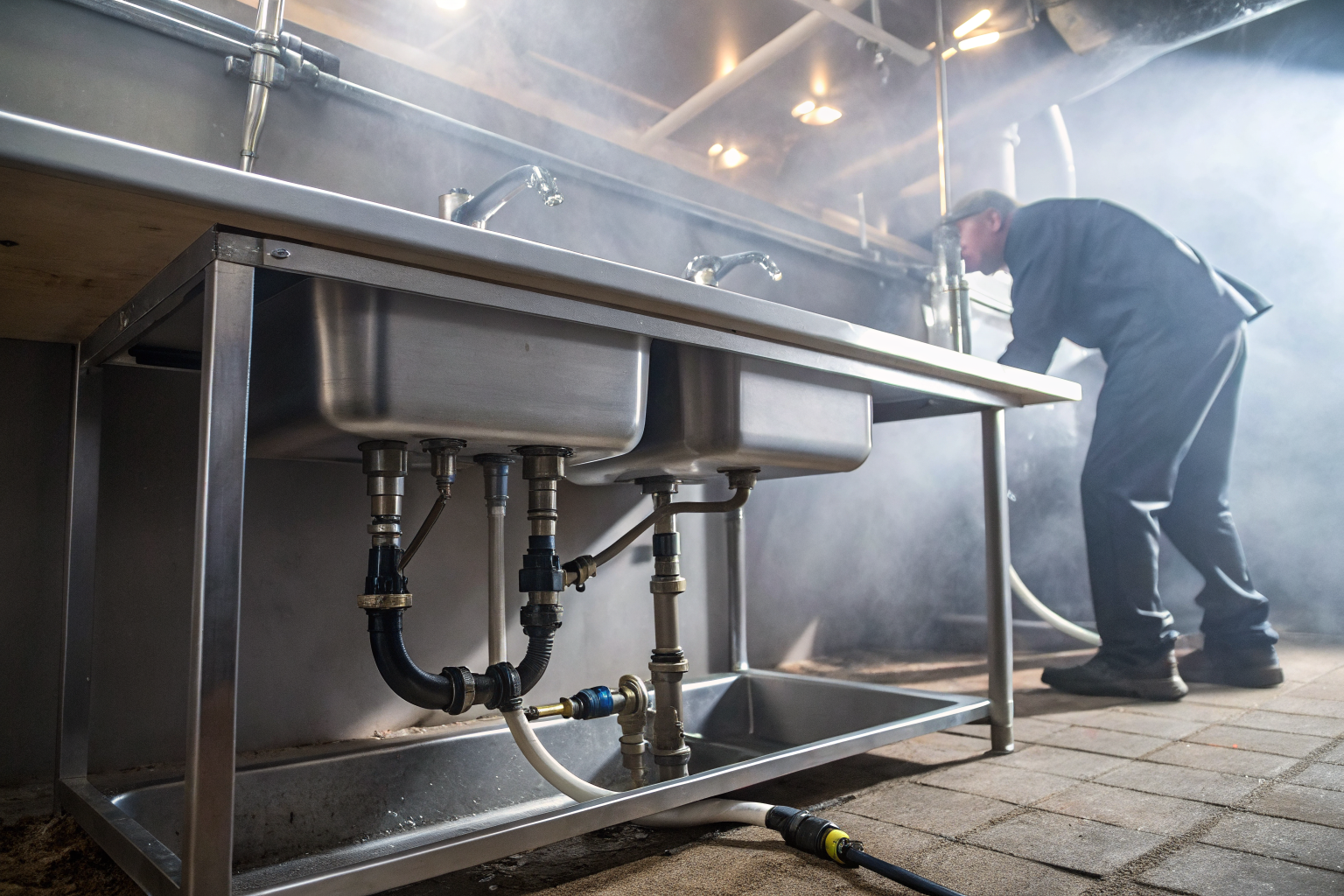
3-compartment sink with grease trap installation, detailed plumbing setup.

3 compartment sink grease trap installation fails most inspections because contractors ignore the Uniform Plumbing Code’s strict elevation and distance requirements. This creates expensive rework and delayed restaurant openings. Commercial grease trap systems need precise plumbing configuration to meet FOG regulations. Key Takeaways: Grease traps must sit at least 4 feet from 3-compartment sink fixtures … Read more

Grease Trap Installation: Complete Guide for Commercial Kitchens

Plumber installing grease trap under sink in a commercial kitchen.

Grease trap installation mistakes cost restaurant owners $15,000 in repairs when they skip critical pre-installation steps. Most failures happen because owners don’t understand code requirements, permit processes, or proper elevation specifications before breaking ground. Key Takeaways: Under-sink installations require 18-inch minimum clearance while gravity interceptors need 3-foot access zones per UPC 1003.3.4 Licensed plumbers reduce … Read more

Residential Grease Traps: Do Homeowners Need One?

Close-up of a residential grease trap under a sink with dramatic lighting.

Residential grease trap installation confuses homeowners who dump cooking grease down drains without knowing they’re slowly destroying septic systems or creating expensive sewer line blockages. Most single-family homes operate under different plumbing codes than commercial grease trap facilities. Key Takeaways: • No residential building codes require grease traps for single-family homes in any U.S. state• … Read more