

Residential grease trap installation confuses homeowners who dump cooking grease down drains without knowing they’re slowly destroying septic systems or creating expensive sewer line blockages. Most single-family homes operate under different plumbing codes than commercial grease trap facilities.
Key Takeaways:
• No residential building codes require grease traps for single-family homes in any U.S. state
• Homes with septic systems that process 25+ pounds of grease monthly can extend system life by 40% with proper grease management
• Home kitchens producing more than 15 gallons per minute wastewater cross into commercial territory and may trigger FOG regulations
Do Homes Need Grease Traps by Code?

Residential properties are exempt from grease trap requirements. The Uniform Plumbing Code treats single-family homes differently than commercial kitchens because home cooking produces far less fats oils and grease (FOG) waste.
This means your house kitchen operates under residential plumbing standards, not commercial food service regulations. The dividing line sits at water flow rates and grease production volume.
Home kitchens cross into commercial territory when they exceed 15 gallons per minute of wastewater flow. At this threshold, local jurisdictions may require FOG management systems. This happens with large home-based catering operations or multi-family buildings with commercial-style kitchens.
Most residential dishwashers produce 2-4 GPM flow rates. Standard home sinks add another 2-3 GPM. You need serious commercial equipment or multiple simultaneous fixtures to hit the 15 GPM commercial threshold.
However, code exemption doesn’t mean grease traps can’t solve real problems. Septic systems and older sewer lines suffer significant damage from accumulated grease over time.
When Should You Install a Residential Grease Trap?

Septic systems benefit from fats oils and grease prevention when households produce high grease volumes. Four situations justify residential grease trap installation:
Septic system protection – Homes processing 25+ pounds of cooking grease monthly see 40% longer septic system life with proper grease management. Grease clogs septic drain fields and kills beneficial bacteria.
Heavy cooking households – Families cooking multiple meals daily, frying foods regularly, or processing large quantities of meat benefit from grease capture. Asian stir-fry cooking and Southern deep-frying produce especially high grease volumes.
Home-based food businesses – Catering operations, home bakeries, or meal prep services operating from residential kitchens may trigger local FOG regulations even below commercial thresholds. Many jurisdictions require permits for home food businesses.
Preventive maintenance approach – Older homes with cast iron drain lines or frequent grease blockages can prevent expensive plumber calls. Professional drain cleaning costs $150-400 per incident.
Homes generating less than 10 pounds of grease monthly rarely see cost-benefit justification for grease trap installation. The maintenance expense outweighs the protection value.
What Types of Grease Traps Work for Home Kitchens?
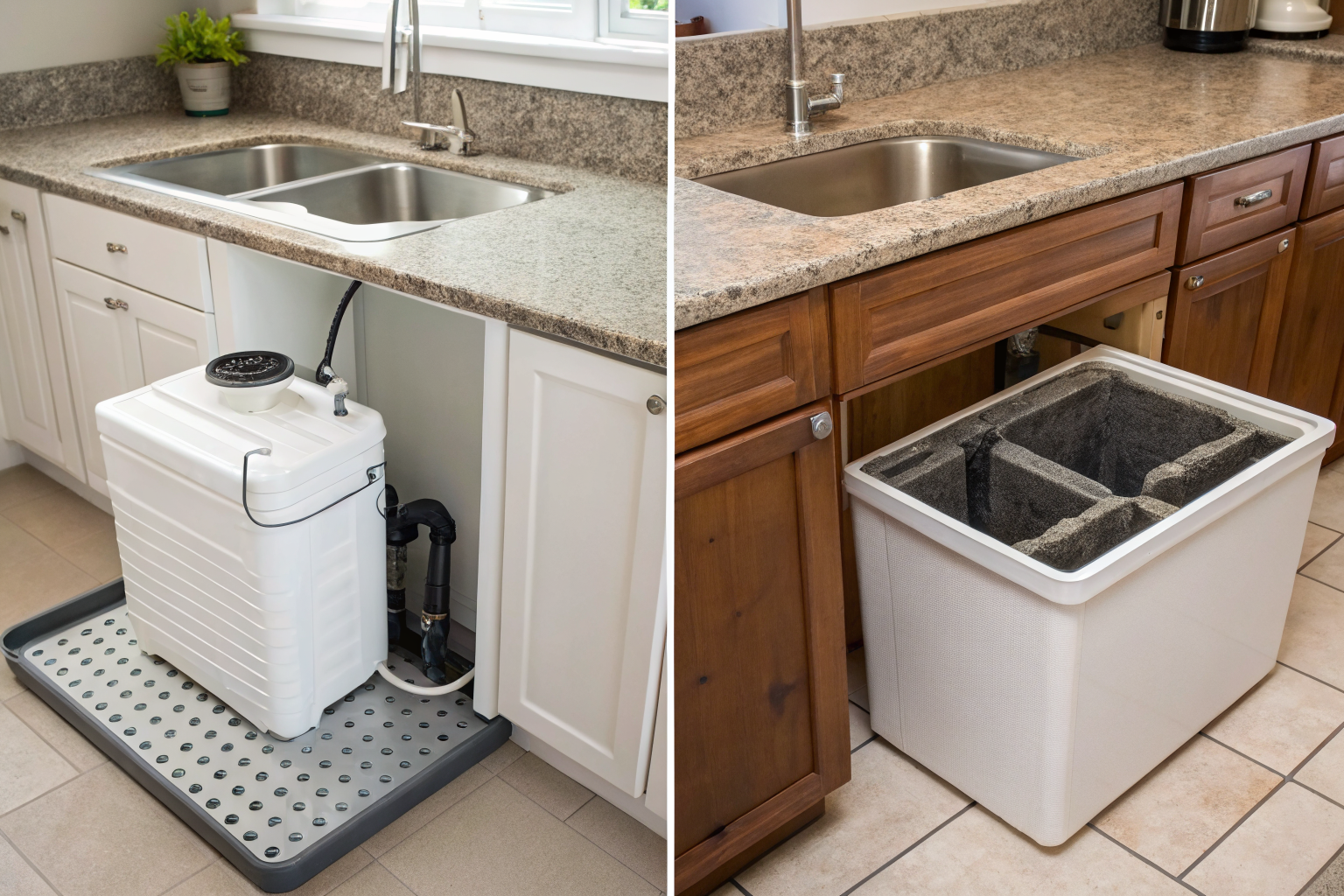
Hydromechanical grease traps suit residential applications better than large gravity interceptors. Home units range from compact under-sink models to larger basement installations.
| Feature | Under-Sink Units | Larger Residential Units |
|---|---|---|
| GPM Capacity | 4-10 GPM | 10-25 GPM |
| Installation | DIY possible | Professional required |
| Price Range | $150-500 | $800-2,500 |
| Maintenance | Monthly | Quarterly |
| Space Required | Cabinet space | Floor/basement area |
Under-sink hydromechanical units handle typical home kitchen flows. They connect between the sink drain and main waste line. These units work through flow restriction and grease separation, not gravity settling like commercial interceptors.
Automatic grease removal devices cost more but reduce maintenance frequency. These units heat and pump separated grease to collection containers. They work well for high-volume home cooking but require electrical connections.
Stainless steel construction lasts longer than plastic models. Plastic units cost 30-50% less but crack from temperature changes and chemical exposure. Most residential applications don’t justify the stainless steel premium unless you’re processing restaurant-level grease volumes.
How Do You Size a Grease Trap for Home Use?

Home kitchen flow rates determine grease trap sizing through a straightforward calculation process. Follow these steps for proper residential sizing:
Calculate total GPM flow – Add sink flow (2-3 GPM), dishwasher discharge (3-4 GPM), and any garbage disposal water (1-2 GPM). Most homes total 6-9 GPM peak flow.
Apply the 2x multiplier – Size your grease trap for double your calculated flow rate. This accounts for simultaneous fixture use and provides capacity buffer during heavy cooking periods.
Consider dishwasher connections – Some grease trap coffee shop setups require separate dishwasher routing. Home dishwashers typically connect through the garbage disposal, affecting your flow calculations.
Plan for future capacity – If you’re installing during a kitchen remodel or expect increased cooking volume, size up one capacity level. Adding a second sink or upgrading appliances later is expensive.
Gravity grease interceptors require 20+ GPM flows to function properly. Most home applications need 4-15 GPM capacity units, making hydromechanical traps the better choice for residential grease management.
Using a grease trap calculator helps verify your manual calculations and ensures proper sizing for your specific fixture combination.
What Are the Best Residential Grease Trap Options?

Grease interceptors vary in installation requirements, maintenance needs, and price points. Top residential models balance performance with reasonable maintenance demands.
| Feature | Zurn GT2700-15 | Watts GW-50 | Canplas 3925 |
|---|---|---|---|
| GPM Capacity | 15 GPM | 10 GPM | 7 GPM |
| Price Range | $400-550 | $200-300 | $150-200 |
| Material | Stainless steel | Cast iron | Plastic |
| Maintenance | Every 2-3 months | Monthly | Monthly |
| Installation | Professional | DIY possible | DIY friendly |
| Warranty | 5 years | 3 years | 1 year |
The Zurn GT2700-15 handles larger home operations with its 15 GPM capacity and stainless steel construction. Professional installation adds $300-500 but ensures code compliance and proper venting connections.
Watts GW-50 units offer middle-ground performance for standard home kitchens. Cast iron construction resists temperature damage while staying cost-effective. These units work well for homes crossing into grease trap code requirements territory.
Canplas 3925 models provide basic grease capture for light residential use. Plastic construction keeps costs low but requires more frequent replacement. Best for homes wanting simple grease management without major installation projects.
All models require monthly cleaning for optimal performance. Maintenance involves removing accumulated grease and cleaning internal baffles. Professional service costs $75-150 quarterly.
Frequently Asked Questions
Can I install a residential grease trap myself?
Most under-sink residential grease traps require basic plumbing skills and can be installed by homeowners. However, units requiring electrical connections or modifications to your main drain line should be installed by a licensed plumber to avoid code violations.
How often do residential grease traps need cleaning?
Home grease traps need cleaning every 1-3 months depending on cooking frequency and household size. Heavy cooking households may need monthly service, while light-use kitchens can extend to quarterly maintenance.
Will a grease trap help if I already have drain problems?
Grease traps prevent future buildup but won’t clear existing blockages in your drain lines. You’ll need professional drain cleaning first, then install a grease trap to prevent recurring problems.