
Free tool: Calculate your grease trap size in 60 seconds →
Tagged

commercial kitchen

Grease Trap Installation Cost: What to Budget for Equipment and Labor

Plumber installing grease trap under sink with complex piping in cinematic lighting.

Most restaurant owners get hit with grease trap installation cost that runs 40-60% higher than equipment prices alone. You see a $600 trap and budget $800, then face a $2,100 bill. Key Takeaways: Under-sink grease trap installations range from $800-2,400 including equipment and labor In-ground grease interceptor projects cost $3,000-15,000 with excavation representing 30-50% of … Read more
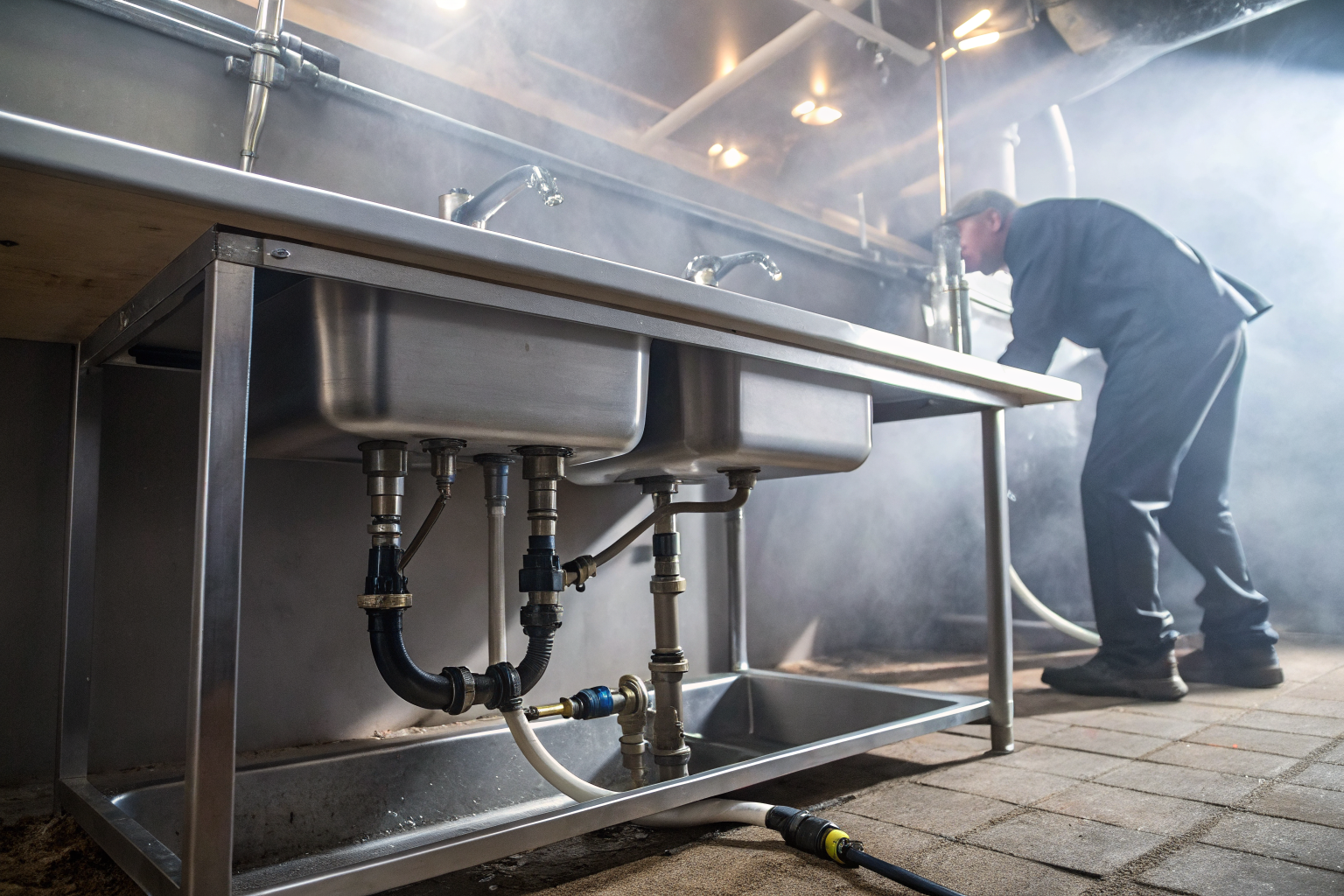
3-Compartment Sink Grease Trap Installation: Plumbing and Code

3-compartment sink with grease trap installation, detailed plumbing setup.

3 compartment sink grease trap installation fails most inspections because contractors ignore the Uniform Plumbing Code’s strict elevation and distance requirements. This creates expensive rework and delayed restaurant openings. Commercial grease trap systems need precise plumbing configuration to meet FOG regulations. Key Takeaways: Grease traps must sit at least 4 feet from 3-compartment sink fixtures … Read more

Underground Grease Interceptors: Guide to In-Ground Systems

Hyper-detailed underground grease interceptor with wastewater flowing in.

Underground grease trap systems face new mandates in major cities, forcing developers to choose between concrete and polyethylene interceptors costing $15,000-$45,000 installed. These gravity-fed units handle commercial flows that overwhelm standard grease trap types, making them essential for high-volume food service operations. Key Takeaways: Underground grease interceptors range from 500-3,000 gallons with concrete systems lasting … Read more

Above-Ground Grease Traps: When to Choose Floor-Mounted Over In-Ground

Floor-mounted grease trap in kitchen with dramatic lighting and fog.

Above ground grease trap systems solve the middle-capacity problem when your kitchen needs more than 20 GPM but excavation costs kill your budget. Floor-mounted units bridge the gap between cramped under-sink models and expensive in-ground interceptors. Key Takeaways: • Floor-mounted grease traps handle 50-100 gallon capacity ranges, filling the gap between under-sink units and underground … Read more

Grease Trap Permits: What to File Before You Install

Workers installing a grease trap in a commercial kitchen.

Grease trap permit violations can cost you $10,000 in fines and force you to tear out your entire plumbing system. Most restaurant owners don’t realize that installing without proper permits triggers automatic FOG violation citations. Key Takeaways: Permit approval takes 14-45 days depending on your municipality type Required documents include site plans, trap specifications, and … Read more

Does Your Dishwasher Connect to a Grease Trap? Code Requirements

Commercial dishwasher connecting to a grease trap in a dramatic, foggy setting.

Dishwasher grease trap connections confuse most commercial kitchen operators who assume dishwashers dump straight into grease traps, but code requirements vary by jurisdiction, and the wrong connection destroys your trap’s effectiveness. Key Takeaways:• Uniform Plumbing Code prohibits dishwasher connections to grease interceptors due to high-temperature bypass risks• International Plumbing Code allows connections but requires water … Read more

Grease Trap for a 3-Compartment Sink: Sizing and Connection Guide

3-compartment sink setup with grease trap and connections in high detail.

3 compartment sink grease trap sizing determines whether your kitchen passes health inspections or gets shut down. One wrong calculation leaves you with an undersized trap that fails when inspectors arrive. Key Takeaways: Standard 3-compartment sinks require 15-25 GPM flow rates, driving 30-50 pound grease trap sizing Maximum 10-foot distance between sink and grease trap … Read more

Grease Trap vs Septic Tank: How They Work Together

Grease trap and septic tank with dramatic lighting and fog.

Grease trap vs septic tank confusion costs rural restaurants $3,000 in system failures. These complementary systems work in sequence, grease traps remove fats oils and grease (FOG) before wastewater enters septic tanks for biological treatment. Key Takeaways: • Grease traps install before septic tanks in the drain line sequence, they’re complementary systems, not alternatives• Septic … Read more

Grease Trap vs Grease Interceptor: What’s the Difference?

Grease trap and interceptor with dramatic lighting and fog.

Grease trap vs grease interceptor confusion causes most restaurant owners to discover they picked the wrong grease management system only after failing a health inspection. Understanding what is a grease trap versus an interceptor prevents expensive retrofits and code violations. Key Takeaways: Grease traps handle 20 GPM or less, while interceptors process 50-1000+ GPM for … Read more