

Most restaurant owners get hit with grease trap installation cost that runs 40-60% higher than equipment prices alone. You see a $600 trap and budget $800, then face a $2,100 bill.
Key Takeaways:
- Under-sink grease trap installations range from $800-2,400 including equipment and labor
- In-ground grease interceptor projects cost $3,000-15,000 with excavation representing 30-50% of total expense
- Labor typically equals 50-80% of equipment cost, while permits and inspections add another $200-800
How Much Does Grease Trap Installation Cost by Type?

Grease trap installation costs vary dramatically based on the type and complexity of the system. Installation type directly determines the price range you’ll face.
| Grease Trap Type | Equipment Cost | Labor Cost | Total Installed Cost |
|---|---|---|---|
| Under-sink (20-50 GPM) | $300-800 | $500-1,600 | $800-2,400 |
| Floor-mounted (75-100 GPM) | $800-2,200 | $800-2,500 | $1,600-4,700 |
| In-ground interceptor (500+ GPM) | $2,500-8,000 | $1,500-7,000 | $4,000-15,000 |
Under-sink units cost $300-800 for equipment plus $500-1,600 for labor, totaling $800-2,400 installed. These systems require minimal plumbing modifications but demand precise inlet outlet elevation to function properly.
Floor-mounted traps jump to $1,600-4,700 installed because they need dedicated floor drains and often require concrete cutting. The installation plumbing configuration becomes more complex with multiple connection points.
In-ground systems cost $4,000-15,000 because excavation dominates the project. You’re paying for concrete cutting, soil removal, backfill, and restoration. A 1,000-gallon grease interceptor that costs $4,000 can require $6,000 in excavation work.
The cost spread exists because trap placement requirements differ by site. A straight drop-in replacement costs 40% less than a system requiring new drain runs or electrical connections.
What Drives Labor Costs in Grease Trap Installation?

Labor costs range from 50-80% of equipment cost depending on installation complexity. Labor factors determine the final pricing more than the trap itself.
Plumbing complexity increases hourly rates. Simple under-sink connections take 4-6 hours at $85-120 per hour. Complex installations requiring new drain lines can take 12-16 hours.
Access restrictions multiply labor time. Basement installations or tight spaces can double work hours. Technicians need room to maneuver pipes and equipment safely.
Code compliance requires certified installers. The Uniform Plumbing Code mandates licensed plumbers for most commercial grease trap installation projects. Licensed rates run $95-150 per hour versus $65-90 for general contractors.
Regional wage differences affect total cost. Metropolitan areas charge 30-50% more than rural locations. California and New York installations cost significantly more than Texas or Alabama projects.
Concrete cutting adds specialized equipment. Breaking through concrete floors requires diamond blade saws and dust extraction systems. This adds $200-500 in equipment rental costs.
Installation plumbing configuration complexity determines whether you pay the minimum or maximum labor rate. Straight connections cost less than custom routing around existing utilities.
Do I Need Permits and What Do They Cost?

A permit is official approval from your local building department to install plumbing equipment that connects to municipal systems. This means you cannot legally install a commercial grease trap without proper permits in most jurisdictions.
Permit fees range $150-600 depending on project scope and location. Simple under-sink installations typically require basic plumbing permits at the lower end. In-ground interceptors need both plumbing and excavation permits, pushing costs higher.
Inspection fees add another $100-300 to your total. Most areas require rough-in inspections before backfill and final inspections before operation. Some jurisdictions charge per inspection, others include multiple visits in a flat fee.
The total timeline runs 2-6 weeks from permit application to final approval. Rush processing costs an additional 50-100% in permit fees. The Uniform Plumbing Code requires permits for any grease trap connecting to municipal sewer systems.
Skipping permits creates bigger problems than the initial cost. Code enforcement can force removal of unpermitted installations, costing double the original project budget to rectify.
What Hidden Costs Should You Budget For?

Hidden costs add 15-35% to initial quotes in 60% of commercial installations. Hidden expenses increase the total project cost beyond equipment and basic labor.
Elevation adjustments require additional plumbing work. Inlet outlet elevation must match existing drain heights. Modifications cost $300-800 when the trap doesn’t align with current plumbing.
Utility relocations happen during excavation. Gas lines, electrical conduits, or water pipes often need temporary or permanent relocation. This adds $500-2,000 in coordination costs.
Code upgrades trigger additional requirements. Installing new equipment can require bringing existing plumbing up to current code standards. Vent modifications or drain line upgrades add $400-1,200.
Concrete restoration costs more than cutting. Breaking concrete costs $3-8 per square foot, but restoration runs $8-15 per square foot for proper finishing.
Access equipment rental extends project time. Tight spaces might require mini-excavators or specialized lifting equipment at $200-400 per day.
Permit fees and hidden costs compound when contractors discover issues during installation. Always request detailed quotes that specify what’s included versus additional charges.
How Do You Plan Your Grease Trap Installation Budget?

Budget planning requires a systematic approach to avoid cost overruns. A structured planning process helps control expenses and timeline.
Conduct a professional site assessment first. Have a licensed plumber evaluate your space, existing plumbing, and access requirements. This costs $150-300 but prevents surprise charges later.
Get three detailed quotes from certified installers. Each quote should itemize equipment, labor hours, permit fees, and potential additional costs. Trap placement requirements vary by installer experience.
Add a 20% contingency for unexpected issues. Underground utilities, code changes, or access problems surface in most projects. Budget the extra funds upfront rather than scrambling during installation.
Plan installation during slower business periods. Schedule work when you can afford 1-3 days of reduced kitchen capacity. Weekend installations cost 25-40% more in labor premiums.
Coordinate permits and inspections early. Submit permit applications 3-4 weeks before your planned installation date. Inspection delays can extend project timelines significantly.
Verify contractor insurance and licensing. Unlicensed work voids warranties and creates liability issues. Licensed contractors cost more but provide protection against faulty installations.
The budget planning framework should account for business disruption costs beyond direct installation expenses.
When Does Replacement Cost More Than New Installation?
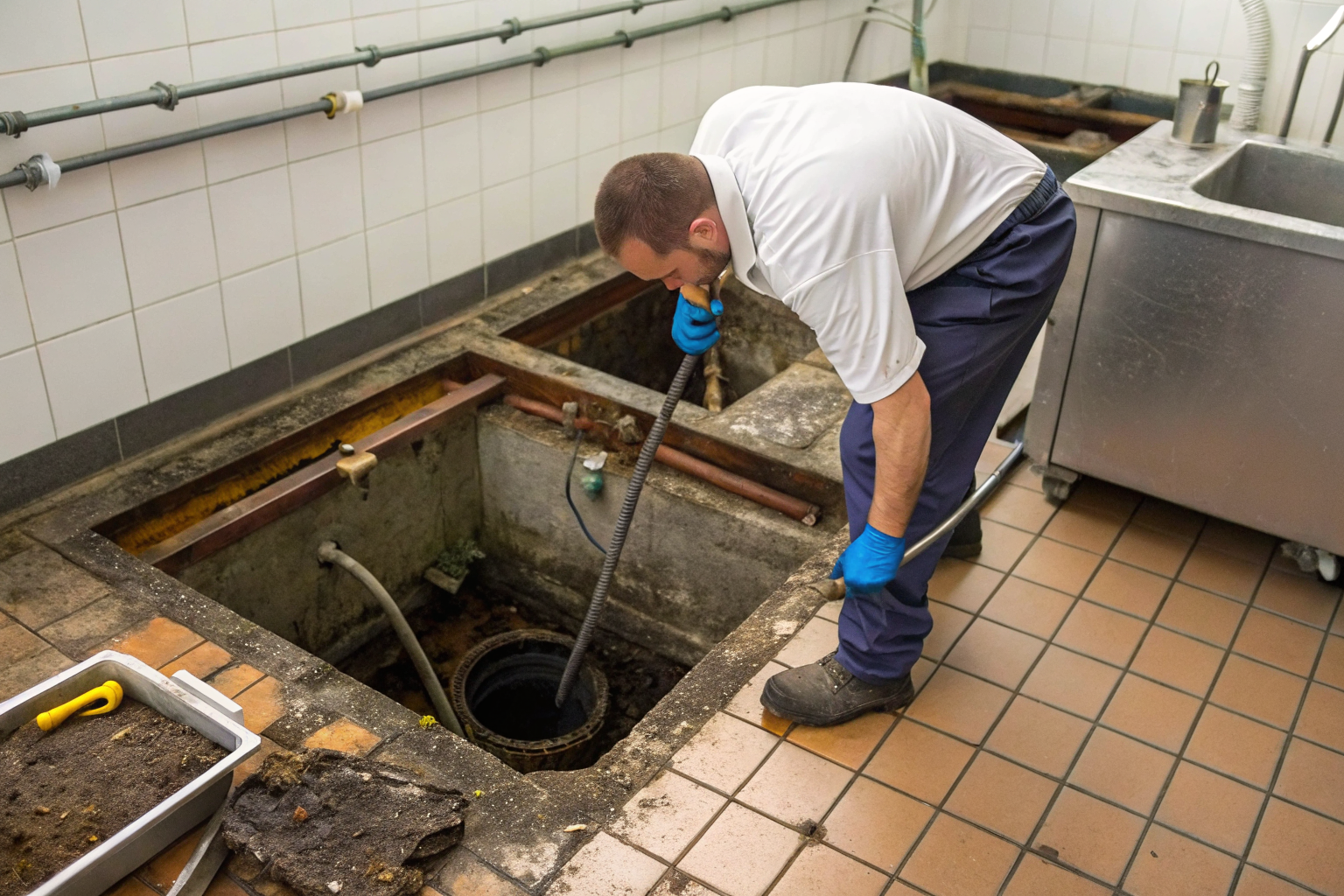
Replacement costs run 20-40% more than new installation due to removal and disposal fees. Replacement scenarios cost more than new installations when existing systems create complications.
| Factor | New Installation | Replacement Installation |
|---|---|---|
| Equipment removal | Not required | $200-800 labor |
| Disposal fees | Not applicable | $100-400 |
| Access modifications | Plan around | Must work with existing |
| Code compliance | Current standards | Retroactive upgrades |
Removing an existing grease interceptor requires pumping, disconnection, and proper disposal. The old unit might contain fats oils and grease that requires hazardous waste handling at $150-400.
Access issues multiply during replacement because you must work within existing constraints. New installations allow optimal placement, while replacements force compromises that increase labor time.
Code changes between original installation and replacement often trigger upgrade requirements. A 1990s system might need new venting, different materials, or additional capacity to meet current standards.
The decision point: if replacement costs exceed 70% of new installation pricing, consider relocating the system entirely. This provides better long-term performance and eliminates ongoing access problems.
Evaluate replacement versus repair when your existing system faces major issues. Sometimes complete replacement delivers better value than attempting to salvage an outdated grease interceptor.
Frequently Asked Questions
Can I install a grease trap myself to save on labor costs?
Most jurisdictions require licensed plumbers for grease trap installations due to code compliance and permit requirements. DIY installation typically voids warranties and fails inspections. Professional installation ensures proper inlet outlet elevation and trap placement requirements.
Do larger grease traps cost proportionally more to install?
Installation costs don’t scale linearly with size. Under-sink units have similar labor regardless of GPM rating. Floor-mounted and in-ground systems see dramatic cost increases due to excavation, concrete work, and access requirements.
What happens if I skip the permit to save money?
Installing without permits risks fines, forced removal, and insurance claim denials. Most areas require permits for any grease trap installation connecting to municipal systems. Retrofitting permits after installation typically costs double the original fee.