
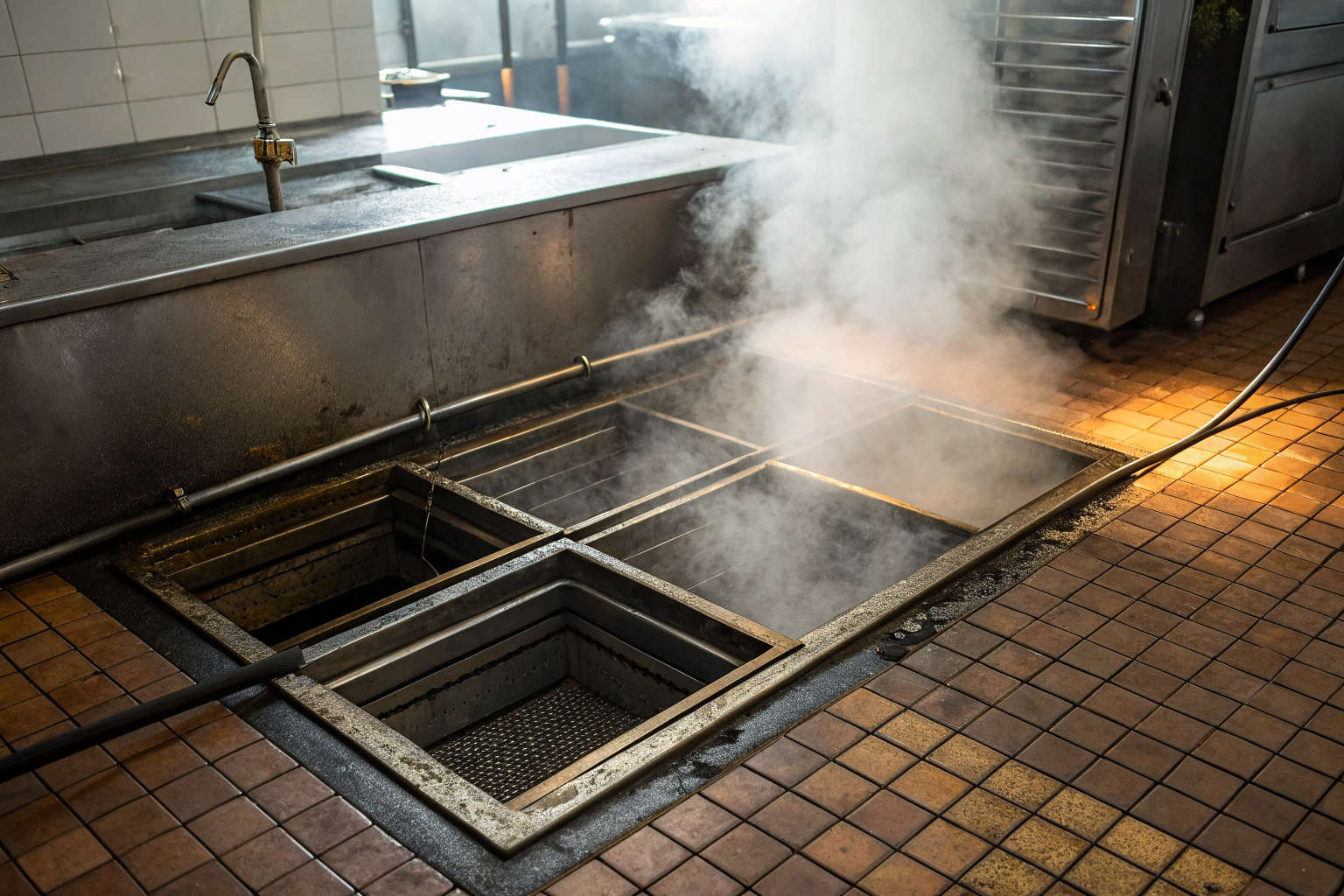
Grease trap enzyme products flood restaurant supply catalogs, promising to cut commercial grease trap pumping costs in half. Cities nationwide fine restaurants up to $2,000 daily for using these prohibited additives that vendors swear will solve FOG problems.
Key Takeaways:
- Most cities ban chemical emulsifiers and enzymes with fines ranging from $500-$2,000 per day
- Bio-enzymatic products cannot replace the 25% rule cleaning schedule required by law
- Only bacterial treatments designed specifically for grease traps avoid most municipal bans
Do Grease Trap Enzymes Actually Work?

Bio-enzymatic products are liquid treatments containing bacteria and enzymes that claim to break down fats oils and grease in commercial kitchen drains. This means they attempt to digest FOG at the molecular level rather than physically separating it like traditional grease trap cleaning methods.
The science behind enzyme action is real. Lipase enzymes do break down fat molecules into smaller components. However, the practical results in grease traps tell a different story.
Most enzyme products reduce FOG by 15-30% but cannot eliminate the need for pumping. The fundamental problem is that grease traps work through mechanical separation, not biological digestion. Even if enzymes break down some grease, the sheer volume of FOG from busy kitchens overwhelms any biological treatment capacity.
Grease trap biological treatment faces three major obstacles. First, the retention time in most traps is too short for complete enzyme action. Second, the high-fat environment actually inhibits bacterial growth. Third, temperature fluctuations from hot dishwater kill beneficial bacteria before they can establish colonies.
Restaurants that rely on enzyme products still face the same FOG accumulation patterns. The grease may be partially liquefied, but it solidifies again downstream, often creating worse blockages in municipal sewer lines.
Which Cities Ban Grease Trap Additives and What Are the Penalties?

Major metropolitan areas across the United States have implemented strict prohibitions on grease trap additives after discovering they cause expensive treatment plant problems. Cities ban grease trap additives because emulsified grease creates higher biochemical oxygen demand in municipal water treatment facilities.
New York City fines reach $2,000 per day while Los Angeles starts at $500 per violation. Enforcement has increased dramatically since 2019 as cities track FOG-related infrastructure damage back to specific restaurants.
| City | Daily Fine | Enforcement Method | Additional Penalties |
|---|---|---|---|
| New York City | $2,000 | Quarterly inspections | Permit suspension after 3 violations |
| Los Angeles | $500-1,500 | Random sampling | $10,000 equipment replacement requirement |
| Chicago | $750 | Complaint-driven | 30-day closure for repeat offenders |
| Houston | $1,000 | Annual audits | Criminal charges for willful violations |
| San Francisco | $2,500 | Monthly monitoring | $25,000 infrastructure damage fees |
Violation detection has become more sophisticated. Cities now test grease samples for chemical signatures that indicate additive use. San Francisco’s FOG program uses spectral analysis to identify banned surfactants, making it nearly impossible for restaurants to hide chemical use.
Restaurants caught using prohibited additives face escalating consequences. First violations typically result in warning notices with 30-day correction periods. Second violations trigger daily fines that continue until compliance is verified. Third violations can result in operating permit suspension, effectively shutting down the restaurant.
The financial impact extends beyond fines. Insurance companies increasingly deny coverage for FOG-related damages when prohibited additives are involved, leaving restaurant owners personally liable for municipal infrastructure repairs that can exceed $50,000.
Chemical Emulsifiers vs Bio-Enzymatic Products: Safety and Legal Status

Chemical emulsifiers represent the most dangerous category of grease trap additives, using synthetic surfactants to break surface tension and disperse grease into municipal sewer systems. Chemical emulsifiers cause downstream pollution by preventing proper grease separation at treatment plants, leading to universal municipal bans.
Bio-enzymatic products occupy a gray area in most jurisdictions. While not as immediately harmful as chemical emulsifiers, they still present problems for municipal water treatment systems.
| Product Type | Legal Status | Primary Risk | Municipal Response |
|---|---|---|---|
| Chemical Emulsifiers | Universally banned | BOD increase up to 400% | $500-2,500 daily fines |
| Synthetic Enzymes | Banned in most cities | Treatment plant disruption | $200-1,000 penalties |
| Bacterial Treatments | Mixed legal status | Inconsistent performance | Warning notices typically |
| Surfactant Blends | Strictly prohibited | Pipe corrosion acceleration | Criminal charges possible |
| Natural Enzymes | Legal in some areas | Minimal documented harm | Usually no penalties |
Chemical emulsifiers can increase BOD levels by 400% in municipal treatment plants. This forces cities to use additional chemicals and energy to process wastewater, dramatically increasing operational costs that get passed to taxpayers through higher sewer fees.
The key difference lies in mechanism. Chemical emulsifiers simply hide grease by breaking it into microscopic particles that pass through grease traps undetected. Bio-enzymatic products attempt actual digestion, though their effectiveness remains limited.
Most cities have learned to distinguish between products that complement proper grease management versus those that attempt to replace it. Products marketed as grease trap replacements or pumping eliminators face immediate prohibition, while bacterial treatments positioned as maintenance aids may receive regulatory approval.
What Products Are Actually Safe to Use in Grease Traps?

Approved products maintain grease trap pumping service schedules rather than attempting to eliminate them. Only 12% of bio-enzymatic products on the market are specifically formulated to avoid municipal bans by focusing on odor control and minor FOG reduction rather than complete grease elimination.
Safe grease trap treatment options include:
Bacterial cultures designed for grease digestion – These products contain specific bacterial strains that consume small amounts of grease without disrupting municipal treatment processes
Odor control enzymes – Focused on breaking down proteins that cause hydrogen sulfide smells rather than attacking grease directly
pH balancing treatments – Help maintain optimal conditions for natural bacterial activity without adding prohibited surfactants
Biofilm digesters – Target the sticky films that trap debris in grease traps without liquefying the grease itself
Natural bacterial boosters – Introduce beneficial bacteria that occur naturally in grease traps but may be depleted by harsh cleaning chemicals
The safest approach involves products that carry municipal approval letters from your specific jurisdiction. Many manufacturers now provide city-by-city compliance documentation showing which formulations meet local FOG ordinance requirements.
Bacterial treatments must be designed specifically for grease trap environments to avoid violations. General-purpose drain cleaners or septic treatments often contain prohibited chemicals that trigger automatic fines during routine inspections.
How Do Additives Affect Your Grease Trap Pumping Schedule?

Additives cannot override the 25% rule mandated by municipal FOG ordinances regardless of their claimed effectiveness. Licensed grease hauler services must still monitor grease accumulation levels and pump when solids reach 25% of trap capacity.
FOG cleaning frequency remains tied to actual accumulation rates, not manufacturer promises about enzyme effectiveness. Restaurants that reduce pumping frequency based on additive marketing face immediate code violations when inspectors measure actual grease levels.
Some products actually increase pumping needs by liquefying grease that later solidifies downstream in the collection system. This creates blockages that require emergency pump-outs and expensive pipe cleaning services.
Restaurants using unapproved additives average 23% more emergency pumping calls because liquefied grease creates unpredictable accumulation patterns. The enzymes may reduce visible grease in the trap while creating hidden buildup in the outlet piping.
Proper additive use should complement the established pumping schedule, not replace it. Products that claim to extend time between cleanings beyond regulatory limits automatically violate most municipal codes, regardless of their actual performance.
The most dangerous misconception involves restaurants that skip scheduled pumping because enzyme products appear to reduce grease levels. This leads to trap overflow events that trigger maximum penalty assessments and potential criminal charges for willful code violations.
Kitchen Best Practices That Actually Reduce FOG Without Additives

Kitchen best management practices reduce FOG loading at the source through systematic operational changes that provide measurable, compliant results. Proper plate scraping reduces grease trap FOG accumulation by 40-60% without any chemical additives or regulatory risks.
Implement these proven FOG reduction steps:
Install grease collection containers at all prep stations – Collect solid fats and cooking oils before they enter the drain system
Require complete plate scraping before washing – Remove all food debris and visible grease using rubber scrapers, not water pressure
Control water temperature during dishwashing – Keep wash water below 140°F to prevent grease liquefaction that passes through the trap
Train staff on proper disposal methods – Teach employees to recognize FOG sources and use dry cleanup methods first
Schedule equipment maintenance during low-flow periods – Clean fryers and grills when minimal wastewater flows to the grease trap
Monitor cooking oil disposal procedures – Ensure used oil goes to recycling containers, not down drains
These operational changes cost nothing beyond staff training time but deliver consistent FOG reduction that enzyme products cannot match. Temperature control alone prevents 30-40% of grease from reaching the trap by keeping fats in solid form during the washing process.
Staff training on fats oils and grease identification helps kitchen workers recognize problem sources before they become drain clogs. Simple changes like using paper towels instead of hot water to clean cutting boards reduce daily FOG loading by measurable amounts.
Frequently Asked Questions
Can enzymes eliminate the need for grease trap pumping?
No enzyme or biological product can eliminate pumping requirements. The 25% rule mandates cleaning when grease and solids reach 25% of the trap’s capacity, regardless of additives used. Municipal codes base pumping frequency on measured accumulation, not product marketing claims.
What happens if I get caught using banned grease trap chemicals?
Penalties range from $500-$2,000 per day depending on your city’s ordinance. Repeat violations can result in permit suspension and forced restaurant closure until compliance is achieved. Insurance companies may also deny coverage for FOG-related damages when prohibited additives are involved.
Are there any grease trap additives that work and are legal?
Some bacterial treatments specifically designed for grease traps are legal in most jurisdictions. However, they supplement proper grease trap maintenance rather than replace it and must be verified against your local FOG ordinance. Products must carry municipal approval documentation to ensure compliance.