
Grease trap inspection failures cost restaurant owners time, money, and operational headaches. FOG program inspectors show up with clipboards and measuring sticks, checking four critical areas that 73% of first-time inspected restaurants fail to meet.
Key Takeaways:
- Inspectors check 4 categories: documentation compliance, physical trap condition, FOG levels, and waste manifests, missing any category triggers violations
- Common instant-fail items include FOG levels above 25% capacity, missing waste manifests from the past 90 days, and cracked baffles allowing grease bypass
- Inspection frequency ranges from monthly (high-volume operations) to annually (small cafes), based on your FOG control program classification
What Do Grease Trap Inspectors Actually Look For?

FOG inspectors examine four inspection categories during every visit. Each category has specific pass/fail criteria that determine your compliance status. Understanding these categories prevents costly violations and keeps your commercial grease trap operation running smoothly.
The FOG control program establishes inspection standards that align with EPA 40 CFR 403 requirements. Inspectors follow standardized checklists to ensure consistent enforcement across all food service establishments.
| Inspection Category | Pass Criteria | Instant Fail Triggers |
|---|---|---|
| Documentation | Current permits, 90-day manifests, service contracts | Missing permits, gaps in waste manifest documentation |
| Physical Condition | Intact baffles, sealed gaskets, structural integrity | Cracked baffles, damaged gaskets, structural damage |
| FOG Accumulation | Below 25% of trap capacity | FOG levels at or above 25% capacity |
| Operational Compliance | Regular cleaning schedules, proper maintenance | Overdue cleaning, improper disposal methods |
Inspectors spend most of their time measuring FOG accumulation levels and verifying waste manifest documentation. These two categories generate the highest violation rates because restaurant staff often underestimate accumulation speed or lose track of disposal records.
Which Documents Must You Have Ready for Inspection?

Restaurant owners must provide specific documentation during inspections. Missing paperwork triggers automatic violations regardless of your trap’s physical condition or FOG levels.
Current grease trap permits from your local jurisdiction. These permits prove your system meets municipal requirements and capacity specifications for your facility size.
Waste manifests from the past 90 days showing proper FOG disposal. Each manifest must include pickup dates, volumes removed, and licensed hauler information with valid signatures.
Active cleaning service contracts with licensed grease trap maintenance companies. Contracts must specify cleaning frequency, emergency response procedures, and compliance with local grease trap requirements.
FOG control program enrollment documentation showing your restaurant’s classification status. This paperwork determines your inspection schedule and compliance obligations under municipal regulations.
Maintenance logs with dated entries for all trap servicing activities. Logs must include cleaning dates, FOG removal volumes, and technician signatures to verify proper record-keeping.
The 90-day documentation requirement catches many restaurant owners off guard. Inspectors need continuous records showing regular FOG removal, not just recent service receipts. Start building your documentation trail immediately after your grease trap permit process concludes.
What Physical Conditions Cause Instant Inspection Failures?

Physical defects trigger immediate FOG violation citations during inspections. These conditions indicate system failures that allow fats oils and grease to bypass treatment and enter municipal wastewater systems.
FOG accumulation above 25% of total trap capacity creates automatic violations. Inspectors measure FOG depth with calibrated dipsticks and calculate percentages based on your trap’s rated capacity specifications.
Cracked or missing baffles that allow untreated grease to flow directly to outlets. Baffles control water flow patterns inside traps, and any structural damage compromises the separation process completely.
Damaged gaskets around trap covers that release sewer odors into dining areas. Broken gaskets indicate poor maintenance and create health code violations beyond FOG program compliance issues.
Structural cracks in trap walls or bottoms that leak contents into surrounding soil. These defects create environmental contamination risks and require immediate trap replacement or professional repair services.
Blocked or missing vent systems that prevent proper trap operation. Adequate venting prevents vacuum conditions that disrupt FOG separation and allows sewer gases to escape safely.
The 25% FOG accumulation threshold generates more instant failures than any other single factor. Restaurant operators often wait until grease becomes visible before scheduling cleanings, but inspectors measure total accumulation including the grease layer below the surface.
How Often Will Your Restaurant Face Grease Trap Inspections?

Inspection frequency varies by restaurant classification and jurisdiction under FOG control program guidelines. High-volume operations face monthly visits while smaller establishments get annual inspections based on their FOG generation rates.
| Restaurant Type | Inspection Frequency | Volume Threshold |
|---|---|---|
| High-volume restaurants | Monthly | 300+ meals/day or fryer operations |
| Medium operations | Quarterly | 100-300 meals/day |
| Small cafes | Semi-annually | Under 100 meals/day |
| Repeat violators | Weekly | Any size with 2+ violations |
Jurisdictions calculate inspection schedules based on several factors including seating capacity, menu complexity, and violation history. Restaurants using fryers or preparing large quantities of fried foods automatically qualify for more frequent inspections regardless of seating count.
Repeat violators face escalated inspection schedules until they demonstrate consistent compliance. Once you receive two violations within a 12-month period, inspectors switch to weekly visits until you complete six consecutive passing inspections.
Some municipalities delegate inspection authority to county health departments while others maintain city-level FOG control programs. Check your local jurisdiction’s specific schedule requirements because inspection frequencies can vary significantly between neighboring communities.
How to Prepare for FOG Program Inspections: Owner’s Checklist

Restaurant owners follow preparation steps before inspections to ensure compliance across all categories. This systematic approach prevents oversights that lead to violations and costly re-inspections.
Gather all required documentation including permits, manifests, and service contracts 24 hours before scheduled inspections. Organize paperwork in chronological order to help inspectors verify continuous compliance quickly.
Measure current FOG levels using a dipstick to confirm accumulation stays below 25% capacity. Schedule emergency cleaning if levels approach the violation threshold before your inspection date.
Inspect physical trap condition including baffles, gaskets, and structural integrity for visible damage. Replace worn gaskets and repair minor issues before inspectors identify them as violations.
Verify cleaning service compliance by confirming your contractor maintains current licenses and insurance coverage. Request updated certificates if your service provider’s credentials expire soon.
Test baffle system operation by running water through connected fixtures and observing flow patterns inside the trap. Proper baffles create turbulence that separates grease from wastewater effectively.
Check vent system function to ensure proper airflow and odor control throughout the trap assembly. Clear any blockages in vent pipes that could create pressure problems during operation.
Prepare staff to answer inspector questions about cleaning schedules, disposal procedures, and waste manifest documentation. Train managers to locate specific records quickly during the inspection process.
Complete this checklist 48 hours before scheduled inspections when possible. Last-minute preparations often miss critical details that experienced inspectors notice immediately.
What Happens During a Typical Grease Trap Inspection?
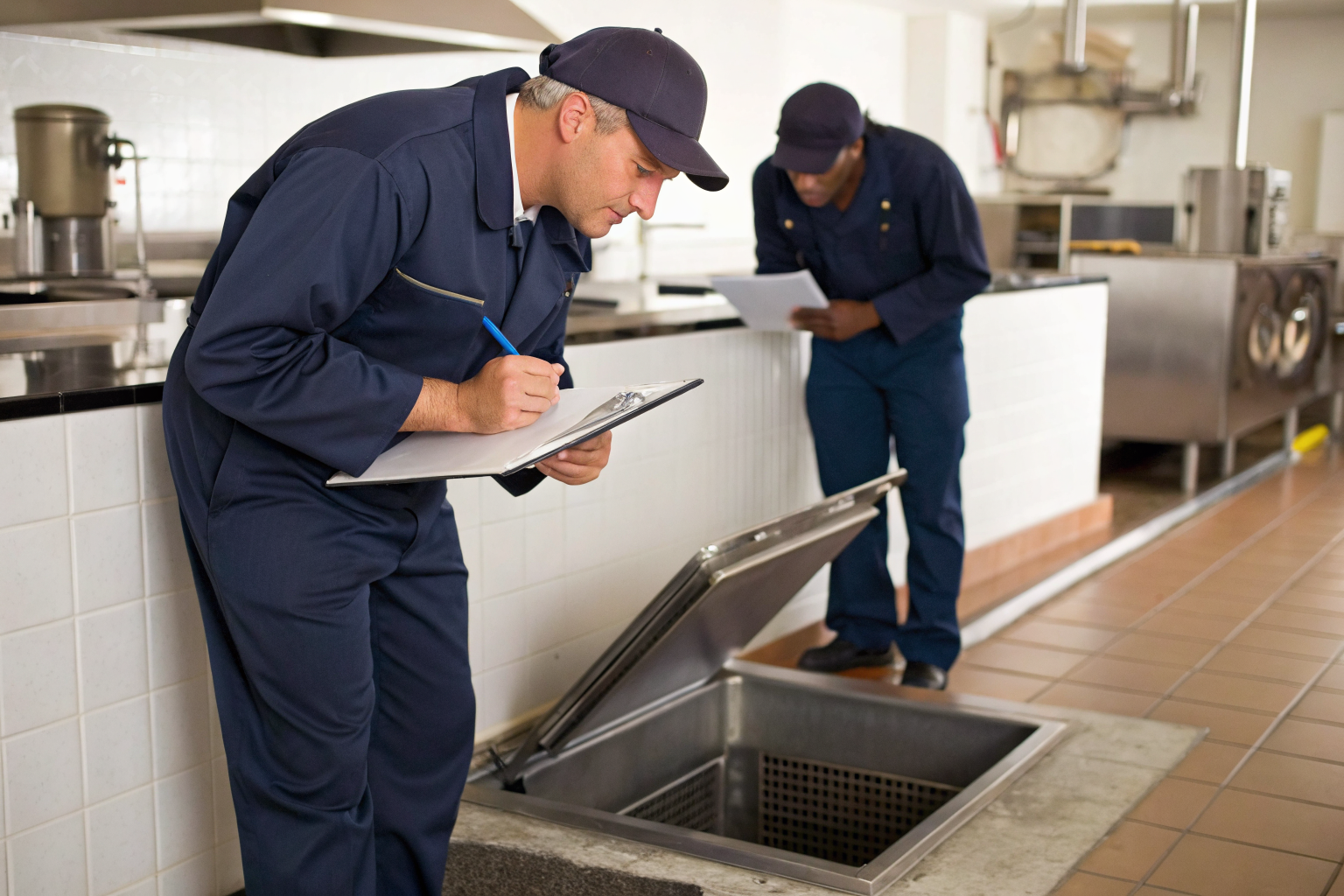
FOG inspectors follow standardized inspection protocols during site visits. Understanding this process helps restaurant owners prepare effectively and avoid common mistakes that trigger violations.
Documentation review takes 10 minutes as inspectors verify permits, waste manifests, and service contracts. Inspectors check dates, signatures, and gaps in your disposal records to confirm continuous compliance.
Physical inspection and FOG measurement requires 15 minutes for trap access, visual examination, and accumulation testing. Inspectors use calibrated measuring devices to determine exact FOG percentages and photograph any defects.
Compliance verification against EPA 40 CFR 403 standards includes cross-checking your operation against federal pretreatment requirements. Inspectors confirm your trap capacity matches your facility’s actual FOG generation rates.
Violation notation documents any non-compliance issues with specific citations and photographic evidence. Inspectors record exact measurements, missing documentation, and physical defects in official reports.
Compliance timeline establishment sets correction deadlines for identified violations, typically 30 days for minor issues. Serious violations like structural damage may require immediate trap shutdown until repairs are completed.
The entire inspection process typically takes 25-30 minutes for compliant facilities. Violations extend inspection time as inspectors document problems and explain correction requirements. FOG control program administrators review inspection reports and issue formal violation notices within 5 business days.
Inspectors cannot provide specific repair recommendations but will explain which conditions must change to achieve compliance. Contact licensed grease trap contractors immediately after receiving violation notices to begin correction work.
Frequently Asked Questions
Can inspectors show up without notice?
Most jurisdictions require 24-48 hours written notice before grease trap inspections. However, complaint-driven inspections and follow-up visits after violations can happen without advance warning.
What happens if I fail my grease trap inspection?
First violations typically result in 30-day correction periods with re-inspection required. Repeat violations escalate to fines ranging from $500-5000 per day until compliance is achieved.
Do inspectors actually measure FOG levels in the trap?
Yes, inspectors use dipsticks or measuring devices to check FOG accumulation depth. Levels above 25% of total trap capacity trigger automatic violations regardless of other compliance factors.
Can I request a different inspector if mine seems unreasonable?
You can file appeals through your local FOG control program administrator, but inspection results stand until the formal appeal process concludes. Most jurisdictions have standardized criteria that reduce inspector subjectivity.