
Most restaurant owners discover what is a grease trap the hard way when health inspectors show up or their sewer line backs up into the dining room. These critical devices prevent catastrophic plumbing failures and keep your business compliant with federal wastewater regulations.
Key Takeaways:
• Grease traps prevent 85-95% of fats, oils, and grease from entering municipal sewer systems
• Federal law requires food service establishments generating 25+ gallons of wastewater daily to install grease management systems
• Operating without required grease traps can result in fines ranging from $2,500 to $25,000 per violation
What Are Fats, Oils, and Grease (FOG)?

Fats, oils, and grease (FOG) is the collective term for lipids discharged from commercial kitchen operations. This includes animal fats from meat preparation, cooking oils from fryers and sautéing, butter and margarine from baking, and grease residue from dishwashing operations.
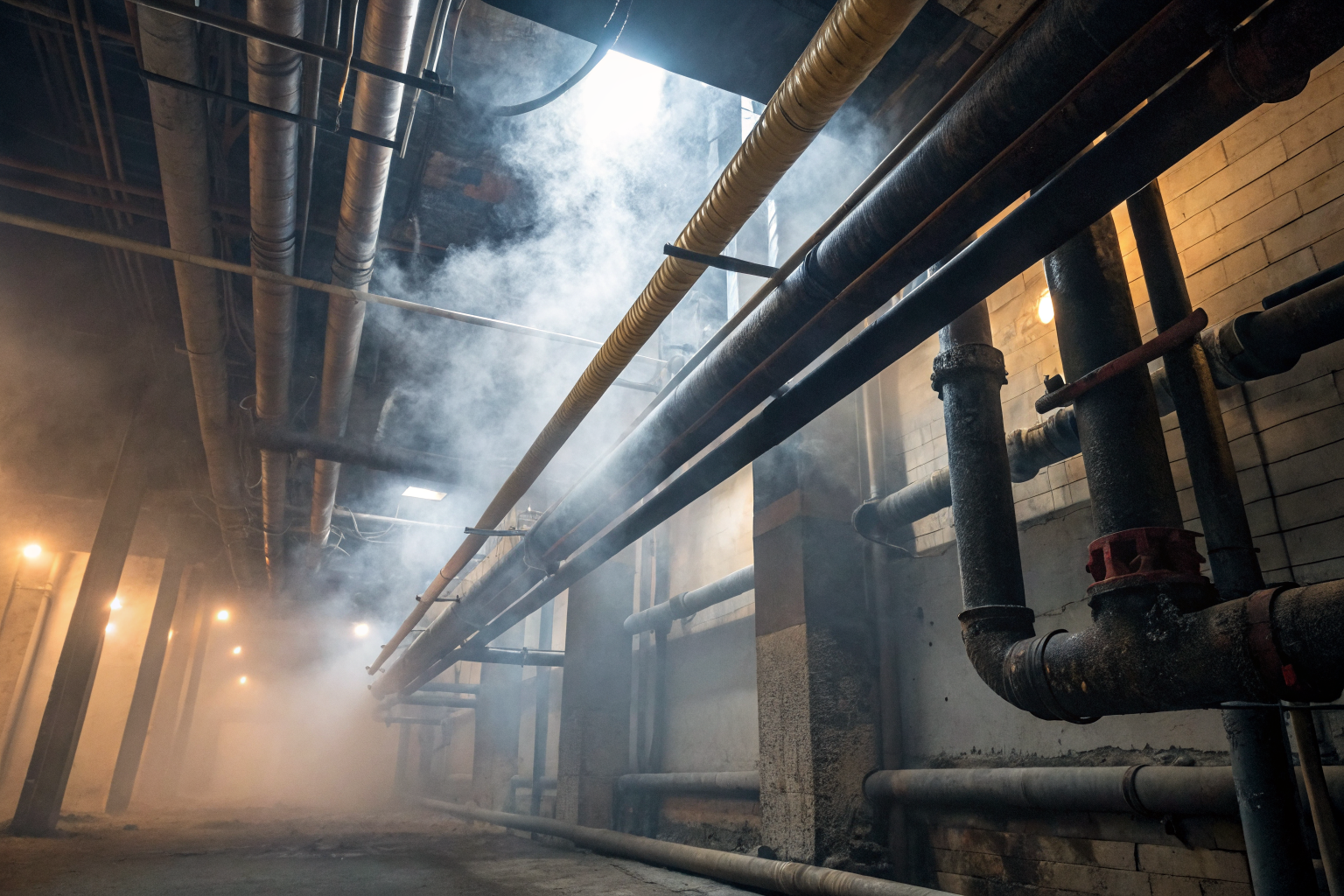
FOG causes sewer blockages through a predictable process. Hot wastewater carries liquid FOG into pipes, where it cools and solidifies into thick deposits that accumulate over time. These deposits restrict water flow, eventually creating complete blockages that force wastewater back up through drains.
The infrastructure damage extends beyond individual restaurants. FOG causes 47% of all sewer backups in commercial districts, creating sanitary sewer overflow events that contaminate waterways and require expensive emergency response. Municipal treatment plants spend millions annually removing FOG that should have been trapped at the source.
Commercial grease trap systems address this problem by capturing FOG before it enters the public sewer system. Without proper FOG management, restaurants face operational shutdowns, health department violations, and liability for environmental damage caused by their wastewater discharge.
How Do Grease Traps Work?

Grease traps separate FOG from wastewater using a simple but effective process based on density differences and controlled flow rates. The baffle system creates multiple chambers that slow water movement and allow separation to occur naturally.
Wastewater enters the first chamber where the flow restrictor reduces velocity to prevent turbulence that would remix separated materials.
FOG floats to the surface while heavier food particles sink to the bottom, creating three distinct layers in each chamber.
Baffles direct water flow downward between chambers, forcing the middle water layer to exit while trapping FOG at the surface.
Clean water exits through the outlet after passing through multiple separation chambers, leaving FOG and solids behind.
The retention time determines separation efficiency. Proper retention time requires 30-45 minutes for complete FOG separation, which means the trap must be sized to hold your kitchen’s peak flow volume for this duration. Understanding how grease trap components work together helps you maintain optimal performance and avoid costly system failures.
Flow restrictors play a critical role by preventing high-velocity surges that would resuspend already-separated FOG. Without adequate flow control, even properly sized traps fail to achieve required removal efficiency.
Who Must Install Grease Traps?
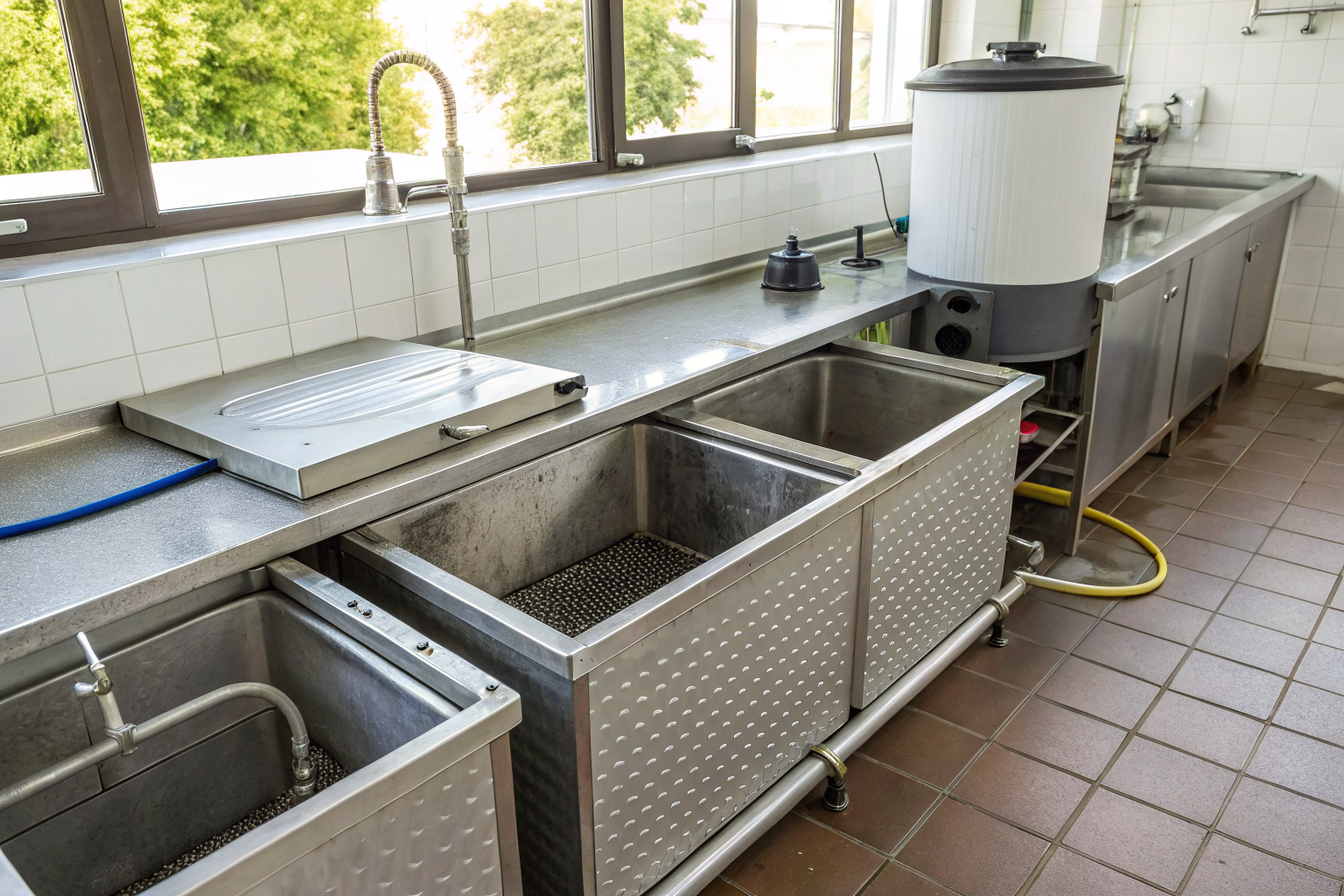
Federal regulations require grease management systems for most food service operations, but specific requirements vary by location and business type. The EPA mandates grease management for facilities producing more than 25 gallons of wastewater per day.
| Business Type | Requirement | Typical System |
|---|---|---|
| Full-service restaurants | Mandatory above 25 GPD | Grease interceptor 1000+ gallons |
| Fast food chains | Mandatory above 25 GPD | Grease trap 50-100 gallons |
| Coffee shops (food service) | Required if cooking on-site | Grease trap 20-50 gallons |
| Bakeries (commercial) | Required for butter/oil use | Grease interceptor 500+ gallons |
| Institutional kitchens | Mandatory above 25 GPD | Large grease interceptor 2000+ gallons |
Local ordinances often exceed federal minimums. Many municipalities require grease management for any food service operation regardless of volume, while others set lower thresholds or mandate specific removal efficiency percentages.
The distinction between grease traps and grease interceptors matters for compliance. Smaller operations typically use under-sink grease traps, while high-volume kitchens need exterior grease interceptors with greater capacity. When comparing grease trap vs grease interceptor options, consider both current volume and future expansion plans.
Violation penalties scale with business size and repeat offenses. First-time violations typically result in warnings and compliance deadlines, but continued non-compliance triggers escalating fines and potential permit revocation.
What Happens Without Proper Grease Management?

Operating without required grease management creates cascading problems that extend far beyond initial compliance violations. Average cleanup cost for FOG-related sewer overflow exceeds $15,000 per incident, not counting business interruption and potential legal liability.
• Municipal penalties start with warning notices but escalate to daily fines of $100-500 until compliance is achieved, plus administrative costs and legal fees
• Emergency plumbing repairs from backed-up lines can cost $5,000-15,000 for drain cleaning, pipe replacement, and damage restoration in dining areas
• Health department violations result in permit suspension or revocation, forcing immediate closure until problems are resolved and reinspection is completed
• Environmental liability for sanitary sewer overflow events includes cleanup costs, regulatory fines, and potential civil lawsuits from affected properties
• Insurance complications arise because FOG violations are considered preventable negligence, potentially voiding coverage for related damage claims
The timeline for consequences varies but follows a predictable pattern. Initial violations trigger 30-90 day compliance periods, after which daily penalties begin accumulating. Continued non-compliance leads to permit revocation and forced closure.
Some operators attempt alternatives like oil water separator systems or septic tanks, but these don’t meet regulatory requirements for FOG management. Understanding grease trap vs septic tank differences prevents costly mistakes in system selection.
Grease Trap vs. Grease Interceptor: Key Differences

The terms are often used interchangeably, but grease traps and grease interceptors serve different applications based on flow volume and installation requirements. Grease interceptors handle higher flow volumes than traps, typically 500-2000 gallons per minute versus 10-50 GPM for standard traps.
| Feature | Grease Trap | Grease Interceptor |
|---|---|---|
| Flow rate capacity | 10-50 GPM | 500-2000 GPM |
| Installation location | Under sink or inside | Underground exterior |
| Capacity range | 20-100 gallons | 1000-5000+ gallons |
| Maintenance frequency | Weekly to monthly | Monthly to quarterly |
| Initial cost | $500-3000 | $5000-25000+ |
Installation location drives the distinction. Grease traps fit under sinks or in kitchen areas for point-of-use treatment, while grease interceptors require exterior excavation and underground installation to handle building-wide wastewater.
Flow restrictor design differs between systems. Traps use simple inlet baffles to control flow, while interceptors employ sophisticated hydraulic controls to manage high-volume surges without compromising separation efficiency.
Cost considerations extend beyond initial purchase. Grease traps require more frequent pumping due to smaller capacity, while interceptors have higher upfront costs but lower per-gallon operating expenses. When evaluating grease trap parts and maintenance requirements, factor in both systems’ long-term operational costs.
Frequently Asked Questions
How long do grease traps last before replacement?
Quality grease traps typically last 15-20 years with proper maintenance. However, units in high-volume kitchens may need replacement after 10-12 years due to wear from constant FOG processing.
Can a grease trap be too big for my restaurant?
Yes, oversized grease traps can reduce efficiency because FOG doesn’t have enough retention time to separate properly. The trap should match your kitchen’s peak flow rate and grease production volume.
Do coffee shops and bakeries need grease traps?
Coffee shops typically don’t need grease traps unless they serve cooked food. Bakeries require grease management if they produce more than 25 gallons of wastewater daily or use significant amounts of butter and oils in production.