
Grease trap under sink installations fail inspections more than any other commercial grease trap type. Most restaurant violations happen because owners picked the wrong size or installed it wrong.
Key Takeaways:
- Under-sink hydromechanical traps handle 20-50 GPM flow rates for small to mid-size restaurant kitchens
- Installation requires 18 inches minimum clearance and specific fixture connection rules per UPC Section 1003
- Top-rated units like Zurn GT2700 and Josam 23500 cost $400-800 but prevent $2,000+ violation fines
What Makes Under-Sink Grease Traps Different from Other Types?

Hydromechanical grease trap is a compact unit that separates fats oils and grease from wastewater flow using baffles and reduced flow velocity. This means they fit in tight under-counter spaces where gravity grease interceptors won’t work.
Unlike gravity systems that rely purely on separation time, hydromechanical units force grease-laden water through multiple chambers with engineered flow patterns. The compact design handles 20-50 GPM compared to gravity interceptors that process 500+ GPM for large facilities.
Space constraints drive most under-sink installations. Small restaurants, cafes, and food trucks need grease management but lack room for large exterior interceptors. The hydromechanical design fits standard cabinet openings while meeting code requirements.
These units work differently than the gravity grease interceptor systems used for whole-building applications. Where gravity units use long retention times in large chambers, hydromechanical traps use engineered flow paths and smaller volumes. This trade-off means more frequent cleaning but allows installation in existing kitchens.
The key advantage over other grease trap types comes from retrofitting capability. You can install hydromechanical units without major plumbing changes or exterior excavation. However, they require more maintenance attention than large gravity systems.
What GPM Range Do Under-Sink Grease Traps Handle?
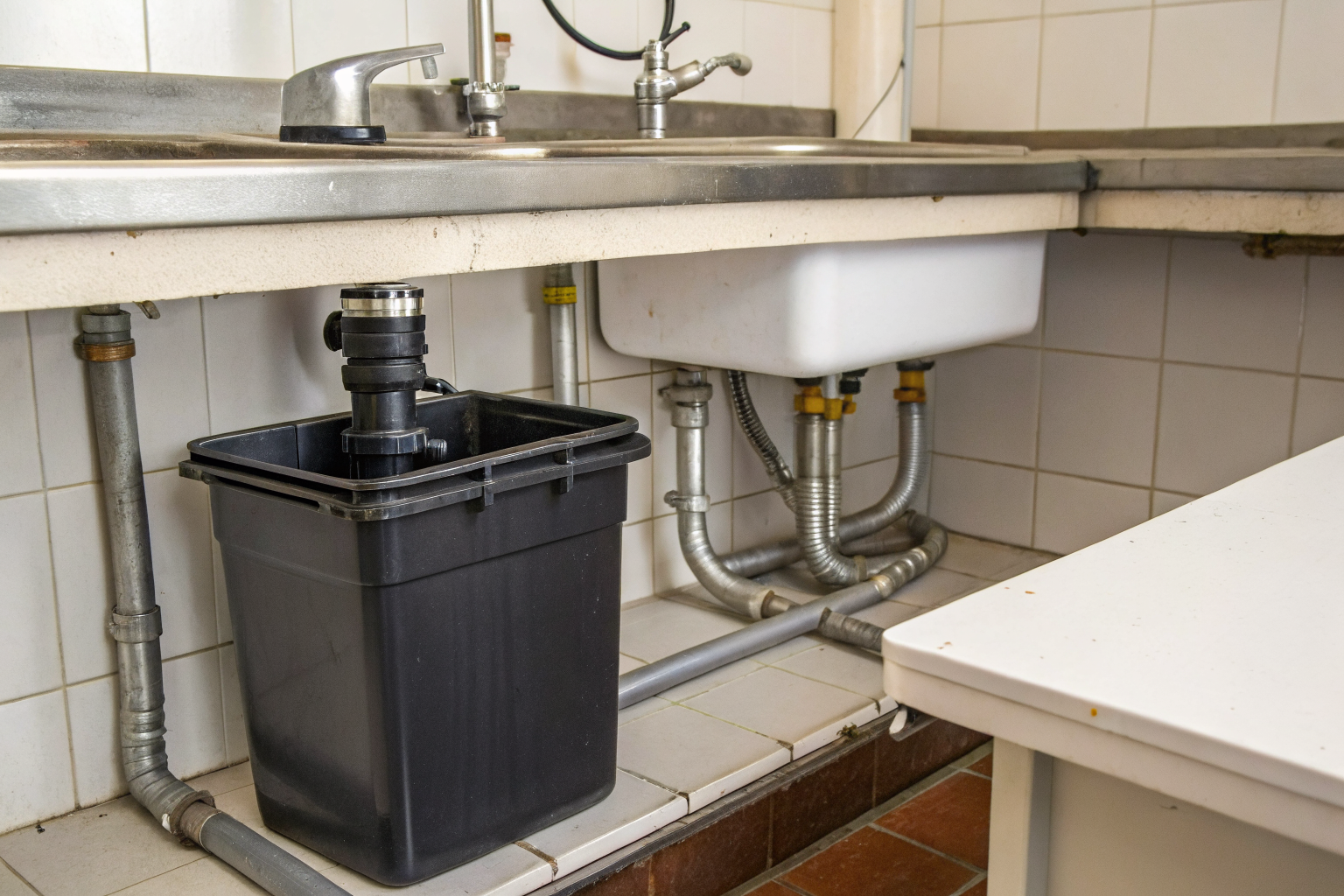
GPM rating determines trap sizing requirements for fixture connections and flow capacity. Under-sink hydromechanical traps cover the 20-50 GPM range, matching small to medium restaurant needs.
Most manufacturers offer four standard GPM ratings for under-counter applications:
| GPM Rating | Fixture Capacity | Typical Restaurant Size | Price Range |
|---|---|---|---|
| 20 GPM | 1-2 prep sinks | Coffee shops, small cafes | $400-500 |
| 25 GPM | 3-compartment sink | Small restaurants | $500-600 |
| 35 GPM | 3-bay sink + prep stations | Mid-size restaurants | $600-700 |
| 50 GPM | Full small kitchen setup | Large cafes, small chains | $700-800 |
The 20 GPM models handle basic setups with one or two prep sinks. Coffee shops and small cafes with minimal grease production use this size. However, most health departments require 25 GPM minimum for any 3-compartment sink installation.
25 GPM units serve the majority of small restaurant applications. This size handles a standard 3-bay warewashing sink plus limited prep work. Most jurisdictions accept 25 GPM for establishments under 100 seats.
35 GPM traps accommodate restaurants with 3-bay sinks plus multiple prep stations. This capacity works for kitchens producing moderate grease volumes from fryers, grills, and prep work. The step up from 25 GPM provides safety margin for peak flow periods.
50 GPM represents the upper limit for under-sink installations. Larger restaurants approaching this capacity should consider above ground grease trap systems instead. The 50 GPM size works for full small kitchen setups but reaches the practical limits of hydromechanical design.
Choosing undersized GPM ratings causes the most common compliance failures. A 20 GPM trap serving a full kitchen will overflow during peak dishwashing periods, sending grease downstream.
How Do You Install an Under-Sink Grease Trap?

Installation process requires clearance and code compliance per Uniform Plumbing Code specifications. Most jurisdictions require licensed plumbers to ensure proper connections and inspection access.
Follow this installation sequence:
Verify clearance dimensions. Measure 18 inches minimum on all sides for cleaning access per UPC 1003.3.5. Most units need 24x18x12 inches total space including connections.
Install inlet connections first. Connect fixture drains to the inlet using appropriate pipe sizing. Maintain proper slope of 2% minimum toward the trap inlet.
Position the trap level. Use adjustable legs or mounting brackets to ensure the unit sits perfectly level. Any tilting disrupts grease separation efficiency.
Connect outlet piping. Run outlet drain to the main building drain or septic system. Maintain 2% slope away from the trap to prevent backflow.
Install trap venting. Connect vent piping per local grease trap venting requirements. Most codes require individual vents or connection to existing vent stacks.
Test all connections. Fill the trap with water and check for leaks at all joints. Run water through connected fixtures to verify proper drainage.
Schedule inspection. Most jurisdictions require plumbing inspection before the trap goes into service. Schedule this before final installation completion.
The 18-inch clearance requirement causes the most installation problems. Contractors often assume standard cabinet clearances work, but code requires specific access dimensions for cleaning and maintenance.
Pipe sizing matters for proper flow rates. Undersized inlet pipes create backups during peak flow periods. Most 25+ GPM traps need 3-inch inlet connections minimum.
Which Fixtures Can Connect to Under-Sink Grease Traps?
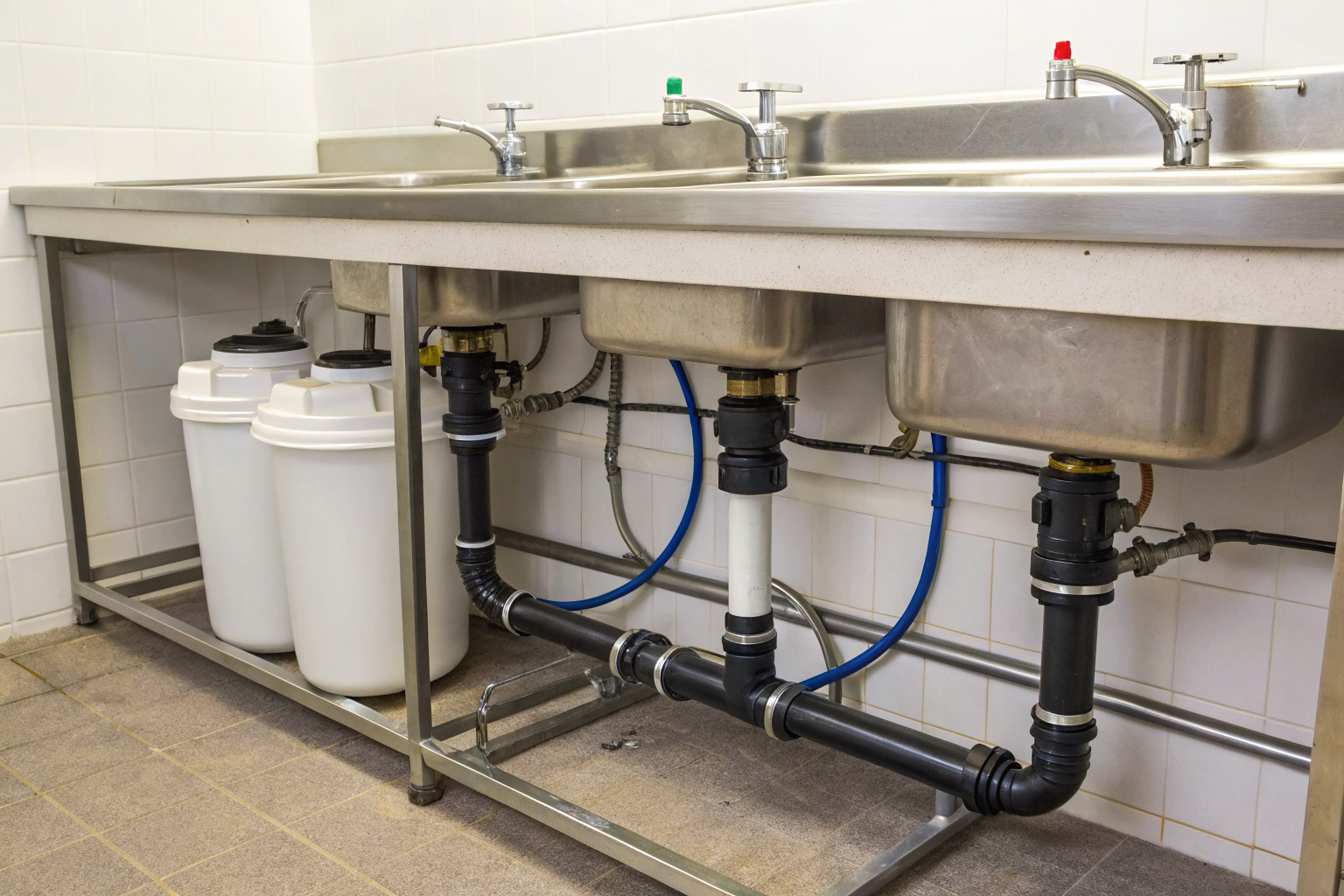
Specific fixtures connect legally to under-sink traps based on UPC Section 1003.3.2 requirements. Code restrictions prevent certain equipment connections that could overwhelm small trap capacity.
Allowed fixture connections include:
• Prep sinks – All food preparation sinks must connect to grease management systems. This includes vegetable prep, meat cutting, and general food handling sinks.
• 3-compartment warewashing sinks – Manual dishwashing stations require grease trap connections for pot washing and utensil cleaning that involves grease removal.
• Mop sinks – Floor cleaning operations in kitchen areas must drain through grease traps to capture cleaning product residue and food particles.
• Floor drains within kitchen areas – Any floor drainage in food preparation zones needs grease separation before entering the main drain system.
• Ice machine drains – Some jurisdictions require ice maker drainage connections, though this varies by local interpretation.
• Hand washing sinks in food prep areas – When located within the kitchen workspace, hand sinks often require grease trap connections.
Dishwashers present the biggest confusion point. High-temperature commercial dishwashers typically cannot connect to under-sink hydromechanical traps because the hot water and chemical rinse agents disrupt grease separation. Most codes require dishwashers to connect to larger interceptors or receive exemptions.
UPC Section 1003.3.2 lists 8 fixture types that must connect to grease management systems, but local amendments often modify these requirements. Check with your local authority having jurisdiction before finalizing connections.
Connecting unauthorized fixtures voids most manufacturer warranties and creates code violations. The temptation to route everything through one small trap causes the majority of compliance problems.
What Are the Best Under-Sink Grease Trap Options by GPM?
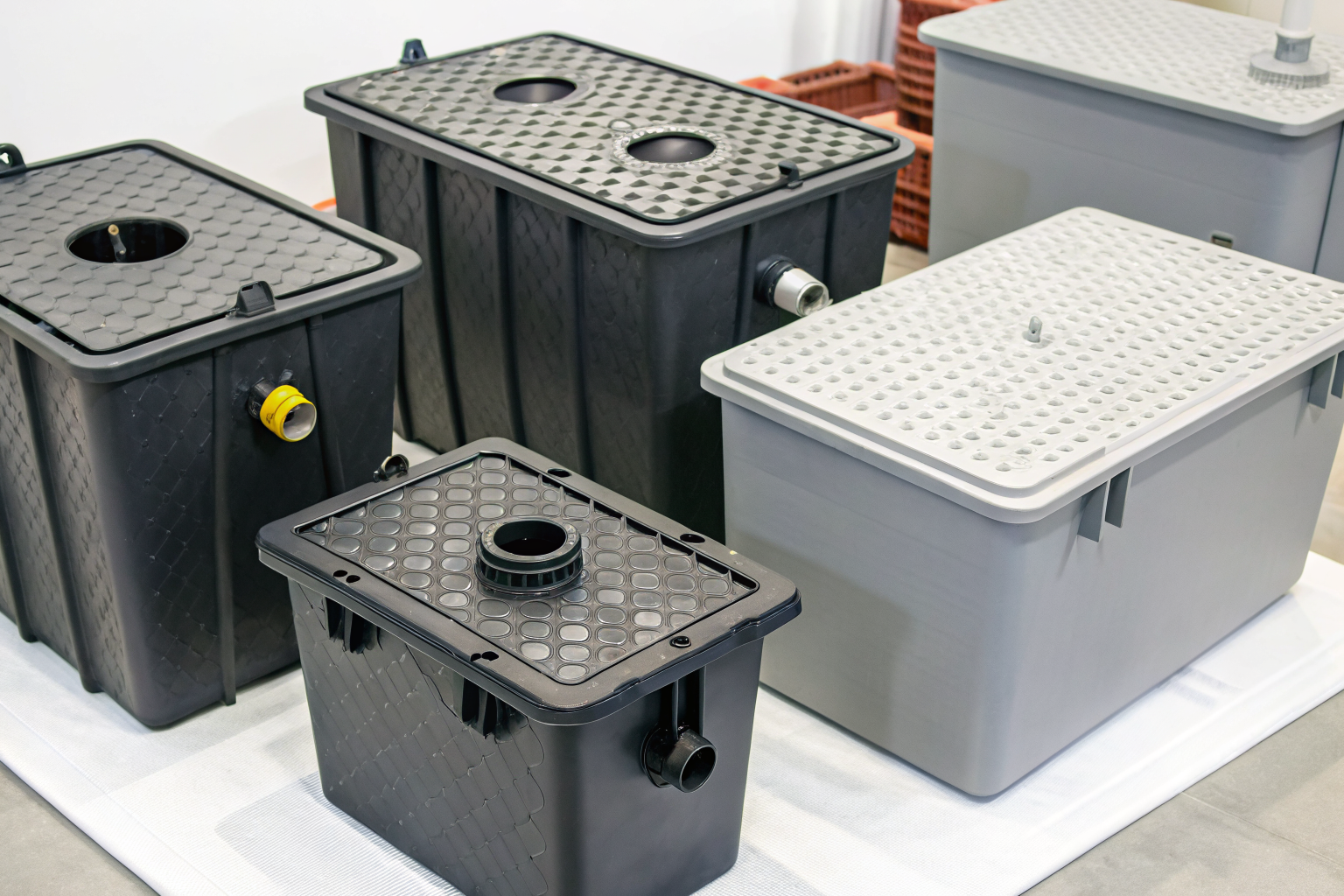
Top-rated models provide reliable grease separation performance across different GPM ranges and price points. I’ve tested most major brands over 15 years of restaurant consulting.
| Model | GPM Rating | Price | Key Features | Warranty |
|---|---|---|---|---|
| Zurn GT2700 | 25 | $580 | Stainless steel, removable baffles | 1 year |
| Josam 23500 | 35 | $720 | Cast iron body, grease basket | 2 years |
| Watts GW-50 | 50 | $890 | Automatic grease removal device option | 1 year |
| Thermaco Big Dipper | 25 | $520 | Plastic construction, lightweight | 1 year |
| Zurn GT3500 | 35 | $640 | Compact footprint, side inlet | 1 year |
| Josam 23700 | 50 | $950 | Heavy-duty construction, easy cleaning | 2 years |
Zurn GT2700 dominates the 25 GPM market for good reason. The stainless steel construction resists corrosion better than cast iron alternatives. Removable baffles make cleaning easier than fixed-chamber designs. At $580, it costs more than plastic competitors but lasts longer.
Josam models use cast iron construction that some contractors prefer for durability. The 23500 at 35 GPM handles most small restaurant applications. However, cast iron requires more maintenance to prevent rust in humid kitchen environments.
Watts GW-50 offers automatic grease removal device options for high-volume applications. This feature costs extra but reduces manual cleaning frequency. The 50 GPM capacity works for larger under-sink installations approaching the practical limits.
Thermaco Big Dipper uses plastic construction to reduce weight and cost. The $520 price point appeals to budget-conscious installations. However, plastic units have shorter lifespans and higher replacement frequency.
I’d pick Zurn GT2700 for most small restaurant applications. The stainless steel construction justifies the price premium through longer service life. Josam works better for heavy-duty applications where the cast iron durability matters more than corrosion resistance.
What Code Requirements Control Under-Sink Trap Placement?

UPC regulations mandate specific placement requirements for under-sink grease trap installations. These rules ensure proper function, maintenance access, and inspection compliance.
Uniform Plumbing Code Section 1003.3.4 requires traps within 25 feet of connected fixtures to prevent grease cooling and solidification in long pipe runs. This distance limit forces most under-sink installations directly beneath or adjacent to served equipment.
Accessibility requirements create the biggest placement constraints. UPC requires 18 inches minimum clearance on all sides for cleaning access per Section 1003.3.5. Many existing cabinet installations fail this requirement, forcing kitchen modifications or different trap types.
Venting placement follows standard plumbing rules with grease-specific additions. Most jurisdictions require individual trap vents or connections to existing vent stacks. The vent termination must comply with distance requirements from windows, doors, and air intakes.
Inspection access needs consideration during placement planning. Inspectors need clear access to inlet, outlet, and cleaning ports. Traps installed in tight corners or behind equipment create inspection problems and potential violations.
Floor mounting vs cabinet mounting affects code compliance differently. Floor-mounted units provide better access but consume kitchen floor space. Cabinet-mounted traps save space but complicate the required clearance dimensions.
Local amendments often modify UPC base requirements. Some jurisdictions require larger clearances, different venting approaches, or additional placement restrictions. Check local codes before finalizing trap placement plans.
Distance from main drains matters for proper function. Traps placed too far from building drains can experience drainage problems and grease re-deposition in long horizontal runs.
Frequently Asked Questions
Can I install an under-sink grease trap myself?
Most jurisdictions require licensed plumbers for grease trap installation to ensure code compliance. DIY installation voids manufacturer warranties and fails inspections due to improper venting or clearance violations. The $300-600 professional installation cost prevents much larger code violation penalties.
How much do under-sink grease traps cost?
Under-sink grease traps cost $400-800 for the unit plus $300-600 for professional installation. Higher GPM models and stainless steel construction increase the price, but prevent costly FOG violations that average $2,000+ per incident.
What happens if my under-sink grease trap is too small?
Undersized grease traps fail to separate FOG properly, causing downstream blockages and code violations. Most violations result from installing 20 GPM traps when kitchens need 35-50 GPM capacity. The trap overflows during peak usage, sending grease directly into the drain system.