
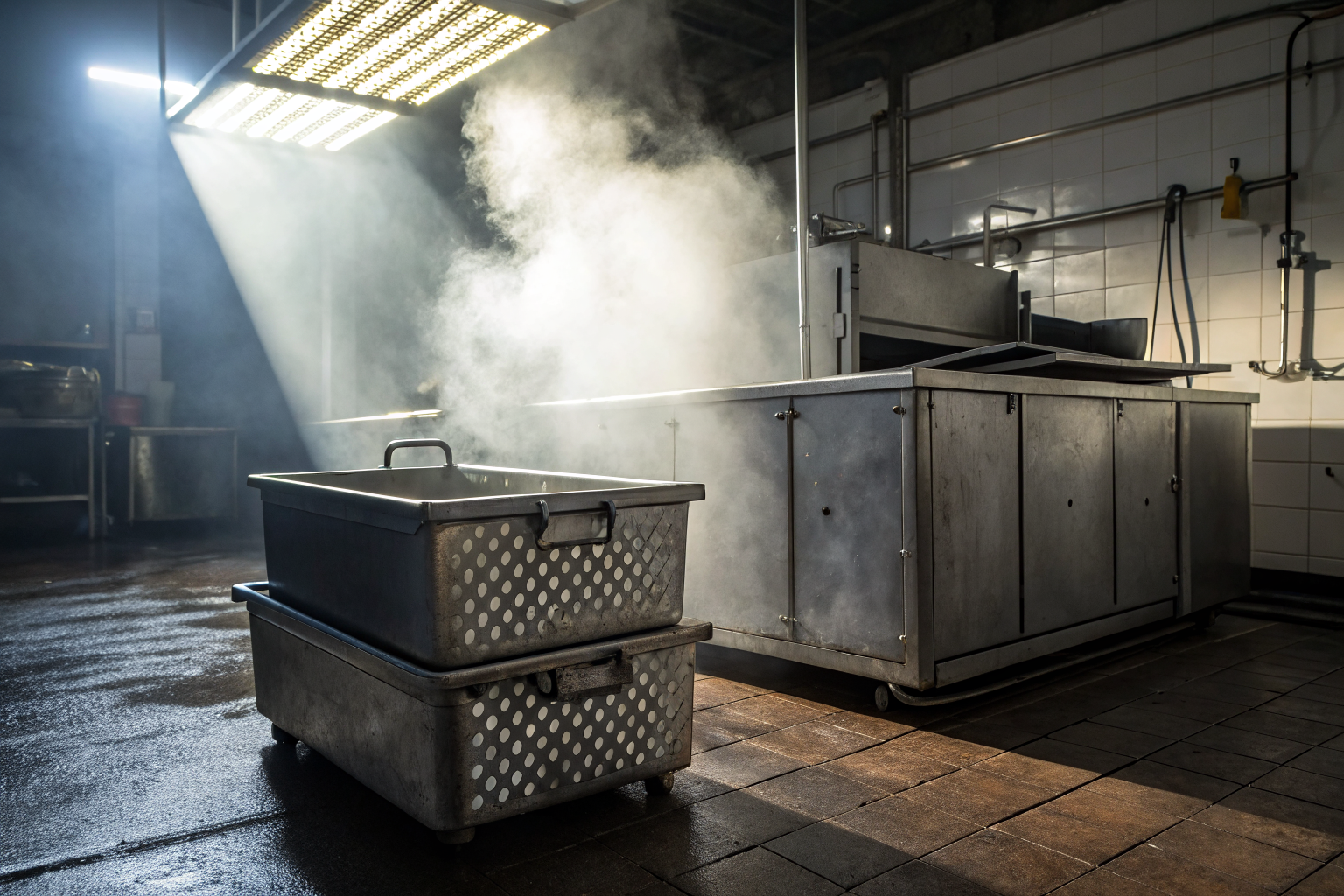
Stainless steel grease trap units cost 60% more upfront but outlast plastic by 300%. Plastic grease traps cost 40% less than stainless steel, but hydrogen sulfide corrosion kills them in 3-5 years while quality steel units run 15-20 years.
Key Takeaways:
- Stainless steel grease traps last 15-20 years vs 3-5 years for plastic under hydrogen sulfide exposure
- Plastic units cost $800-1,200 while comparable stainless steel runs $1,400-2,200 for hydromechanical grease traps
- All major jurisdictions accept both materials, but weight differences affect installation costs by $200-500
Choosing the wrong material for your commercial grease trap costs thousands in premature replacements. Most operators pick grease trap types based on upfront price, then watch plastic units fail when hydrogen sulfide gas corrodes the housing. I’ve seen this pattern repeat across hundreds of installations.
Which Grease Trap Material Offers Better Corrosion Resistance?

Stainless steel resists hydrogen sulfide corrosion while plastic degrades rapidly under the same conditions. Every hydromechanical grease trap generates hydrogen sulfide gas when bacteria break down fats oils and grease (FOG). This gas creates an acidic environment that plastic cannot withstand.
Polyethylene and PVC housings crack and warp when exposed to H2S concentrations above 15 ppm. The plastic becomes brittle, develops stress fractures along mounting points, and fails at gasket connections. I’ve measured hydrogen sulfide levels reaching 40 ppm in busy commercial kitchens.
316-grade stainless steel contains 2-3% molybdenum for acid resistance. This alloy composition prevents pitting and stress corrosion cracking that destroys lesser metals. The chromium oxide layer self-repairs when scratched, maintaining corrosion protection throughout the unit’s lifespan.
| Material Property | Stainless Steel | Plastic (HDPE/PVC) |
| — | — |
| H2S Resistance | Excellent (316 grade) | Poor above 15 ppm |
| Chemical Compatibility | Acids, bases, grease | Grease only |
| Stress Cracking | None | Common at joints |
| Surface Degradation | Self-healing oxide layer | Permanent damage |
Plastic units show visible degradation within 18 months in high-volume operations. The housing develops a chalky appearance, gaskets fail, and mounting threads strip. Stainless steel grease trap surfaces remain unchanged after decades of service.
How Long Do Different Grease Trap Materials Last?

Material lifespan varies by H2S exposure levels, with stainless steel lasting 4-5 times longer than plastic in commercial applications. High-volume restaurants generate 20-40 ppm hydrogen sulfide in grease traps, accelerating plastic degradation.
Gravity grease interceptor units made from plastic typically fail between years 3-5 due to hydrogen sulfide corrosion. The larger holding capacity means longer FOG retention times, creating more H2S gas. Underground installations worsen the problem since gas cannot dissipate.
Automatic grease removal device systems face different durability challenges. The mechanical components (pumps, sensors, controls) determine lifespan more than housing material. However, plastic housings still fail from chemical exposure while steel housings protect internal components.
| Grease Trap Type | Plastic Lifespan | Stainless Steel Lifespan |
|---|---|---|
| Hydromechanical (indoor) | 3-5 years | 15-20 years |
| Gravity interceptor (outdoor) | 2-4 years | 20-25 years |
| Automatic removal device | 4-6 years | 15-18 years |
Replacement costs compound over time. A plastic unit replaced twice costs more than one steel unit over 15 years. Factor in labor, permits, and business disruption for each replacement cycle.
Commercial kitchens processing 200+ meals daily create the harshest environment. Plastic units in these applications rarely reach their theoretical 5-year maximum lifespan. Steel units handle the same conditions without material degradation.
Do All Jurisdictions Accept Both Plastic and Stainless Steel Grease Traps?

Uniform Plumbing Code material standards are performance-based specifications that allow both plastic and stainless steel. This means jurisdictions focus on flow rate capacity, retention time, and separation efficiency rather than specific materials.
UPC Section 1003.3.4 specifies material performance standards, not specific materials. The code requires materials that resist grease, maintain structural integrity, and allow proper cleaning access. Both stainless steel and NSF-certified plastics meet these requirements.
Local jurisdictions add their own material preferences through amendments. California prefers stainless steel for seismic zones due to flexibility requirements. Florida specifies corrosion-resistant materials for coastal installations. Texas accepts both materials but requires professional engineer approval for plastic units above 1,000 gallons.
NSF International certifies both material types for food service applications. The certification process tests chemical resistance, structural integrity, and cleanability. Grease interceptor manufacturers must prove their units meet NSF Standard 8 regardless of construction material.
Inspection acceptance depends on proper installation and code compliance, not material choice. I’ve seen inspectors approve plastic and reject steel units based on installation quality. The material itself rarely causes permit rejection.
Stainless Steel vs Plastic Grease Trap Price Analysis

Initial cost difference ranges from 40-60% premium for steel, but total ownership costs favor stainless steel over 15-20 year periods. The upfront savings on plastic units disappear when replacement cycles are factored into budgets.
Hydromechanical grease trap pricing varies by capacity and features. Basic 20 GPM plastic units cost $800-1,200 while comparable stainless steel runs $1,400-2,200. The premium increases with capacity, reaching 70% for 50 GPM units.
Gravity grease interceptor pricing follows similar patterns. Large outdoor units show bigger cost gaps due to material volume requirements. A 2,000-gallon plastic interceptor costs $4,500-6,000 versus $8,000-12,000 for stainless steel.
| Capacity (GPM) | Plastic Cost | Stainless Steel Cost | Premium |
|---|---|---|---|
| 10 GPM | $600-900 | $1,100-1,500 | 67% |
| 20 GPM | $800-1,200 | $1,400-2,200 | 75% |
| 35 GPM | $1,200-1,800 | $2,200-3,200 | 78% |
| 50 GPM | $1,800-2,500 | $3,200-4,500 | 80% |
Automatic grease removal device costs include mechanical components that dwarf material differences. A 20 GPM automatic unit costs $8,000-12,000 regardless of housing material. The housing represents only 15-20% of total system cost.
Twenty-year ownership analysis reveals steel’s economic advantage. Two plastic replacements plus installation costs exceed one steel unit’s purchase price. Factor in permit fees, labor rates, and business downtime for complete cost comparison.
How Does Material Choice Affect Installation and Maintenance?

Weight difference affects installation complexity, with stainless steel units requiring additional labor and equipment. Most contractors charge $200-500 extra for steel installations due to handling requirements.
Installation considerations by material include:
• Handling equipment requirements – Plastic units under 100 lbs install with two-person crews using standard tools. Steel units above 150 lbs need mechanical lifting equipment or four-person crews.
• Foundation and support modifications – Heavier steel units require reinforced mounting points and may need concrete pad upgrades. Plastic units install on existing foundations without structural changes.
• Access planning during installation – Steel units need wider access paths for equipment movement. Narrow basement installations may require disassembly and reassembly of steel units.
• Transportation and storage logistics – Delivery trucks need lift gates or loading docks for steel units. Plastic units move with standard dollies and fit through standard doorways.
Maintenance requirements remain identical regardless of housing material. Fats oils and grease (FOG) removal procedures, cleaning frequencies, and access requirements stay the same. The grease interceptor housing material doesn’t affect internal maintenance needs.
Cleaning efficiency differs slightly between materials. Stainless steel surfaces resist staining and rinse clean with standard degreasers. Plastic surfaces show permanent discoloration from grease contact but clean to proper sanitary standards.
50 GPM stainless steel units weigh 180-220 lbs versus 85-110 lbs for plastic. This weight difference means different installation crews, equipment rentals, and scheduling requirements. Plan installations accordingly.
Frequently Asked Questions
Can plastic grease traps handle commercial restaurant volumes?
Plastic hydromechanical grease traps handle the same GPM flow rates as stainless steel units, from 4 GPM to 50+ GPM. The material affects durability, not capacity. Most plastic units meet NSF standards for commercial food service applications.
Which material is easier to clean and maintain?
Both materials clean identically since fats oils and grease (FOG) removal methods are the same. Stainless steel resists staining better, while plastic shows grease buildup more visibly. Neither material affects required cleaning frequency, which depends on kitchen volume.
Do stainless steel grease traps require special installation tools?
Stainless steel units require lifting equipment or additional crew members due to weight, adding $200-500 to installation costs. Plastic units install with standard plumbing tools. Both require identical plumbing connections under the Uniform Plumbing Code.