

How does a grease trap work? Every minute your grease trap operates, it performs a simple physics trick that prevents thousands of dollars in sewer damage. Understanding what is a grease trap and the mechanics behind commercial grease trap operation reveals why these systems protect your restaurant and the municipal sewer system.
Key Takeaways:
- Grease traps use gravity separation, FOG floats while water flows through in 90+ seconds retention time
- Three-baffle systems capture 95% of fats, oils, and grease when flow restrictors maintain proper velocity
- Solid particles settle to the bottom while grease forms a floating layer, each requiring different removal methods
The Physics Behind Grease Trap Operation

Gravity separation is the controlled process where materials separate based on density differences. This means heavier substances sink while lighter materials float, creating distinct layers that allow targeted removal.
Fats, oils, and grease (FOG) have a specific gravity of 0.9 compared to water’s 1.0 density. This 10% difference seems small but creates powerful separation forces inside your grease trap. When wastewater enters the system, gravity immediately begins sorting materials by weight.
Water molecules pull downward on food particles and debris, forcing them toward the bottom. Meanwhile, oil molecules resist this downward force and migrate upward. The temperature inside the trap matters too. Hot water from dishwashing keeps FOG liquid and mobile, while cooler temperatures cause fats to solidify and float more effectively.
The separation happens within minutes, but the magic lies in giving materials enough time and space to complete the process. Rush this physics, and you get mixed layers that defeat the entire system. Grease traps separate FOG through gravity by maintaining calm conditions where density differences can work.
How Do Baffles Control Water Flow Inside Grease Traps?

Baffle systems control water flow path by forcing wastewater under submerged barriers while trapping floating grease above the surface. Each baffle creates a separate chamber with specific separation duties.
Incoming water hits the inlet baffle and slows down immediately. This first barrier reduces turbulence that would otherwise mix FOG back into the water stream.
Water flows under the inlet baffle while grease stays trapped on the surface. The submerged barrier acts like an underwater dam, allowing only the bottom water layer to pass through.
The middle baffle repeats this process in the separation chamber. Water continues flowing underneath while any remaining FOG gets caught in the second containment zone.
The outlet baffle provides final protection before water exits. This last barrier prevents any surface grease from escaping into your drain lines.
Flow restrictors maintain proper water velocity throughout the system. These devices ensure water moves slowly enough for complete FOG separation.
Standard three-baffle configuration increases separation efficiency by 40% versus single-baffle systems. Each additional baffle gives FOG another chance to separate and gives solids more time to settle. Without proper baffle design, you get a mixing tank instead of a separation system.
What Happens to Different Materials During Separation?

| Material Type | Density Behavior | Movement Pattern | Removal Method |
| — | — | — |
| FOG (Fats, Oils, Grease) | 0.9 specific gravity – floats | Rises at 1 inch per minute | Surface skimming |
| Water | 1.0 specific gravity – neutral | Flows horizontally through system | Natural drainage |
| Food Solids | 1.2-2.5 specific gravity – sinks | Settles at 2-3 inches per minute | Bottom pumping |
| Soap Residue | Variable – often suspended | Remains in middle water layer | Water replacement |
Different materials behave according to density during the separation process. Fats, oils, and grease immediately begin floating toward the surface once turbulence stops. Food particles drop toward the bottom at nearly double the speed that grease rises.
Soap and detergent residues complicate this process. These chemicals can emulsify FOG, breaking large oil droplets into tiny particles that resist separation. That’s why many restaurants see better grease trap performance when they reduce soap concentrations in their pot-washing sinks.
Temperature changes also affect material behavior. Hot water keeps fats liquid and mobile, while cooling causes them to solidify and trap more effectively. The middle water layer carries dissolved substances that won’t separate regardless of retention time. This clarified water eventually exits through the outlet baffle.
Why Does Retention Time Matter for Proper Separation?
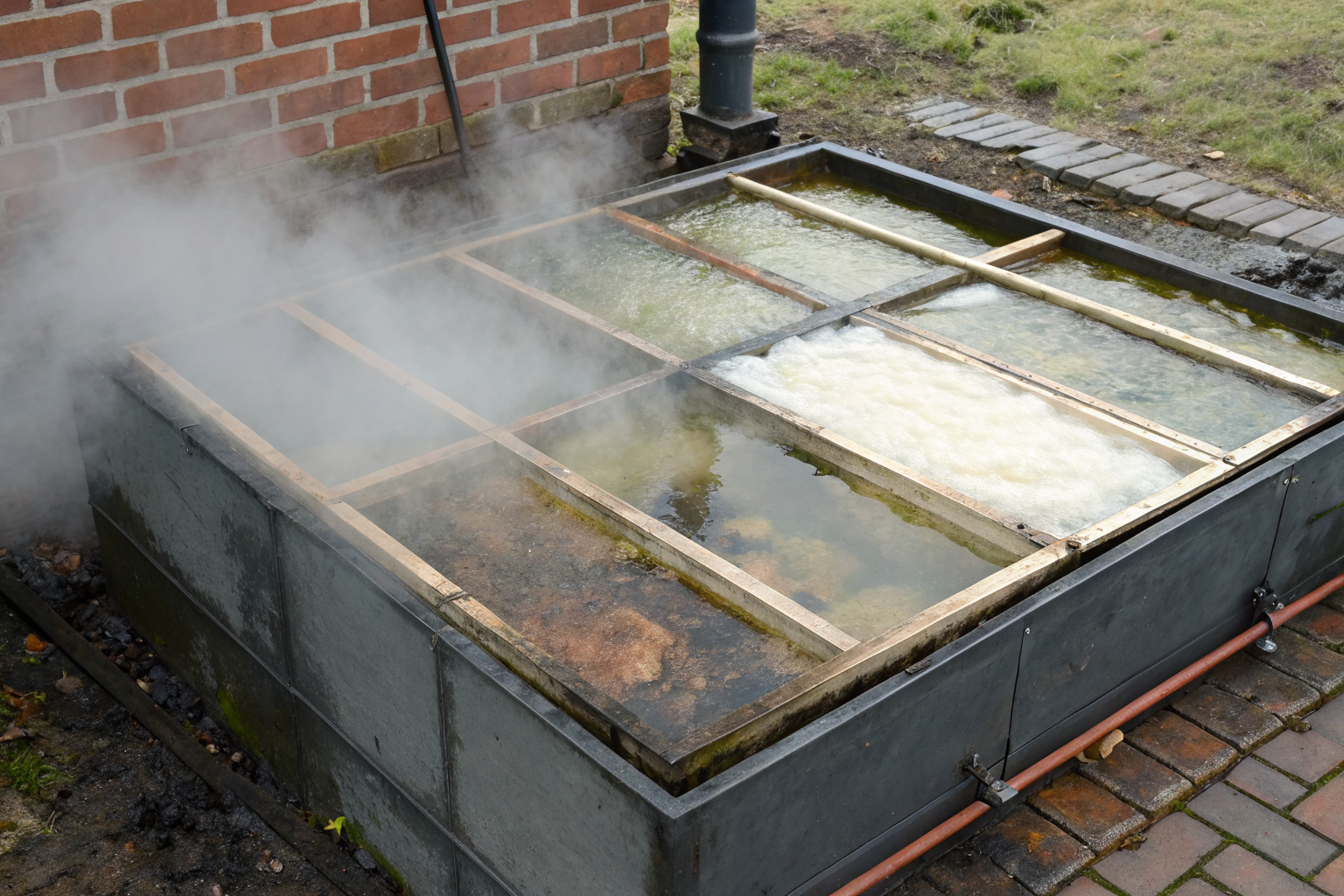
Retention time determines separation effectiveness by giving materials enough duration to sort themselves by density. Water must remain inside the trap long enough for FOG to float and solids to settle completely.
Flow restrictors maintain proper velocity by controlling how fast water moves through each chamber. These devices create back-pressure that forces water to spend the minimum 90 seconds needed for separation. Without flow restriction, water rushes through too quickly for gravity separation to work.
Retention time below 60 seconds reduces grease capture efficiency to less than 70%. The physics just can’t happen fast enough. Restaurants that try to size grease traps too small for their flow rates end up with expensive FOG problems downstream.
You can calculate your grease trap retention time using a grease trap calculator that factors in your fixture unit count and peak flow rates. Most health departments require proof of adequate retention time before approving grease trap installations.
The Three Zones: Inlet, Separation, and Outlet Chambers
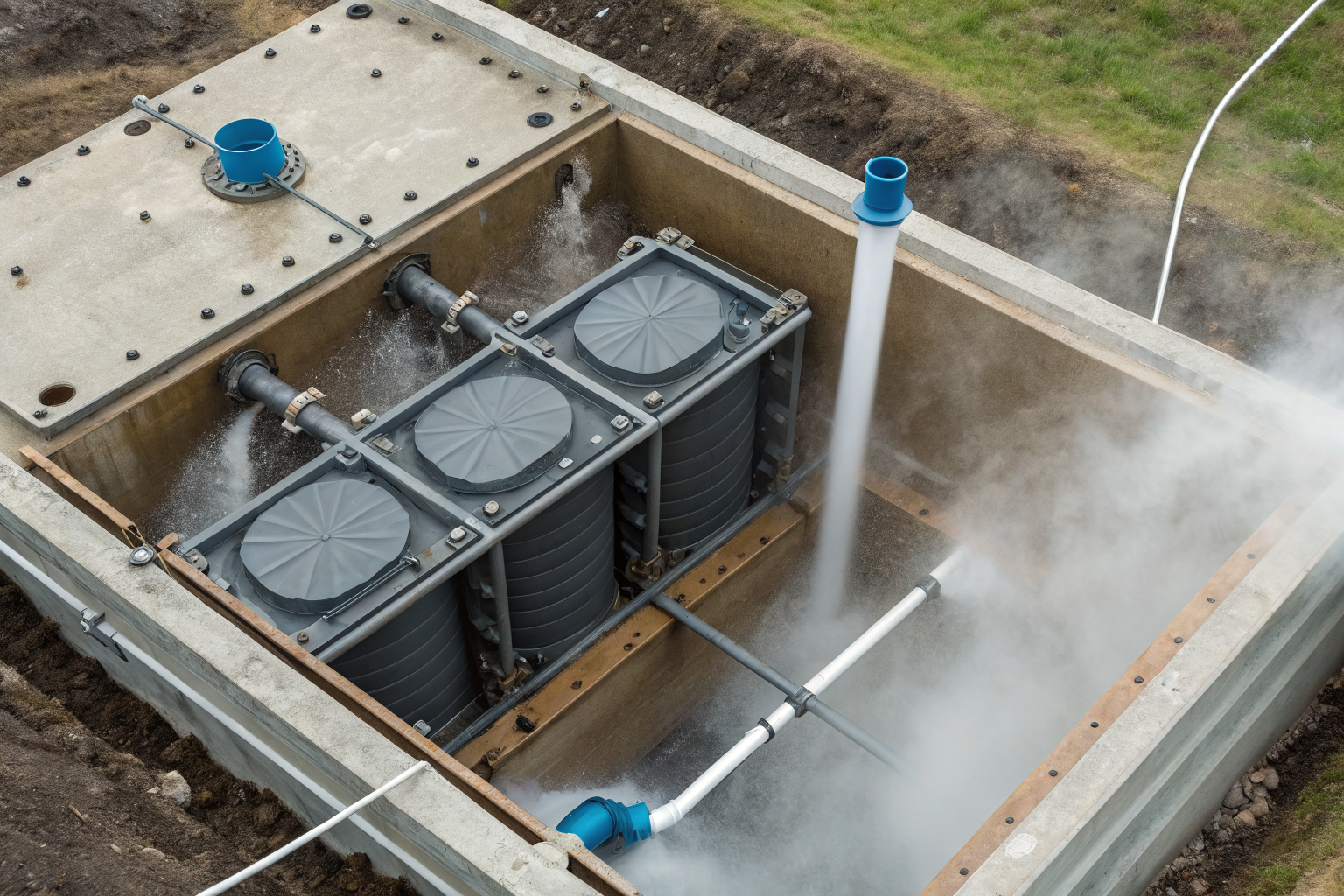
Three zones perform distinct separation functions within every grease interceptor system:
• Inlet zone reduces water turbulence and begins initial FOG separation. Proper inlet design reduces turbulence by 80%, preventing remixing of separated materials. The entrance baffle forces water to enter below the surface, avoiding disruption of the floating grease layer.
• Separation zone provides maximum retention time and calm water conditions. This middle chamber contains the largest volume and gives materials time to sort by density. Most FOG capture happens here during the extended retention period.
• Outlet zone provides final grease protection and water clarification. The exit baffle skims clarified water from the middle layer while preventing surface grease escape. Any FOG that made it past the first two zones gets trapped here.
• Inspection ports allow monitoring of all three zones without system disruption. You can visually confirm proper separation by observing distinct layers through these access points.
Each zone works in sequence, but failure in any single zone compromises the entire system. If your inlet zone creates too much turbulence, even perfect separation and outlet zones can’t compensate. Understanding grease trap parts and their interaction helps you identify where problems originate.
When Grease Traps Fail: Overflow and System Breakdown

System failure causes sanitary sewer overflow when accumulated FOG blocks normal water flow patterns. Once grease layers become too thick, they spill over baffles and enter the drain system as solid masses.
FOG blockages cause 47% of all sanitary sewer overflows in commercial districts. These failures start small with reduced flow capacity, then escalate to complete blockages that back up into kitchens and dining areas. The repair costs include both your internal plumbing and potential municipal sewer damage.
Fats, oils, and grease solidify inside sewer lines, creating pipe restrictions that affect entire city blocks. When your grease trap fails, you become liable for cleanup costs that often exceed $50,000 per incident. Many cities now require restaurants to carry specific insurance coverage for FOG-related sewer damage.
Regular maintenance prevents most failures, but you need to understand grease trap code requirements for your area. Some jurisdictions mandate professional inspections every 30 days, while others allow quarterly servicing. The key is removing accumulated grease before it overwhelms your baffle system.
Underground grease trap systems face additional risks from groundwater infiltration and structural damage that can compromise separation effectiveness. Surface-mounted units offer easier inspection access but require more frequent attention during peak usage periods.
Frequently Asked Questions
How long does water stay inside a grease trap during separation?
Water typically remains in a grease trap for 90-120 seconds during proper operation. This retention time allows FOG to float to the surface while solids settle to the bottom through gravity separation. Flow restrictors control the exit rate to maintain this minimum contact time.
What stops grease from flowing out with the clean water?
The outlet baffle extends below the water surface, creating a barrier that traps floating grease while allowing clarified water to exit from the middle layer. This submerged barrier prevents surface grease from reaching the drain line. The baffle depth typically extends 6-12 inches below the water surface.
Can you see the separation happening inside a grease trap?
Yes, through inspection ports you can observe three distinct layers: floating grease and oils on top, clear water in the middle, and settled food solids on the bottom. The separation is visible because each material has different density properties. Proper separation shows clear boundaries between each layer without mixing or emulsification.