

Grease trap odor hits you like a slap when something’s gone wrong. Rotten egg smell from your grease trap means one of three things failed, and ignoring it triggers health department violations that shut restaurants down.
Key Takeaways:
- 90% of grease trap odors trace back to overdue cleaning when FOG levels exceed the 25% rule
- Hydrogen sulfide gas creates the signature rotten egg smell when traps are oversized and water sits stagnant
- Failed gasket seals cause immediate bypass and create sewage-like odors that signal emergency response needs
Why Does My Grease Trap Smell Like Rotten Eggs?
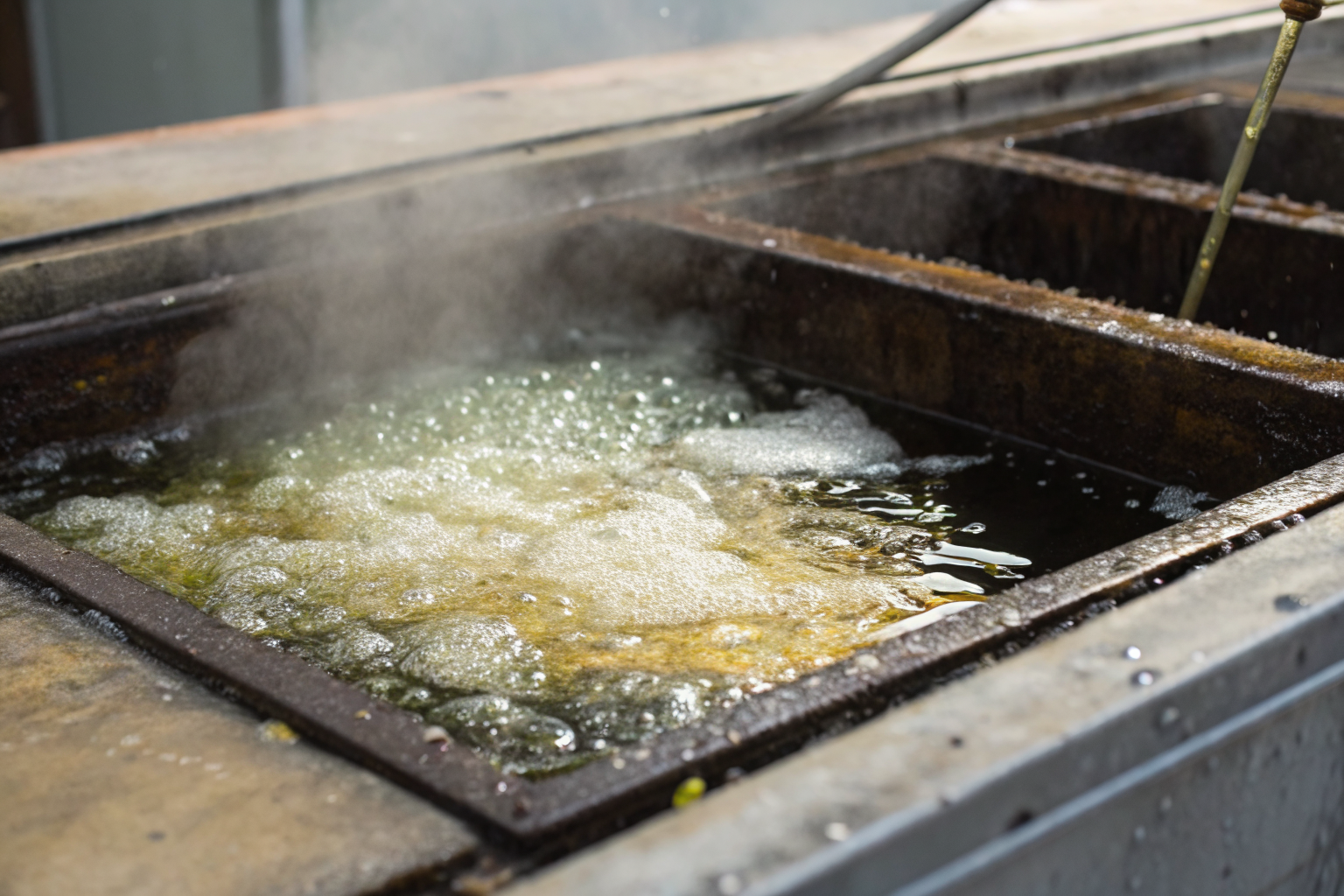
Hydrogen sulfide gas is the chemical compound that creates the unmistakable rotten egg odor coming from your grease trap. This means anaerobic bacteria are breaking down fats oils and grease (FOG) in oxygen-starved conditions.
The process starts when FOG accumulates beyond normal levels and sits stagnant. Bacteria consume the organic matter but can’t access oxygen, so they produce hydrogen sulfide as a waste product. Temperature speeds this up dramatically. Water sitting at 85°F or higher accelerates bacterial activity and gas production.
Retention time matters too. Water that sits longer than 30 minutes in your grease trap creates perfect conditions for anaerobic breakdown. This happens when your trap is oversized for your kitchen’s flow rate, or when FOG buildup creates stagnant pockets.
H2S becomes detectable at 0.5 parts per million concentration. Once you smell it, bacterial activity has been going on for days or weeks. The odor is your warning that conditions inside the trap have shifted from normal aerobic processing to anaerobic decay.
Oversized commercial grease trap systems create this problem more often than undersized ones. When restaurants install traps based on peak flow rather than average flow, water moves too slowly through the system and stagnates.
The Three Root Causes of Grease Trap Odor Problems

Root causes include overdue cleaning failures, bypass conditions, and improper venting. Each creates different symptoms and requires different solutions.
| Problem Type | Odor Characteristics | Timeline | Severity Level |
|---|---|---|---|
| FOG bypass failure | Sewage-like, immediate | Hours to days | Emergency |
| 25% rule violation | Rotten eggs, gradual | Weeks to months | Routine maintenance |
| Improper venting | Musty, intermittent | Variable | Moderate repair |
Overdue cleaning accounts for 90% of odor complaints based on service records. When FOG levels exceed the 25% rule, anaerobic conditions develop and hydrogen sulfide production begins. This creates the classic rotten egg smell that builds gradually over weeks.
FOG bypass failure produces immediate sewage odors. Cracked gaskets or damaged baffles let untreated wastewater flow directly into the sewer line. This bypasses the grease separation process entirely and creates foul odors within hours.
Improper venting causes musty, stagnant odors that come and go. Blocked or inadequate vent pipes prevent air circulation, creating pockets of stagnant water where bacteria thrive. The smell intensity varies with weather conditions and kitchen activity levels.
Each problem requires different diagnostic steps and solutions. Mixing them up wastes time and money while the real issue gets worse.
How to Diagnose Which Problem Is Causing Your Odor

Diagnosis steps identify specific odor causes through systematic visual inspection and measurement. Start with the most obvious signs before moving to detailed testing.
Measure FOG levels first. Remove the grease trap cover and look at the surface. FOG should never exceed 25% of the trap depth. If you see a thick layer covering more than one-quarter of the water surface, overdue cleaning is your problem.
Check for bypass conditions. Look for cracks in baffles, loose gasket seals, or gaps around the inlet/outlet pipes. Any visible damage that lets water flow around the separation chambers indicates bypass failure.
Test vent airflow. Hold a piece of tissue paper near the vent opening. It should move noticeably from air flow. No movement means blocked venting that creates stagnant conditions.
Identify emergency vs routine issues. Sewage backup, visible overflow, or water pooling around the trap requires immediate professional response. Gradual rotten egg odors without overflow can wait for scheduled cleaning.
Document what you find. Take photos of FOG levels, any visible damage, and vent conditions. This helps service technicians diagnose the exact problem and prevents repeat issues.
Visual FOG measurement should stay below 25% of total trap capacity. Anything above this threshold creates anaerobic conditions that produce hydrogen sulfide gas.
Why Your Grease Trap Still Smells After Cleaning

Post-cleaning odors indicate structural problems that cleaning alone can’t fix. Professional cleaning should eliminate 95% of accumulated FOG mass, so persistent smells point to equipment failure.
• Incomplete cleaning left FOG deposits. Some cleaning services rush the job and miss FOG buildup in corners, under baffles, or around inlet pipes. Remaining organic matter continues producing odors.
• Damaged gaskets allow bypass flow. Cracked or worn gaskets let untreated wastewater flow around the separation chambers. The trap looks clean but FOG never gets captured properly.
• Blocked venting prevents air circulation. Grease vapor and debris can clog vent pipes over time. Without proper airflow, even a clean trap develops stagnant conditions quickly.
• Oversized trap creates dead zones. When your grease trap sizing doesn’t match actual kitchen flow, water moves too slowly and creates stagnant pockets where bacteria thrive despite regular cleaning.
• Contaminated disposal methods spread odors. If cleaning crews don’t properly contain and transport the FOG waste, residual material around the trap site continues creating odors.
Failed gasket seals are the most common cause of post-cleaning odors. The cleaning removes visible FOG but doesn’t address the structural damage that lets new FOG bypass the system immediately.
When Grease Trap Odor Signals Emergency Response Needed

Sanitary sewer overflow requires emergency grease response when odors combine with visible backup or flooding conditions. Sewage-like smells without overflow are still urgent but not immediately dangerous.
Watch for sewage backup indicators. Water backing up into floor drains, sinks, or around the trap itself means the downstream sewer line is blocked. This creates liability for contamination damage and requires immediate containment.
Overflow conditions need professional response within hours. Grease trap contents flowing onto the floor or into storm drains violate environmental regulations and create health hazards. Stop all kitchen operations until containment is complete.
Health department notification requirements vary by jurisdiction, but sewer overflows must be reported within 24 hours in most areas. Document the incident with photos and contact information for any affected areas.
Immediate containment steps include shutting off water flow to affected drains, blocking storm drain access, and calling your waste management company for emergency pumping. Don’t attempt to fix overflow conditions yourself.
Emergency grease response costs more but prevents fines, contamination liability, and extended kitchen shutdowns that cost far more than professional cleanup.
Preventing Future Grease Trap Odor Problems

Prevention methods eliminate recurring odor issues through consistent monitoring and maintenance schedules. The 25% rule and regular inspections catch problems before they create emergency conditions.
• Follow strict cleaning schedules based on FOG accumulation. Monitor trap levels weekly and schedule cleaning when FOG reaches 20% of trap capacity, not 25%. This buffer prevents anaerobic conditions from developing.
• Replace gaskets on a fixed interval. Monthly gasket inspections prevent 80% of bypass failures. Replace any gaskets showing cracks, hardening, or gaps around pipe connections.
• Maintain vent systems with quarterly cleaning. Clear grease buildup from vent pipes and check for proper airflow. Blocked vents create stagnant conditions even in properly maintained traps.
• Train staff on proper FOG disposal methods. Employees scraping plates and cleaning equipment need to understand which materials go in trash vs sink. Reducing FOG load extends time between cleanings.
• Monitor trap performance with daily visual checks. Look for unusual odors, surface scum buildup, or slow drainage that indicates developing problems. Early detection prevents emergency situations.
Fats oils and grease disposal training should cover cooking oil recycling, plate scraping procedures, and cleaning chemical restrictions. Reducing FOG input is more effective than increasing cleaning frequency.
Frequently Asked Questions
Can I use chemicals to eliminate grease trap odors?
Most cities ban grease trap additives because they emulsify FOG and cause downstream pipe blockages. Chemical treatments mask odors temporarily but don’t address the root cause. Only proper cleaning and maintenance eliminate odor sources permanently.
How do I know if my grease trap is too big and causing stagnant water odors?
Oversized traps create stagnant zones where water sits longer than 30 minutes, allowing anaerobic bacteria to produce hydrogen sulfide gas. If your trap rarely reaches 25% capacity despite normal kitchen operations, it’s probably oversized and needs flow modification or replacement.
What should I do if my grease trap odor is getting worse despite regular cleaning?
Worsening odors after cleaning indicate structural problems like cracked baffles, failed gaskets, or blocked venting. Stop kitchen operations and call for professional inspection immediately. Continuing to operate with bypass conditions creates health code violations and potential sewer overflow liability.