

Grease trap requirements Florida creates county-level enforcement chaos. Miami-Dade requires 1,500-gallon minimums while Broward allows 750-gallon traps for identical restaurants. This patchwork stems from Florida DEP’s delegation of fats, oils, and grease (FOG) enforcement to individual counties.
Key Takeaways:
- Florida DEP delegates FOG enforcement to county health departments, creating 67 different enforcement approaches across the state
- Miami-Dade County mandates 1,500-gallon minimum trap sizes regardless of calculated flow, triple the 500-gallon state minimum
- Florida Building Code Chapter 7 (2020) requires 25% rule compliance with 90-day maximum cleaning intervals statewide
What Authority Does Florida DEP Have Over Grease Trap Requirements?

Florida DEP is the state environmental agency responsible for water quality protection under EPA 40 CFR 403. This means they oversee compliance with federal pretreatment standards but delegate day-to-day FOG control program enforcement to county health departments and municipal utilities.
The delegation creates a two-tier system. Florida DEP sets baseline requirements through the Florida Building Code while counties add their own FOG control programs on top of state minimums. Counties can exceed state requirements but cannot reduce them.
Only 23 of Florida’s 67 counties operate independent FOG control programs. These counties, including Miami-Dade, Broward, and Palm Beach, have permit requirements, inspection schedules, and penalty structures beyond what the state mandates. The remaining 44 counties rely solely on Florida Building Code enforcement through building departments.
Florida DEP retains authority over wastewater discharge permits for facilities that discharge directly to surface waters. Most restaurants discharge to municipal sewer systems and fall under county jurisdiction. Restaurant owners must check both state building code requirements and local county FOG programs to determine their full compliance obligations.
How Does Florida Building Code Handle Grease Trap Sizing and Installation?
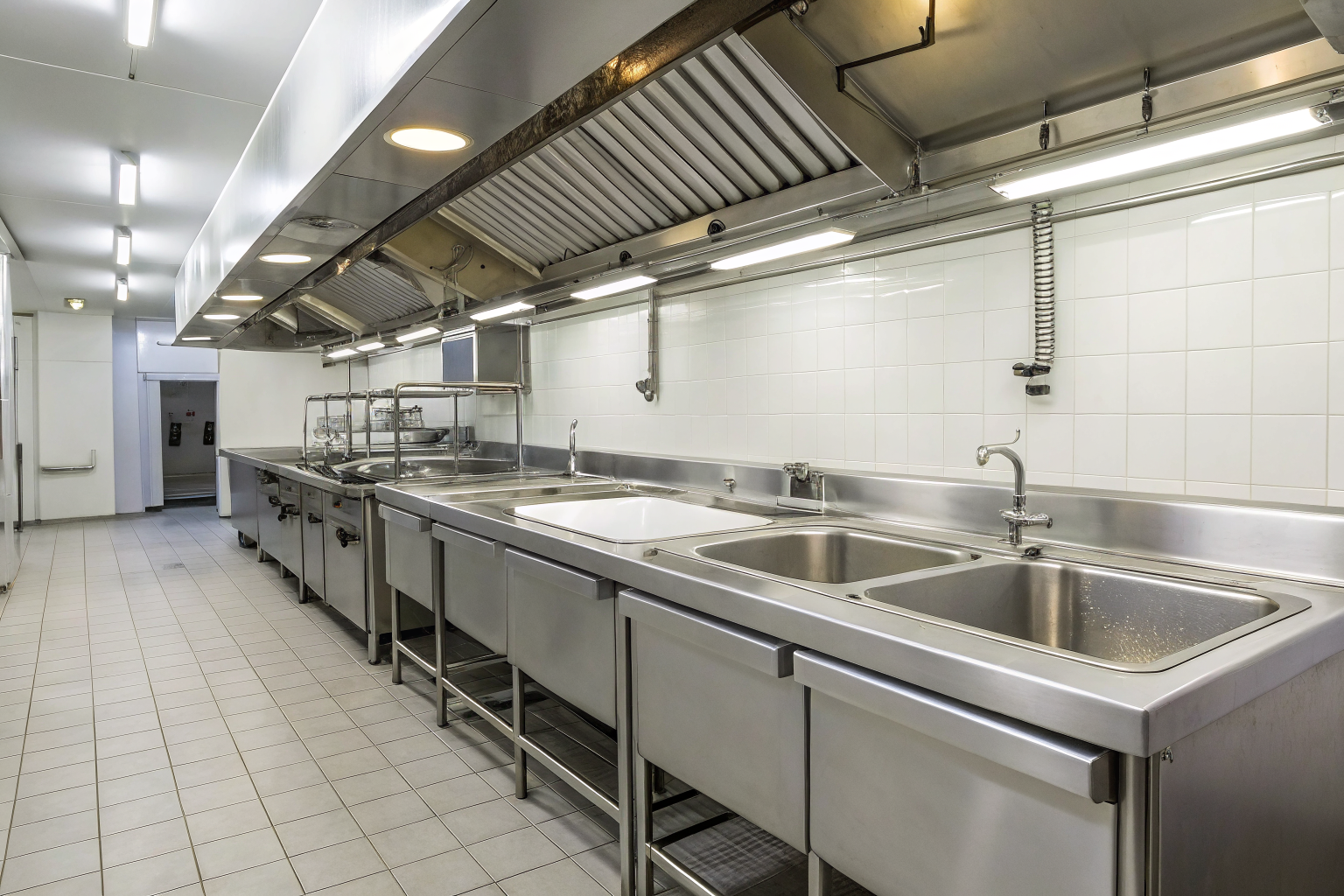
Florida adopted the International Plumbing Code with state-specific amendments codified in Florida Building Code Chapter 7. The code establishes minimum grease interceptor requirements for all commercial kitchens with grease-producing equipment.
Here’s the state plumbing code adoption process for grease trap compliance:
- Calculate trap size using IPC formulas based on fixture drain flow rates or drainage fixture units (DFUs)
- Install grease interceptors per Chapter 7 specifications with proper venting and access for cleaning
- Maintain traps under the 25% rule, clean before fats, oils, and grease (FOG) and solids reach 25% of total capacity
- Schedule cleaning at maximum 90-day intervals regardless of 25% rule status
- Document all cleaning with waste manifests from licensed grease haulers
- Keep cleaning records for minimum two years for building department inspection
Florida Building Code Chapter 7 mandates 90-day maximum cleaning intervals statewide. This requirement applies even in counties without FOG control programs. Building departments can inspect grease trap maintenance records during routine inspections or complaint investigations.
The state sets a 500-gallon minimum trap capacity for most commercial kitchens. Counties with FOG programs often increase this minimum. Miami-Dade requires 1,500 gallons while Broward allows the state 500-gallon minimum for small operations.
Installation must include sampling boxes or inspection ports for county FOG inspectors where local programs exist. Building departments issue permits for trap installation as part of commercial kitchen plumbing permits.
What Makes Miami-Dade County’s Grease Trap Requirements So Strict?
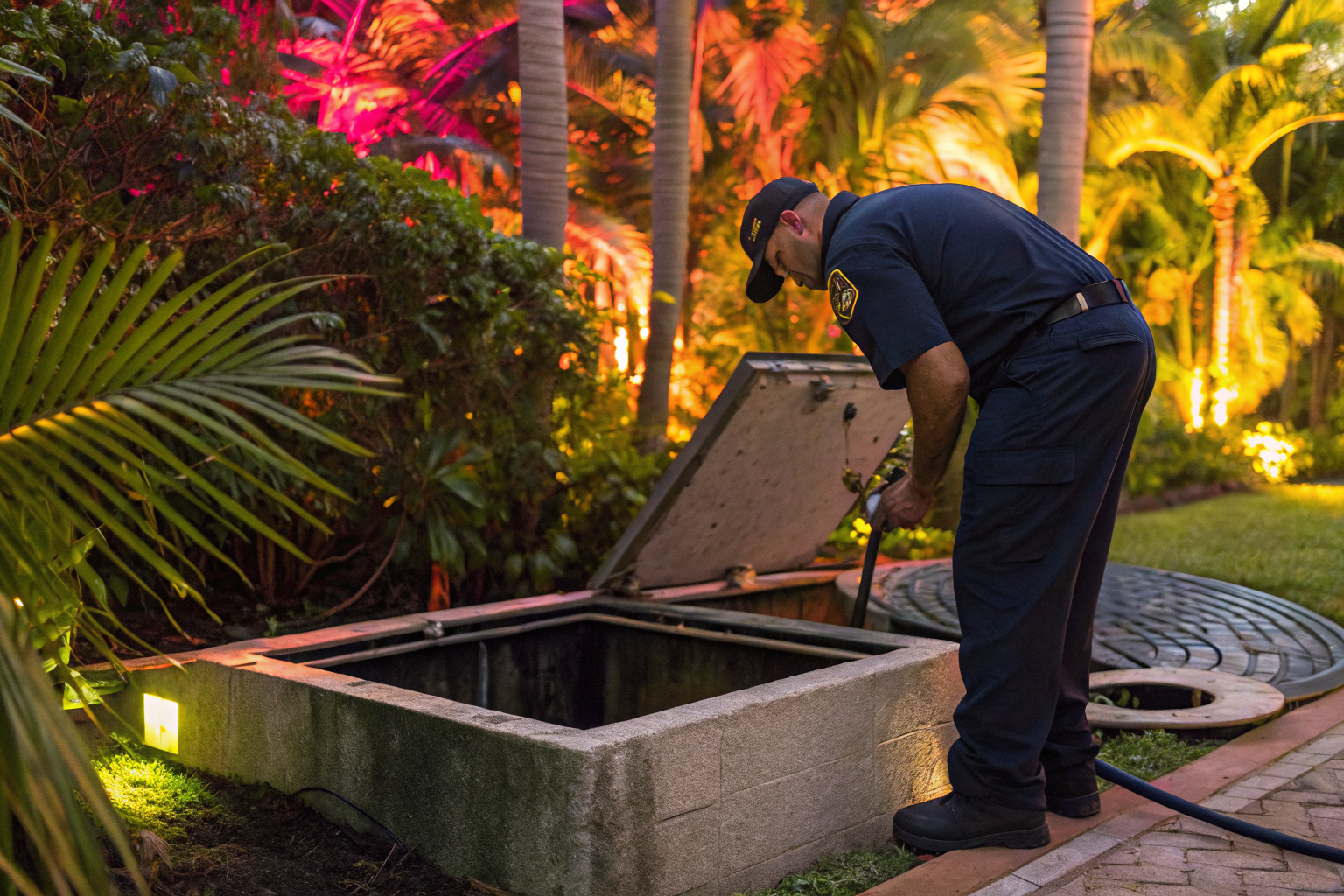
Miami-Dade County operates the most restrictive FOG control program in Florida under County Code Chapter 24. The county requires 1,500-gallon minimum trap sizes regardless of calculated flow rates, triple the state’s 500-gallon baseline.
| Requirement Type | Miami-Dade Standard | State Baseline |
| — | — |
| Minimum Trap Size | 1,500 gallons | 500 gallons |
| Cleaning Frequency | 90 days maximum | 90 days maximum |
| Permit Required | Yes, $200 annually | No |
| Inspection Schedule | Quarterly | None |
| Base Fine Amount | $500 per violation | No county fines |
| Maximum Daily Fine | $5,000 for repeat violations | No county fines |
Miami-Dade County FOG program exceeds state requirements because of chronic sewer overflow problems in the 1990s. The county documented that undersized grease traps caused 60% of collection system blockages in commercial districts. Their response was to mandate oversized traps regardless of calculated need.
The municipal FOG ordinance requires annual permits for all food service establishments. Restaurant owners pay $200 per year and submit to quarterly inspections. Inspectors check trap capacity, cleaning records, and waste manifests during each visit.
Penalty structure starts at $500 per violation. Common violations include undersized traps, missed cleaning intervals, and lack of proper waste documentation. Repeat violations escalate to $5,000 per day. Miami-Dade fines start at $500 per violation with escalation to $5,000 per day for repeat violations.
Restaurant owners cannot use calculated sizing methods to reduce trap requirements. A coffee shop that calculates a 750-gallon need must still install 1,500 gallons to meet county minimums. This city-level enforcement program creates the highest compliance costs in Florida.
How Do Broward and Palm Beach County FOG Programs Compare?

Broward and Palm Beach counties operate different FOG control programs despite similar demographics and restaurant densities. The variation shows how county delegation creates inconsistent enforcement across Florida.
| Program Feature | Broward County | Palm Beach County |
| — | — |
| Minimum Trap Size | 750 gallons | 1,000 gallons |
| Annual Permit Fee | $150 | $250 |
| Inspection Frequency | Bi-annually | Annually |
| Cleaning Documentation | Electronic reporting required | Paper manifests accepted |
| First Violation Fine | $250 | $500 |
| Maximum Daily Fine | $1,000 | $2,500 |
Broward County allows 750-gallon minimum trap sizes for most food service establishments. Palm Beach requires 1,000-gallon minimums for comparable restaurant types. Both exceed the state’s 500-gallon baseline but use different rationales.
Broward focused on administrative efficiency when designing their FOG program. They require electronic reporting through an online portal but conduct fewer inspections. Restaurant owners upload cleaning records and waste manifests digitally. Broward allows 750-gallon minimums while Palm Beach requires 1,000-gallon minimums for comparable restaurant types.
Palm Beach emphasizes enforcement over convenience. Their $250 annual permits cost $100 more than Broward’s but include annual inspections. Palm Beach inspectors physically verify trap capacity and cleaning compliance during site visits.
Both counties require licensed grease haulers and waste manifests but handle documentation differently. Broward mandates electronic submission within 48 hours of cleaning. Palm Beach accepts paper manifests submitted by mail or in-person within 30 days.
Penalty structures reflect each county’s enforcement philosophy. Broward starts with $250 fines and emphasizes compliance assistance. Palm Beach begins at $500 and escalates faster to discourage violations.
Which Florida Counties Have No FOG Control Programs?

Forty-four of Florida’s 67 counties lack independent FOG control programs. These counties rely solely on Florida Building Code Chapter 7 requirements with no additional permits, inspections, or county-specific mandates.
Counties without FOG programs include:
• Rural counties with limited commercial food service like Dixie, Glades, and Lafayette
• Small metropolitan counties that delegate enforcement to municipalities like Citrus and Hernando
• Counties where individual cities operate FOG programs instead of county-wide systems like Orange County (Orlando has its own program)
• Counties that attempted FOG programs but discontinued them due to budget constraints like Polk and Volusia
Restaurant owners in these counties must still comply with Florida Building Code grease trap requirements. You need proper sizing per IPC formulas, 90-day maximum cleaning intervals, and waste documentation from licensed haulers. Building departments can inspect maintenance records during routine inspections.
The enforcement gap means no proactive FOG inspections in 44 counties. Building departments respond to complaints about sewer backups or odor problems but don’t conduct scheduled grease trap inspections. Restaurant owners face lower compliance costs but risk surprise violations if problems occur.
Counties without programs often see FOG violations only during health department inspections or after sewer backup incidents. Some counties contract with regional authorities for FOG enforcement rather than operating independent programs.
Restaurant owners in counties without FOG control programs should verify local municipal requirements. Cities like Orlando, Tampa, and Jacksonville operate their own FOG programs separate from county authority.
Frequently Asked Questions
Do food trucks need grease traps under Florida Building Code?
Florida Building Code Chapter 7 applies to permanent food service establishments with grease-producing equipment. Mobile food vendors typically fall under county health department rules rather than building code requirements. Check with your operating county’s health department for mobile food service FOG requirements.
Can I use a 500-gallon trap if Miami-Dade requires 1,500 gallons?
No. Miami-Dade County Code Chapter 24 supersedes state minimums and requires 1,500-gallon capacity regardless of calculated flow rates. Installing an undersized trap results in immediate violation status and potential $500-$5,000 daily fines.
What happens if my Florida county doesn’t have a FOG program?
Counties without FOG programs default to Florida Building Code Chapter 7 requirements only. You’ll need grease traps per IPC sizing formulas with 90-day cleaning maximums, but no additional permits or county-specific requirements apply.