

Grease trap installation mistakes cost restaurant owners $15,000 in repairs when they skip critical pre-installation steps. Most failures happen because owners don’t understand code requirements, permit processes, or proper elevation specifications before breaking ground.
Key Takeaways:
- Under-sink installations require 18-inch minimum clearance while gravity interceptors need 3-foot access zones per UPC 1003.3.4
- Licensed plumbers reduce installation failure rates by 73% compared to DIY attempts on grease interceptors over 50 GPM
- Post-installation inspection covers 12 specific checkpoints including inlet-outlet elevation differential requirements
What Are the Three Main Grease Trap Installation Types?

Grease trap installation splits into three distinct categories based on capacity, location, and plumbing requirements. Each type requires specific installation plumbing configurations that determine cost, complexity, and code compliance.
Under-sink units handle 4-50 GPM and mount directly below dishwashing stations. These compact systems fit in tight spaces but need 18-inch minimum clearance for maintenance access. Most restaurants choose this option for 3 compartment sink grease trap installations because they’re cheaper and easier to retrofit.
Above-ground interceptors process 50-1,000 GPM and install at floor level or in utility rooms. They need concrete pads, dedicated electrical for some models, and three-foot access zones on all sides. These units work for high-volume operations that can’t dig underground.
Underground systems handle 500+ GPM and require excavation, concrete vaults, and traffic-rated covers. Municipal codes often mandate these for large restaurants because they separate more fats, oils, and grease before discharge.
| Installation Type | Capacity Range | Space Requirements | Installation Complexity |
|---|---|---|---|
| Under-sink | 4-50 GPM | 18″ clearance minimum | Low – 4-6 hours |
| Above-ground | 50-1,000 GPM | 3-foot access zones | Medium – 8-12 hours |
| Underground | 500+ GPM | Excavation required | High – 2-3 days |
Capacity thresholds determine which type you can install. Health departments require larger interceptors for restaurants that produce more than 300 gallons of wastewater daily. The grease interceptor size calculation includes all connected fixtures and their flow rates.
Which Code Requirements Must You Check Before Installation?
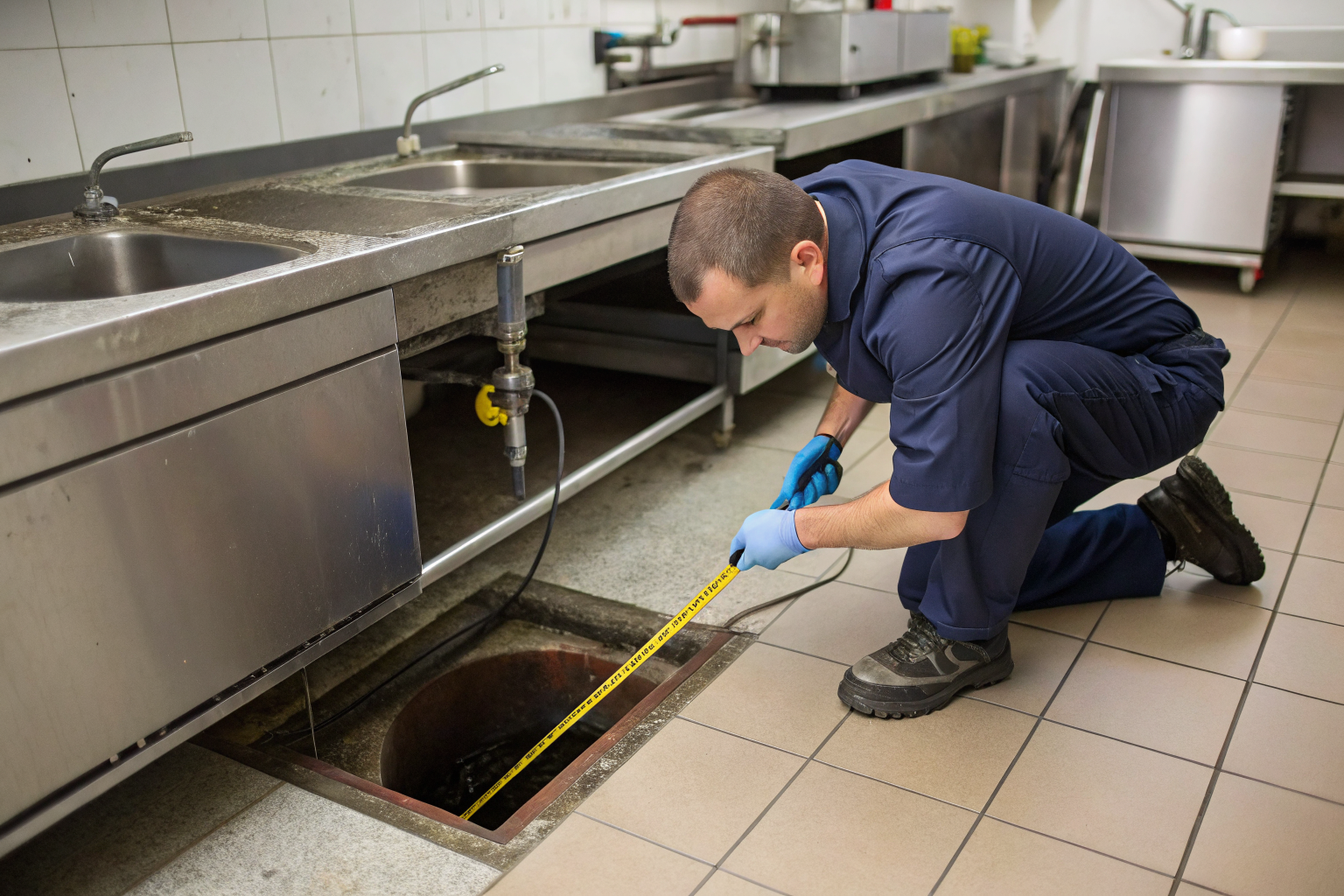
Uniform Plumbing Code mandates specific trap placement requirements that vary by jurisdiction and installation type. UPC requires 2% minimum slope while IPC allows 1% on drain lines to grease traps. Getting this wrong means ripping out the entire installation.
Code requirements cover four critical areas:
Distance requirements from fixtures. Grease traps must be within 50 feet of the farthest connected fixture under most codes. Longer runs require larger pipe sizes and different slope calculations.
Venting specifications. All grease traps need proper venting to prevent siphoning and odor problems. Vent pipes must extend through the roof or connect to existing plumbing vents per UPC Section 1003.3.4.
Access requirements for maintenance. Covers need 36-inch minimum clearance on underground units. Above-ground interceptors require removable access panels on all sides for pump-out access.
Elevation and slope specifications. Inlet pipes need 2-4 inch elevation differential above outlet pipes. Drain connections require proper slope to prevent backups and ensure flow velocity.
IPC and UPC differ on several installation requirements. IPC allows smaller access zones but requires more frequent cleaning schedules. UPC mandates larger interceptors but allows longer cleaning intervals. Check your local amendment to determine which code applies.
Most jurisdictions add local amendments that override state plumbing codes. These often include stricter requirements for commercial grease trap installations in sensitive watershed areas.
Do You Need Permits Before Installing Your Grease Trap?

Permit requirements vary by installation type and jurisdiction. Permit approval takes 14-21 business days in most jurisdictions for commercial installations. Under-sink units under 50 GPM often qualify for permit exemptions, while all interceptors over 100 GPM require full permitting.
The permit application process follows these steps:
Submit installation drawings with specifications. Include trap location, capacity, inlet/outlet elevations, and connection details. Most jurisdictions require licensed engineer stamps for interceptors over 500 GPM.
Pay permit fees and schedule plan review. Fees range from $150-800 depending on system size and local rates. Plan review adds 5-10 business days to approval timeline.
Schedule rough inspection before concrete work. Inspectors verify excavation depth, pipe slope, and structural requirements. This happens before backfilling or pouring concrete pads.
Complete final inspection after installation. Final inspection covers all connection points, venting, access requirements, and operational testing. Some jurisdictions require flow testing with dye to verify retention times.
Exempt installations still need building department approval in most areas. Even simple under-sink replacements require permits when you modify existing plumbing connections. Permit violations result in stop-work orders and double fees for retroactive approvals.
Local health departments often require separate approvals from building permits. These focus on capacity calculations and maintenance access rather than structural requirements.
Should You Hire a Plumber or Install It Yourself?

Licensed plumbers reduce installation failure rates significantly compared to DIY attempts on larger systems. Professional installation costs $800-2,400 more but includes 2-year warranty coverage. Code requirements mandate professional installation for most commercial applications.
DIY installation works for simple under-sink replacements but gets complex fast. Most restaurant owners lack the tools and expertise for proper testing and code compliance. Underground grease trap installation always requires professional contractors because of excavation and concrete work.
| Factor | DIY Installation | Professional Installation |
|---|---|---|
| Cost | $1,200-3,500 | $2,000-5,900 |
| Timeline | 1-3 days (learning curve) | 4-12 hours (experienced) |
| Code Compliance | 60% pass rate on inspection | 95% pass rate on inspection |
| Warranty Coverage | None | 2 years parts and labor |
| Liability | Owner responsibility | Contractor insurance |
Complexity thresholds determine when professional installation becomes necessary. Any system requiring excavation, concrete work, or electrical connections needs licensed contractors. Most jurisdictions require master plumber licenses for commercial grease interceptor installations.
Insurance considerations favor professional installation. Many commercial policies exclude coverage for DIY plumbing failures that cause property damage. Licensed contractors carry liability insurance that covers installation defects.
Warranty coverage differs between DIY and professional installs. Manufacturer warranties often void for improper installation. Professional installers provide separate installation warranties that cover labor defects.
How Do You Handle Inlet and Outlet Elevation Requirements?

Inlet outlet elevation determines proper trap operation and flow characteristics. This means the inlet pipe must be 2-4 inches higher than outlet for proper hydraulic operation. Getting elevation wrong causes flow problems, poor separation, and premature failure.
Proper elevation differential creates the hydraulic conditions needed for grease separation. Water enters through the elevated inlet and slows down as it hits the larger trap volume. This velocity reduction allows fats, oils, and grease to rise to the surface while cleaned water exits through the lower outlet.
Calculating proper inlet height requires measuring from the trap bottom to determine outlet elevation first. Add 2-4 inches to set inlet elevation, then work backward to fixture connections. Most installations need gradual slope transitions to avoid sharp elevation changes that create turbulence.
Outlet positioning requirements vary by trap design but generally need the outlet pipe to draw water from the middle zone of the trap. Too high and grease escapes. Too low and sediment gets pulled through. The outlet baffle or tee fitting controls this draw point.
Slope calculations for drain connections become critical when dealing with elevation requirements. Standard 2% slope means 1/4 inch drop per foot of horizontal run. Long runs to grease traps often require intermediate elevation adjustments or pump stations.
Installation plumbing configuration must account for fixture elevations, trap location, and required slopes. This often means custom transitions and fittings to maintain proper hydraulics. Pre-fabricated systems include these calculations, while field-built installations require engineering review.
What Does Post-Installation Inspection Actually Check?

Post-installation inspection verifies 12 critical installation points that determine system approval. Inspectors test water flow for 15 minutes minimum to verify proper retention time and separation performance. Failed inspections mean reinstallation at full cost.
Inspection checklist covers these areas:
Structural integrity and access requirements. Covers, frames, and access points must meet load ratings and clearance specifications. Underground units need traffic-rated covers if installed in drive areas.
Plumbing connections and leak testing. All joints get pressure tested at 10 PSI for 15 minutes minimum. Leaks require immediate repair before approval.
Inlet and outlet elevation verification. Inspectors measure actual elevations against approved drawings. Deviations over 1 inch typically require modifications.
Flow testing and retention time verification. Water flow through the system must meet calculated retention times based on capacity. Inspectors use dye testing to verify flow patterns.
Venting system operation and odor control. Vent pipes must draw properly without creating vacuum conditions. Odor complaints from neighboring businesses can fail the inspection.
Documentation and maintenance manual review. Operators need proper documentation for cleaning schedules, capacity limits, and emergency procedures.
Water testing procedures involve running all connected fixtures simultaneously to verify system capacity. Inspectors check for overflow conditions, backup situations, and proper separation during peak flow conditions.
Documentation requirements include manufacturer specifications, capacity calculations, cleaning schedules, and emergency contact information. Many jurisdictions require operator training certification before final approval.
Fats, oils, and grease separation gets verified through visual inspection during flow testing. Proper installations show clear separation layers without mixing or turbulence that indicates hydraulic problems.
What Installation Mistakes Cause the Most Failures?

Common installation mistakes cause system failure and expensive repairs within the first year of operation. Improper slope accounts for 34% of failed installations in first-year inspections. These errors cost $3,000-12,000 to fix because they require major rework.
The top five installation errors create predictable failure patterns. Wrong pipe sizing causes backup conditions that overflow the trap and flood the kitchen. Undersized pipes can’t handle peak flow from multiple fixtures running simultaneously.
Improper slope creates flow problems that prevent proper separation. Too steep and water moves too fast for grease to separate. Too flat and solids settle in the lines instead of reaching the trap. Both conditions require excavation and re-piping to fix.
Missing or improper venting causes siphoning that pulls grease through the outlet pipe. This defeats the separation process and creates odor problems. Vent repairs often require opening walls and extending pipes through the roof.
Incorrect elevation differential stops the hydraulic separation process. Water flows straight through without slowing down for grease separation. Fixing elevation problems means raising the entire trap or modifying inlet connections.
Poor access planning creates maintenance nightmares that lead to cleaning violations. Covers buried under equipment or too close to walls prevent proper pump-out access. Moving installed equipment costs more than proper planning during installation.
Prevention strategies focus on proper planning and professional installation for complex systems. Most mistakes happen when owners try to save money on professional installation for systems that exceed their skill level.
Frequently Asked Questions
How long does commercial grease trap installation take?
Under-sink installations take 3-6 hours while underground interceptor installations require 2-3 days including excavation and concrete work. Professional installations include testing time which adds 2-4 hours to verify proper operation.
Can you install a grease trap in an existing restaurant?
Yes, but retrofit installations cost 40-60% more than new construction installs due to access limitations and potential floor cutting. Most existing restaurants choose under-sink units to avoid major plumbing modifications.
What tools do you need for grease trap installation?
Professional installations require pipe wrenches, level, measuring tape, PVC primer and cement, and flow testing equipment. DIY attempts often fail because proper testing equipment costs more than hiring a licensed plumber.
Do grease trap installations need electrical connections?
Passive grease traps require no electrical connections, only plumbing. Automatic grease removal devices need 110V power supply and GFCI protection, which adds $300-500 to grease trap installation cost.