
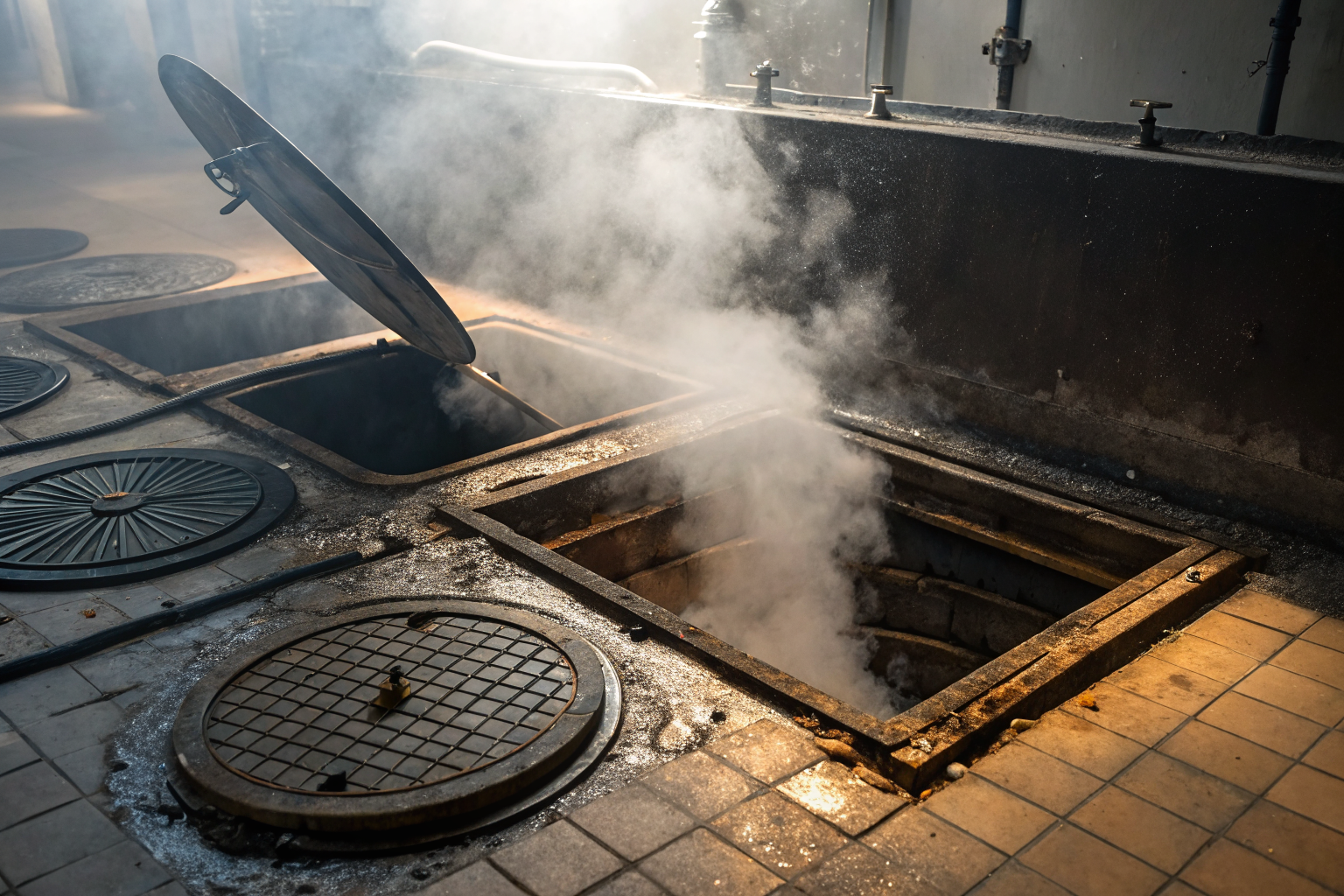
Grease trap leaking creates immediate FOG violations that can shut down your kitchen and trigger thousands in emergency response fees. A small leak worsens fast, causing sanitary sewer overflow risks and mandatory cleaning requirements that violate the 25% rule.
Key Takeaways:
- Lid gasket failure accounts for 60% of grease trap leaks and costs $15-40 to fix
- Tank corrosion through the sidewall requires full replacement at $800-3,500 depending on size
- FOG bypass failure from outlet leaks violates the 25% rule and triggers mandatory emergency cleaning
Where Do Grease Traps Leak Most Often?
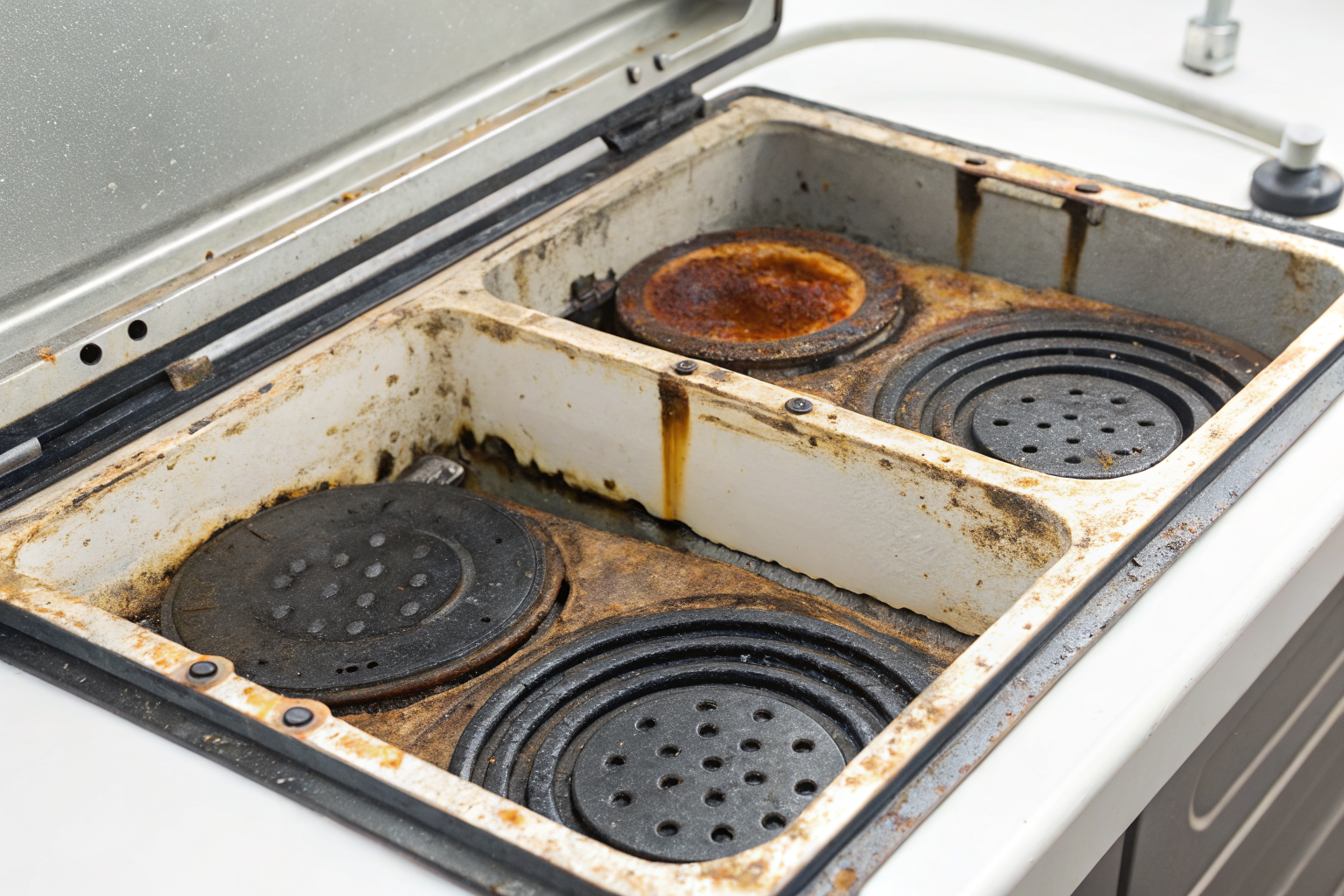
Lid gaskets fail most frequently at 18-24 months in active commercial grease traps. The constant thermal cycling and fats oils and grease (FOG) exposure breaks down rubber seals faster than any other component.
Inlet outlet connection failures rank second, typically showing up after 5-8 years of service. The joints where pipes enter and exit the trap experience the most stress from thermal expansion and chemical exposure.
Riser joint leaks occur less frequently but create the messiest cleanup problems. These connections between the tank and access risers fail when ground settlement shifts the components.
| Leak Location | Frequency | Typical Repair Cost |
|---|---|---|
| Lid gasket | 60% of all leaks | $15-40 for gasket replacement |
| Inlet/outlet connections | 25% of all leaks | $150-400 for joint repair |
| Tank sidewall corrosion | 10% of all leaks | $800-3,500 for replacement |
| Riser joints | 5% of all leaks | $200-600 for resealing |
Service records from commercial grease trap maintenance companies show lid gasket failure represents 60% of all leak calls. Most operators don’t realize gaskets need replacement before visible leaking starts.
Is Your Grease Trap Leaking from the Lid?
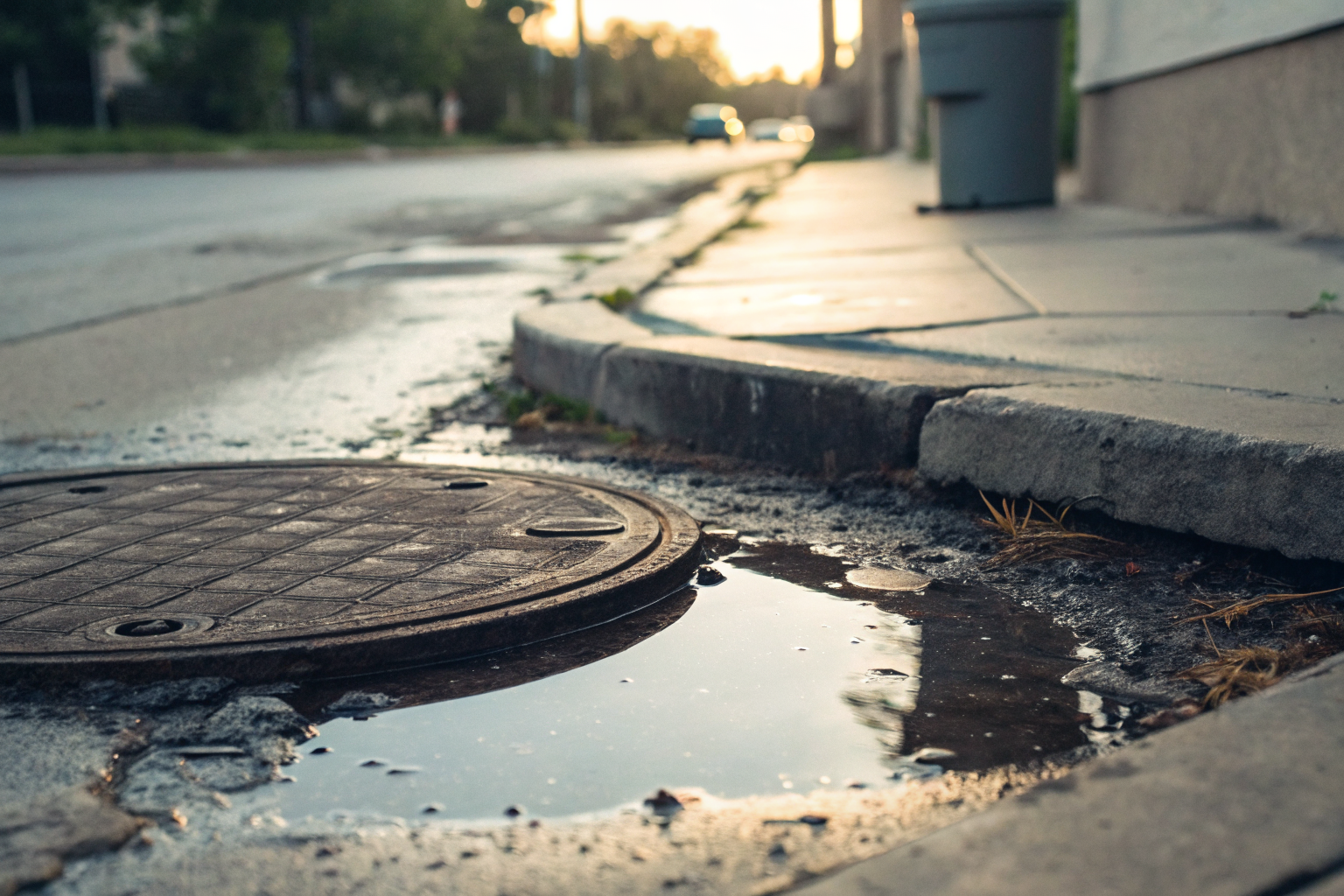
Lid leaks create water pooling directly under the access cover. You’ll see wet concrete or standing water that doesn’t dry between cleaning cycles.
Follow these steps to diagnose lid gasket problems:
Remove the lid and inspect the gasket groove. Look for cracked, hardened, or compressed rubber that won’t spring back when pressed.
Check for FOG buildup on the gasket surface. Hardened grease coating prevents proper sealing even with good gaskets.
Test gasket compression by pressing firmly around the entire perimeter. Soft spots or areas that don’t compress indicate gasket failure.
Look for rust stains or mineral deposits on the lid rim. These show where water has been leaking and drying repeatedly.
Measure gasket thickness against manufacturer specs. Most gaskets should be 3/8 to 1/2 inch thick when new.
Lid gasket replacement costs $15-40 depending on trap size, while full lid replacement runs $150-300. Most gasket failures happen because operators wait too long between replacements.
How Do You Replace a Grease Trap Gasket?
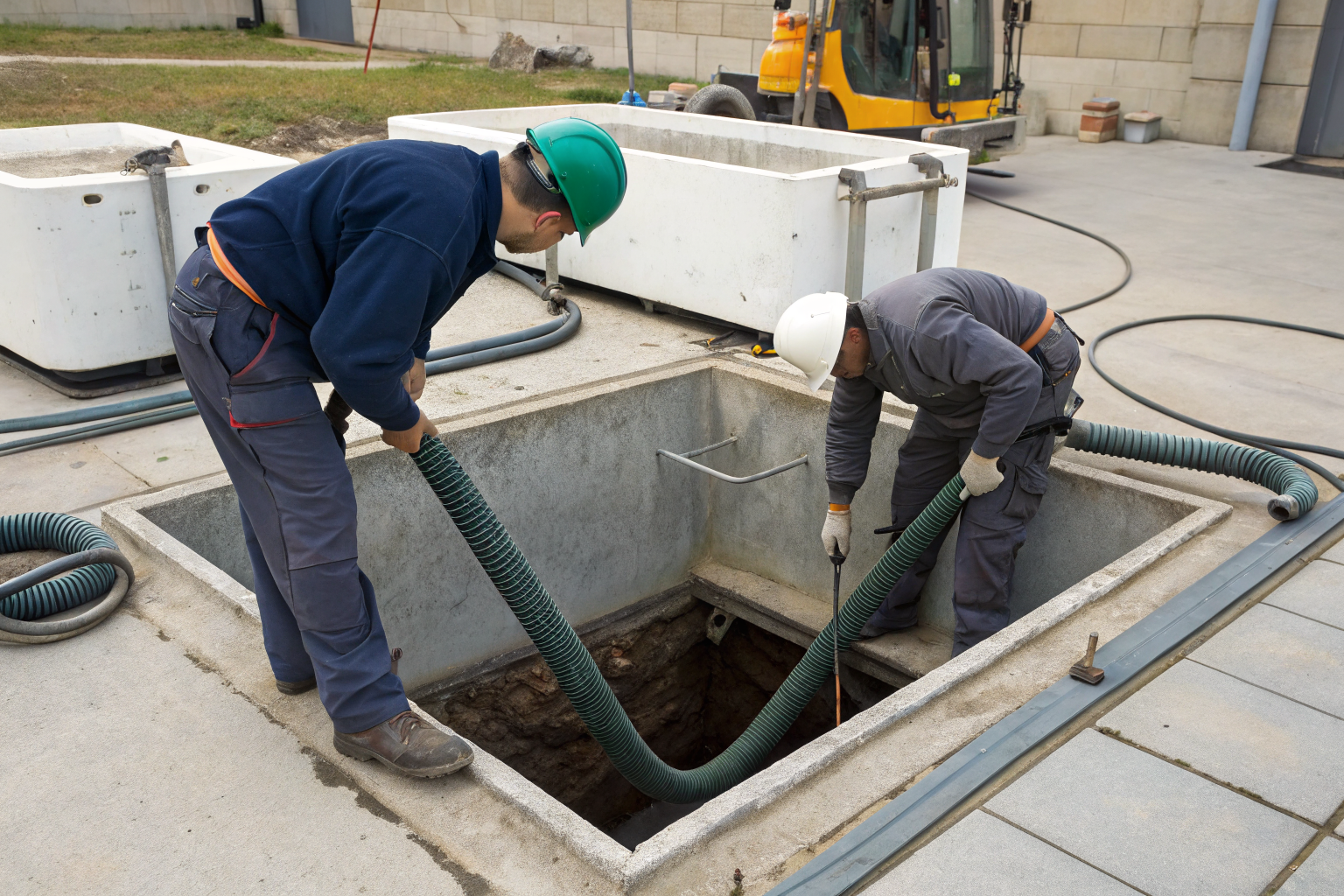
Gasket replacement requires trap emptying and cleaning first. You cannot install a new gasket on a full trap without creating worse seal problems.
Here’s the replacement process:
Empty the trap completely using proper FOG waste disposal methods. The tank must be bone dry for gasket adhesion to work.
Remove the old gasket and clean the groove with degreasing solution. Scrape out hardened FOG deposits that prevent proper seating.
Measure the groove dimensions and order the correct gasket size. Most manufacturers use standard sizes, but verify before ordering.
Install the new gasket with food-grade sealant if specified. Some gaskets need adhesive, others rely on compression alone.
Torque the lid bolts to manufacturer specifications in a cross pattern. Over-tightening crushes the gasket and creates leak points.
Fill the trap with water and check for leaks before putting back in service. Test the seal under full operating pressure.
Gasket replacement takes 45-60 minutes after trap is emptied and cleaned. Most commercial grease trap repair services charge $150-250 for the complete job including gasket cost.
When Do Inlet and Outlet Connections Fail?
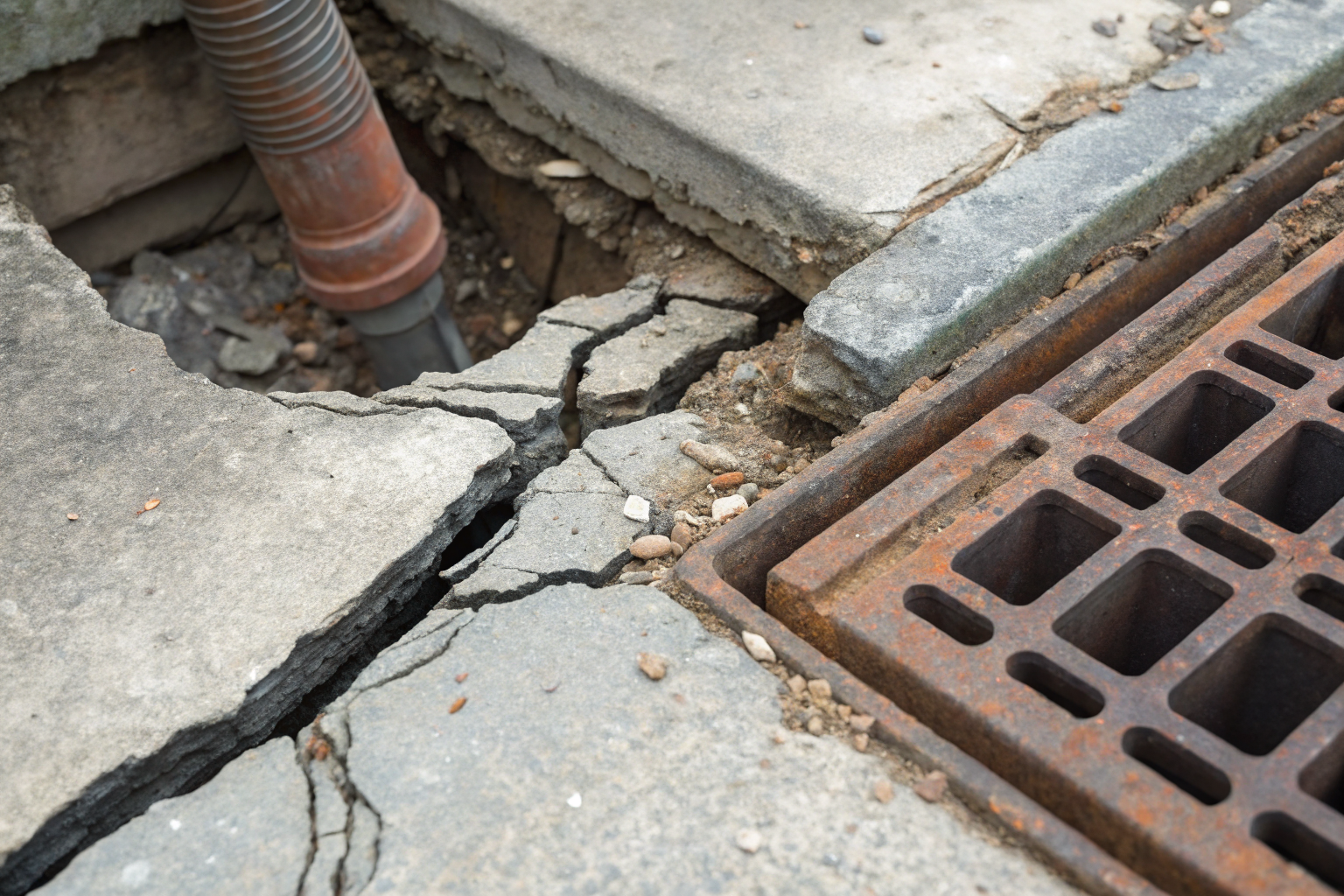
Inlet outlet connection failures cause sanitary sewer overflow risk when FOG bypasses the trap entirely. These joints fail from thermal expansion cycles that crack pipe connections over time.
Connection failures typically occur after 5-8 years in high-volume restaurants. The constant hot water flow expands and contracts the pipes, loosening threaded joints and cracking solvent-welded connections.
PVC connections fail faster than steel in grease trap applications. The plastic becomes brittle from chemical exposure and temperature changes. Steel connections rust through but give more warning before complete failure.
FOG bypass failure happens when outlet connections leak, allowing untreated wastewater to skip the separation process. This violates local discharge limits and can trigger emergency grease response requirements.
I’ve seen this happen when restaurants ignore small drips from pipe connections. The leak gets worse during busy periods when hot water flow increases, eventually creating a full bypass situation that shuts down the kitchen.
Connection repairs require excavation for underground grease trap installation points, making them more expensive than lid gasket fixes.
How Do You Identify Tank Corrosion Before It Leaks?
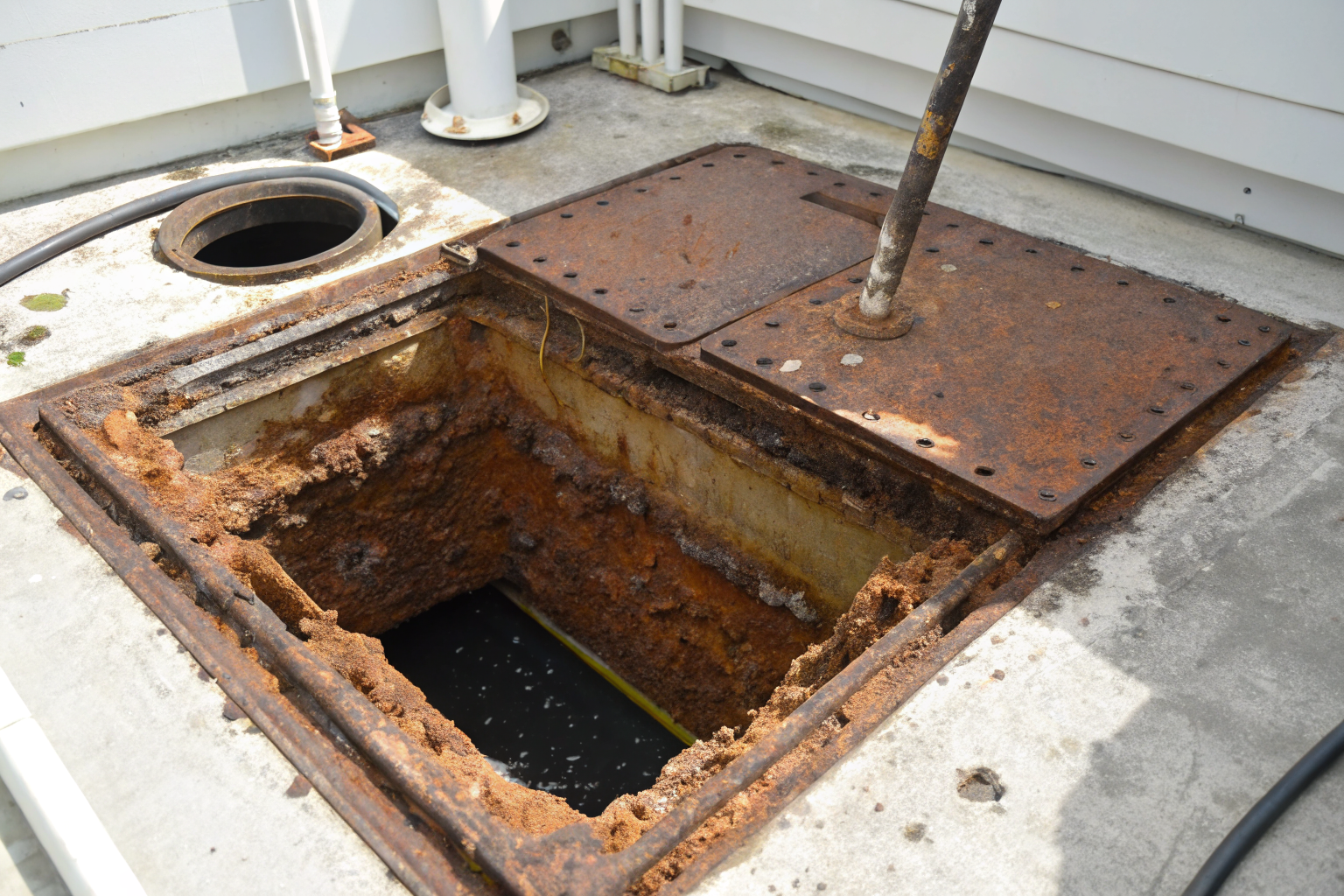
Tank corrosion identification prevents hydrogen sulfide gas exposure and catastrophic tank failure. Hydrogen sulfide reduces steel thickness by 0.1-0.3mm annually in active grease traps.
Watch for these corrosion warning signs:
• Surface rust that flakes off when touched. This indicates the protective coating has failed and metal degradation has started.
• Pitting or small holes in the tank walls. These start as pinpoints and grow rapidly once the steel is breached.
• White or green mineral deposits on the exterior. These form where water has been seeping through micro-cracks in the tank.
• Hydrogen sulfide smell stronger than normal. Increased gas production often comes from tank corrosion creating new bacterial growth areas.
• Metal thickness under 3/16 inch when measured with ultrasonic testing. Most tanks start at 1/4 inch thickness when new.
Steel grease traps in high-sulfur environments corrode faster than manufacturer warranties cover. The 15-20 year expected life drops to 8-12 years when hydrogen sulfide concentrations exceed normal levels.
Once you see through-wall corrosion, repair isn’t an option. The tank needs replacement before it creates environmental contamination or workplace safety hazards.
When Should You Replace vs Repair a Leaking Grease Trap?
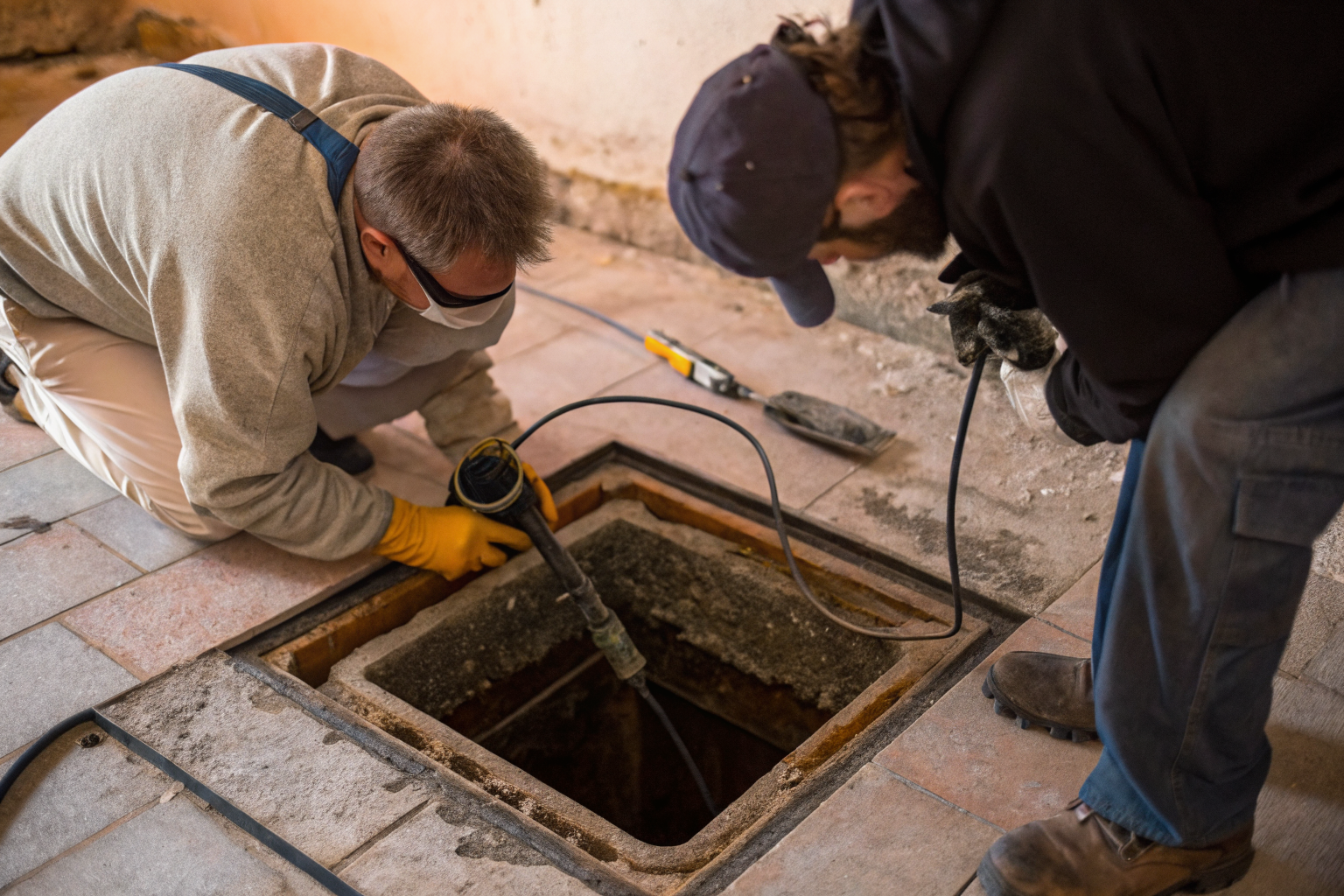
Full trap replacement costs $800-3,500 depending on capacity and installation complexity. The decision comes down to age, multiple failure points, and emergency grease response requirements.
| Factor | Repair | Replace |
|---|---|---|
| Age of unit | Under 8 years | Over 10 years |
| Number of leak points | Single gasket or connection | Multiple locations leaking |
| Tank condition | Surface corrosion only | Through-wall corrosion visible |
| Repair cost vs replacement | Under 30% of replacement cost | Over 50% of replacement cost |
| Downtime acceptable | 1-2 days for repairs | 3-5 days for replacement |
Traps over 10 years old with multiple leak points should be replaced rather than repaired. The labor cost for multiple repairs often exceeds half the replacement price, making new installation the better value.
Emergency replacement takes 3-5 business days including permits and installation. Plan for temporary kitchen modifications or reduced capacity during the replacement period.
Automatic grease trap systems have fewer leak points but cost more to replace when tank corrosion occurs. The electronic components add $1,500-2,500 to replacement costs compared to passive units.
Frequently Asked Questions
Can I temporarily seal a grease trap leak while waiting for repairs?
No temporary sealants work on grease traps due to FOG exposure and temperature fluctuations. Emergency grease response requires immediate professional pumping and proper repair to prevent FOG bypass failure and regulatory violations. Temporary fixes make the problem worse by masking the leak location.
How long does a grease trap gasket last?
Standard grease trap gaskets last 18-24 months in normal restaurant conditions. High-volume operations or exposure to harsh chemicals can reduce gasket life to 12-15 months, requiring more frequent replacement schedules. Keep spare gaskets on hand to avoid emergency service calls.
What happens if I ignore a small grease trap leak?
Small leaks worsen fast and can trigger FOG bypass failure within weeks. This violates the 25% rule and creates sanitary sewer overflow risk, leading to mandatory emergency cleaning and potential restaurant shutdown orders. Address leaks immediately to avoid regulatory problems and expensive emergency repairs.