
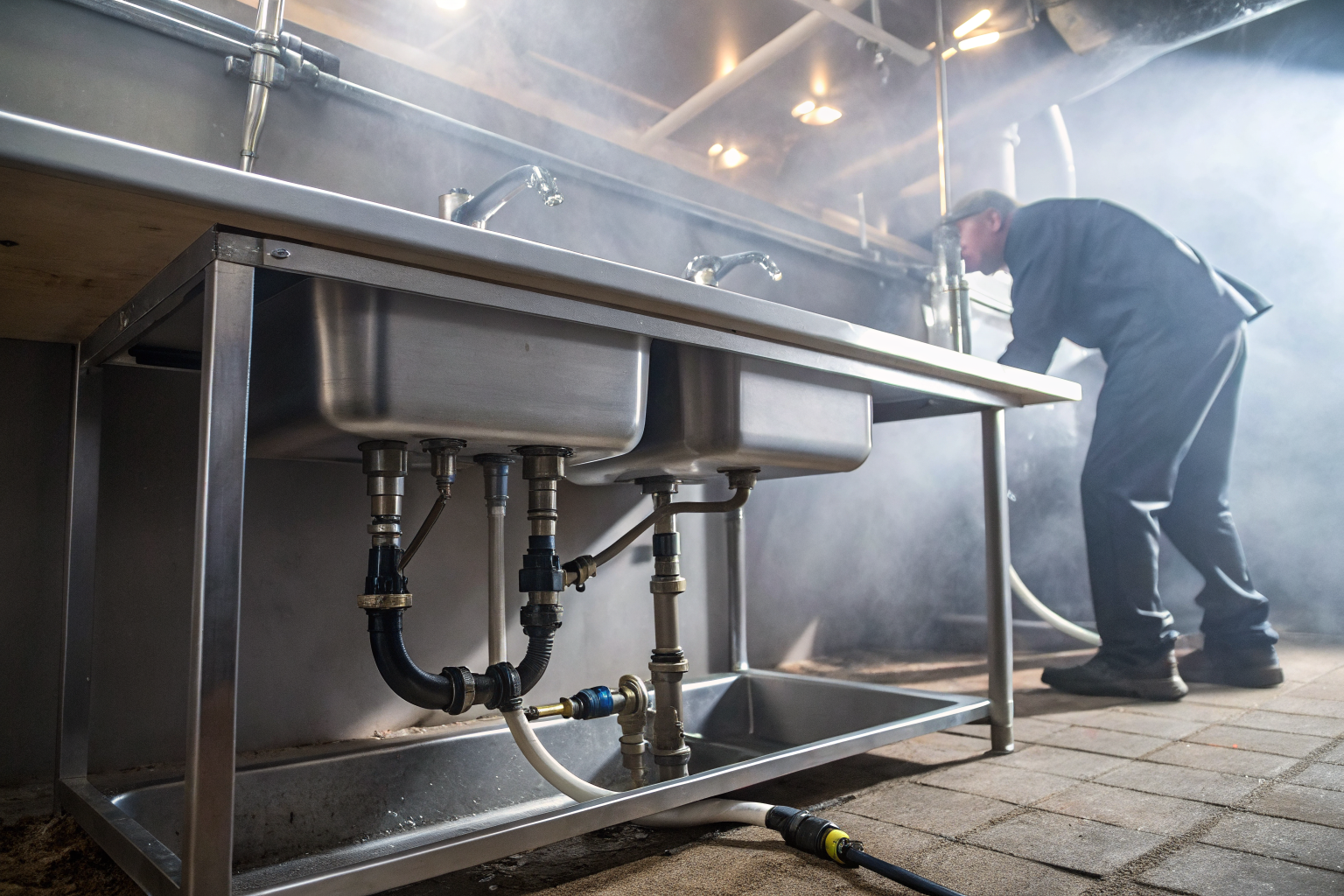
3 compartment sink grease trap installation fails most inspections because contractors ignore the Uniform Plumbing Code’s strict elevation and distance requirements. This creates expensive rework and delayed restaurant openings. Commercial grease trap systems need precise plumbing configuration to meet FOG regulations.
Key Takeaways:
- Grease traps must sit at least 4 feet from 3-compartment sink fixtures under UPC Section 1003.3.4.2
- Inlet pipe elevation must be 2 inches higher than outlet elevation to ensure proper flow
- All 3-compartment sink grease trap installations require individual venting per UPC Section 1002.1
How Do You Install a Grease Trap Under a 3-Compartment Sink?
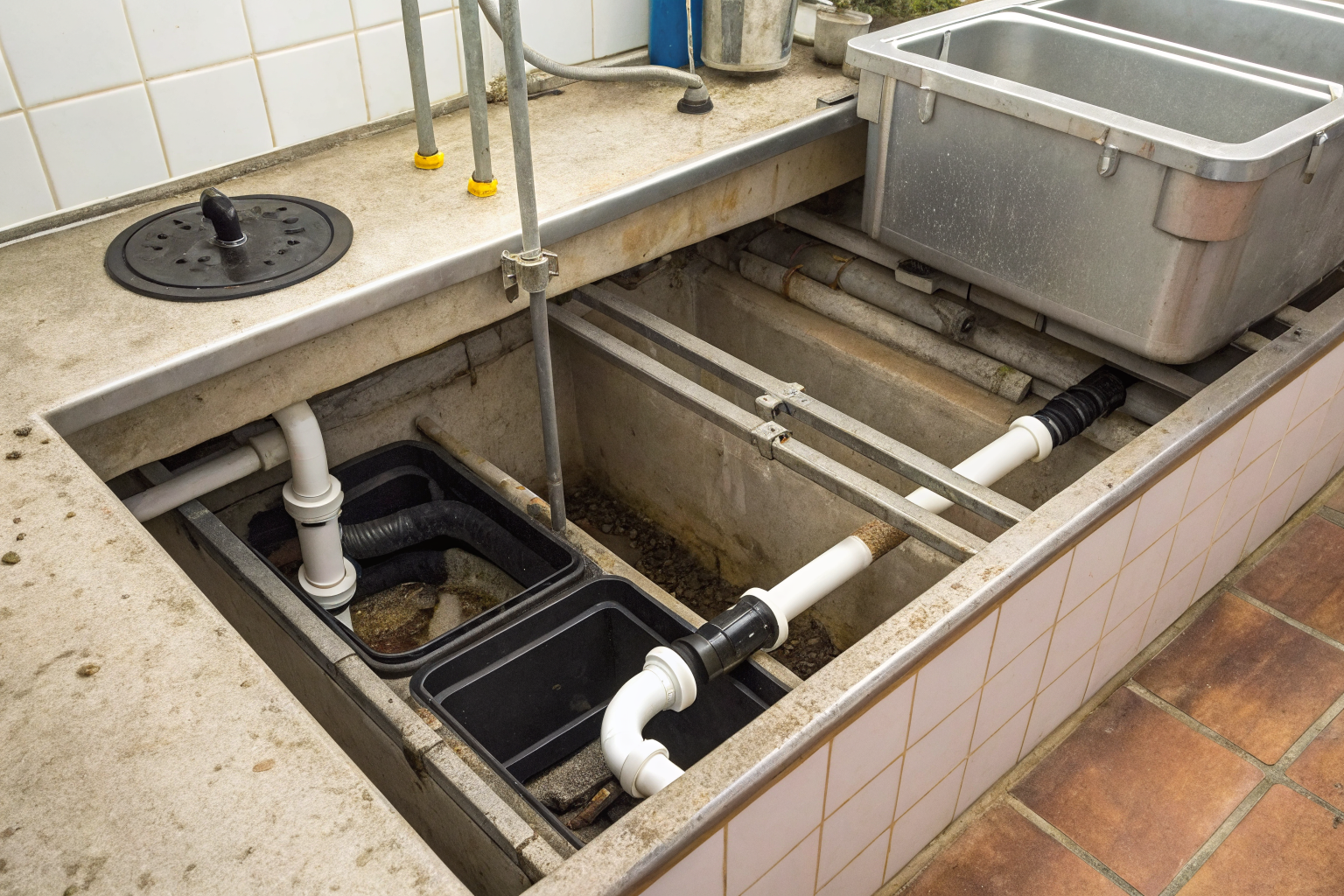
3-compartment sink grease trap installation requires specific plumbing configuration to handle the combined wastewater from all three basins. The grease interceptor must connect properly to prevent backflow and maintain separation efficiency.
Follow these installation steps:
Position the grease interceptor within 4 feet of the sink’s drain outlet, measuring horizontally from the fixture trap weir to the grease trap inlet.
Set inlet elevation 2 inches higher than the outlet connection to create proper hydraulic flow through the trap body.
Connect the common drain line from all three compartments using a 3-inch minimum diameter pipe before entering the grease trap inlet.
Install the outlet connection with 1/4-inch per foot minimum slope toward the building’s main drain or septic system.
Secure all fittings with appropriate gaskets and ensure watertight connections at both inlet and outlet points.
Test the system by filling all compartments simultaneously and checking for proper drainage flow and trap performance.
The minimum 2-inch elevation difference between inlet and outlet connections prevents grease from backing up into the sink basins. Without this elevation, fats oils and grease can solidify in the drain lines.
What Are the Drain Connection Specifications for 3-Bay Sink Grease Traps?

Drain connection specifications determine proper grease trap performance by controlling flow rates and preventing system failures. Installation plumbing configuration must handle the combined discharge from all compartments.
| Component | Specification |
|---|---|
| Drain pipe diameter | 3-inch minimum |
| Connection type | Direct connection required |
| Fixture units | 6 units per compartment |
| Flow rate capacity | 20-35 GPM typical |
| Pipe material | Schedule 40 PVC or cast iron |
| Slope requirement | 1/4-inch per foot minimum |
The 3-inch minimum drain pipe diameter handles peak flow during busy service periods without backing up. Smaller pipes create bottlenecks that force fats oils and grease to accumulate upstream of the trap.
Direct connections prevent air gaps that would allow grease to cool and solidify before reaching the separation chamber. Indirect connections through floor drains or similar fixtures violate most local codes for commercial kitchens.
Fixture unit calculations determine the trap’s required capacity. Each sink compartment generates 6 fixture units, so a 3-compartment system needs an 18-unit minimum grease trap. This translates to flow rates between 20-35 GPM depending on the manufacturer’s sizing charts.
How Far Can a Grease Trap Be from a 3-Compartment Sink?
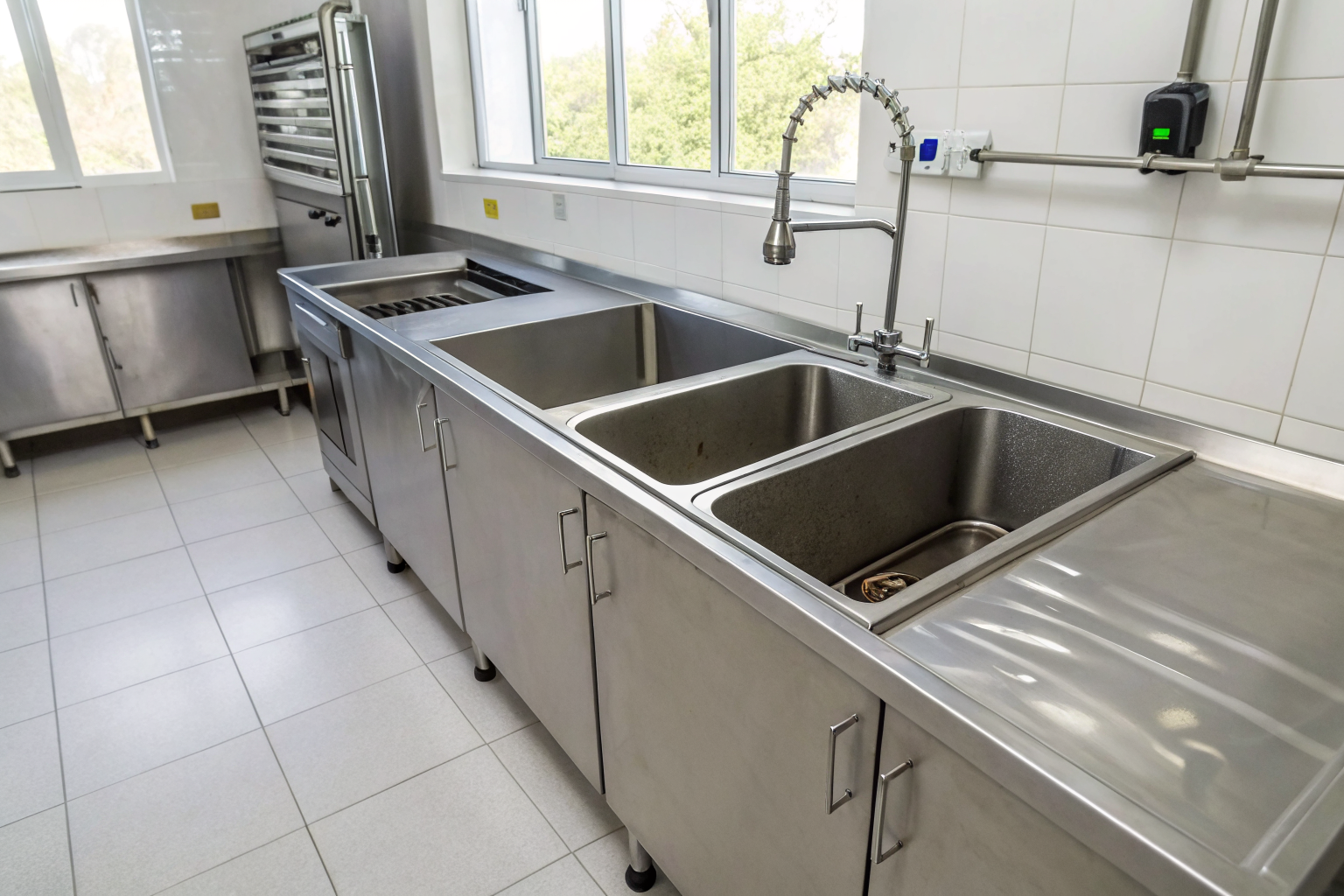
Trap placement requirements define maximum distance from fixture as the horizontal measurement between the sink’s trap weir and the grease trap inlet. This prevents fats oils and grease solidification in connecting pipes.
The Uniform Plumbing Code sets a 4-foot maximum horizontal distance under Section 1003.3.4.2. This means measuring straight-line distance, not pipe length. You can route pipes with bends and offsets, but the actual separation between fixture and trap cannot exceed 4 feet.
Beyond this distance, grease cools below its liquid point and sticks to pipe walls. The four-foot rule keeps wastewater temperature high enough for effective separation in the trap chamber.
One exception applies to direct burial installations where the grease trap sits below grade. These systems can extend the distance up to 10 feet because soil temperature helps maintain grease liquidity. However, local codes often override this exception.
Most jurisdictions enforce the standard 4-foot rule regardless of installation type. Check with your local plumbing authority before exceeding UPC minimums. Getting caught with an oversized installation means ripping out completed work.
What Elevation Requirements Apply to 3-Compartment Sink Grease Trap Connections?
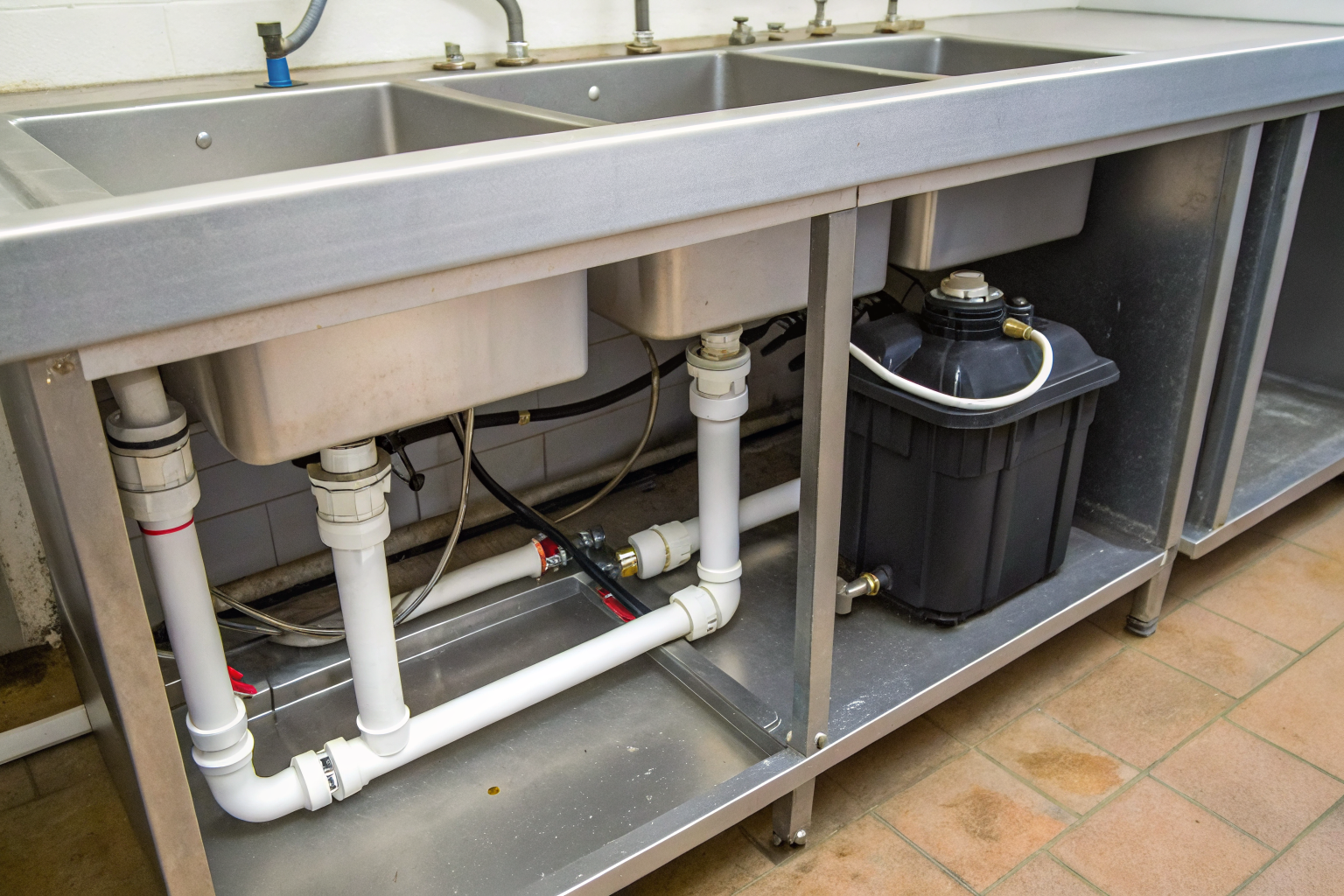
Inlet outlet elevation ensures proper hydraulic flow through grease interceptor chambers by creating the pressure differential needed for separation. Without correct elevation, the system cannot remove fats oils and grease effectively.
The inlet connection must sit at least 2 inches higher than the outlet connection. This elevation difference prevents backflow and maintains forward momentum through the trap. Installation plumbing configuration should slope continuously from sink to trap to building drain.
Slope calculations require 1/4-inch per foot minimum for grease trap inlet piping. A 4-foot horizontal run needs 1-inch total drop from sink drain to trap inlet. This keeps wastewater moving fast enough to prevent grease buildup in connecting pipes.
Fixture height considerations affect the available elevation for proper connections. Standard 3-compartment sinks sit 34-36 inches above floor level. Under-counter grease traps need enough clearance for the required elevation difference plus adequate slope to the building drain.
Elevation affects separation efficiency because grease naturally floats to the surface. Proper hydraulic flow allows time for this separation while preventing turbulence that would remix separated grease back into the effluent stream.
Do 3-Compartment Sink Grease Traps Need Individual Venting?

Venting for 3-comp installations prevents siphonage and backflow issues that compromise trap performance. The Uniform Plumbing Code requires individual venting to protect the trap seal and maintain proper operation.
Venting requirements include:
• Individual vent connection directly from the grease trap, not shared with other fixtures or drains
• 2-inch minimum vent pipe diameter for grease traps serving 3-compartment sinks, based on fixture unit load
• Proper vent termination through the roof or approved sidewall location per local building codes
• Wet venting prohibition – grease trap vents cannot serve as wet vents for other plumbing fixtures
• Vent slope requirements of 1/4-inch per foot toward the trap to drain any condensation back to the unit
Code requirements specific to 3-comp installations demand individual venting because these systems handle higher grease loads than single-basin sinks. Shared venting allows cross-contamination between fixtures and reduces the trap’s separation efficiency.
Common venting mistakes include undersized vent pipes, shared connections with floor drains, and improper termination points. These violations fail inspection and create operational problems like slow drainage and sewer gas odors.
The 2-inch minimum vent pipe diameter prevents blockages from grease vapors that can solidify in smaller pipes. Larger commercial installations may require 3-inch or 4-inch vents depending on trap capacity and local code amendments.
Frequently Asked Questions
Can you connect all three compartments to one grease trap?
Yes, all three compartments of a 3-bay sink connect to a single grease trap through a common drain line. The trap must be sized for the combined flow rate of all compartments, typically requiring a 20-35 GPM unit for standard commercial sinks. This configuration meets code requirements and provides cost-effective grease separation.
What happens if you install the grease trap too far from the sink?
Installing beyond the 4-foot maximum distance allows fats, oils, and grease to cool and solidify in the drain lines before reaching the trap. This causes blockages and reduces separation efficiency, violating UPC Section 1003.3.4.2. The result is expensive drain cleaning and potential code violations during inspection.
Do you need a permit to install a grease trap under a 3-compartment sink?
Most jurisdictions require both plumbing and FOG management permits for 3-compartment sink grease trap installations. The plumbing permit covers the installation work, while the FOG permit addresses ongoing maintenance and compliance requirements. Contact your local building department before starting any installation work.