

Dishwasher grease trap connections confuse most commercial kitchen operators who assume dishwashers dump straight into grease traps, but code requirements vary by jurisdiction, and the wrong connection destroys your trap’s effectiveness.
Key Takeaways:
• Uniform Plumbing Code prohibits dishwasher connections to grease interceptors due to high-temperature bypass risks
• International Plumbing Code allows connections but requires water temperature below 140°F at trap inlet
• Jurisdictions requiring dishwasher connections increase trap sizing by 25-50% to handle additional flow
Does Your Dishwasher Connect to a Grease Trap?
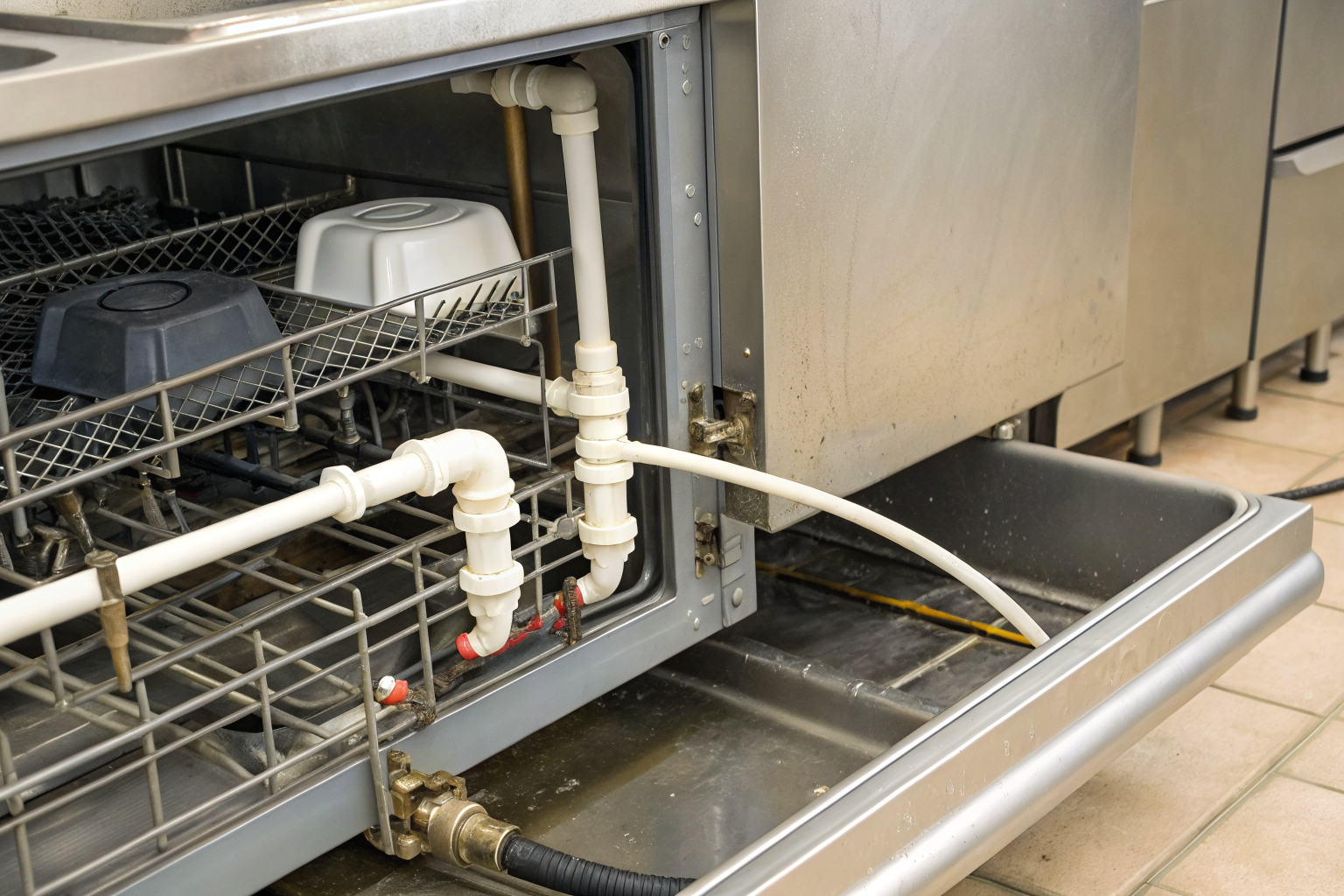
Commercial dishwasher connections to grease interceptors depend entirely on your local plumbing code requirements. A grease interceptor is a plumbing device that separates fats oils and grease (FOG) from wastewater before it enters the sewer system. This means the connection question directly impacts your facility’s ability to prevent FOG discharge violations.
The relationship between dishwashers and grease systems centers on temperature. Commercial dishwashers discharge water at 180-195°F during their final rinse cycles. This extreme heat liquefies captured grease inside the interceptor, allowing it to flow downstream instead of separating properly.
Most operators discover this requirement during permit applications or health inspections. The answer determines not just your plumbing design but also affects commercial grease trap selection and sizing calculations. Some jurisdictions mandate the connection despite thermal concerns, while others prohibit it entirely to preserve trap effectiveness.
Why Can’t Dishwashers Go to Grease Traps?
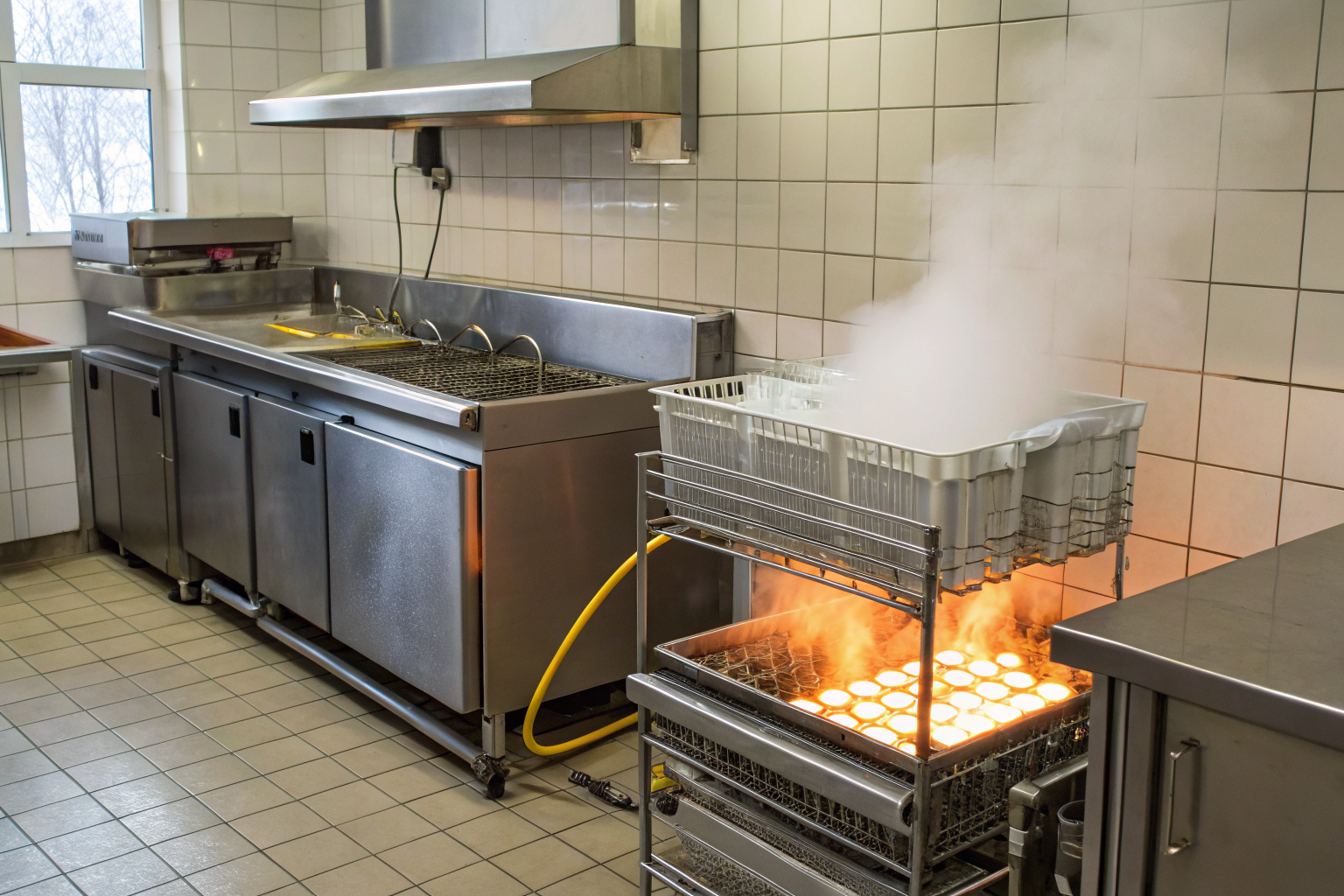
High temperature water bypasses the grease separation process by keeping fats oils and grease in liquid form. Grease interceptors work through gravity separation, cooler wastewater allows grease to rise and solidify while heavier particles sink. Hot dishwasher discharge destroys this physical process.
Water above 140°F keeps grease in liquid state, preventing proper separation in trap chambers. The liquefied grease flows through the outlet pipe instead of accumulating in the storage compartment. This thermal bypass turns your grease interceptor into an expensive pass-through device.
The problem compounds over time. Repeated hot water flushes gradually melt existing grease accumulation, releasing weeks of captured FOG in concentrated slugs. These grease slugs create downstream blockages that trigger sewer backups and regulatory violations.
Restaurant operators who ignore temperature restrictions face two problems: ineffective grease management and potential equipment damage. The constant thermal cycling from hot dishwasher discharge can crack concrete interceptor walls and warp steel baffles designed for ambient water temperatures.
What Do UPC vs IPC Code Requirements Say?

The Uniform Plumbing Code prohibits dishwasher grease trap connections while the International Plumbing Code allows conditional connections. UPC Section 1010.3.2 explicitly prohibits connections while IPC allows with temperature controls.
| Code | Dishwasher Connection | Temperature Limit | States Using Code |
|---|---|---|---|
| Uniform Plumbing Code (UPC) | Prohibited | No exceptions | California, Nevada, Arizona, Utah |
| International Plumbing Code (IPC) | Allowed with controls | Below 140°F at inlet | Texas, Florida, New York, Illinois |
| Local Amendments | Varies by jurisdiction | 120-160°F range | Portland, Seattle, Chicago |
UPC states treat dishwasher discharge as incompatible with grease separation regardless of temperature reduction methods. The code assumes that any connection creates operational problems that outweigh potential FOG capture benefits.
IPC jurisdictions focus on inlet temperature rather than source prohibition. You can connect dishwashers if you install temperature reduction systems that cool the discharge below 140°F before it reaches the grease interceptor. This approach requires additional equipment but preserves trap function.
Local amendments often override state codes with stricter requirements. Some cities mandate all commercial kitchen fixtures connect to grease systems while others prohibit specific equipment types based on local sewer capacity limitations.
Which Jurisdictions Actually Require Dishwasher Connections?

Local jurisdictions require all fixture connections to grease systems despite thermal concerns in several major markets:
Portland, Oregon mandates every commercial kitchen fixture connect to grease interceptors, including dishwashers, regardless of water temperature or equipment type.
Seattle, Washington requires comprehensive fixture connections with temperature reduction valves for hot discharge equipment like dishwashers and sterilizers.
San Francisco, California demands all grease-producing fixtures connect despite following UPC baseline requirements that typically prohibit dishwasher connections.
Chicago, Illinois requires connection of all commercial kitchen equipment with exceptions only for ice machines and beverage dispensers.
These jurisdictions justify stricter requirements through sewer capacity protection and FOG reduction goals. They argue that partial compliance creates enforcement gaps where operators route problematic discharge around grease management systems.
Cities like Portland and Seattle require all commercial kitchen fixtures to connect regardless of temperature. Enforcement focuses on comprehensive capture rather than equipment-specific exemptions, pushing thermal management responsibility to the operator through required cooling systems.
How Does Dishwasher Connection Affect Grease Trap Sizing?
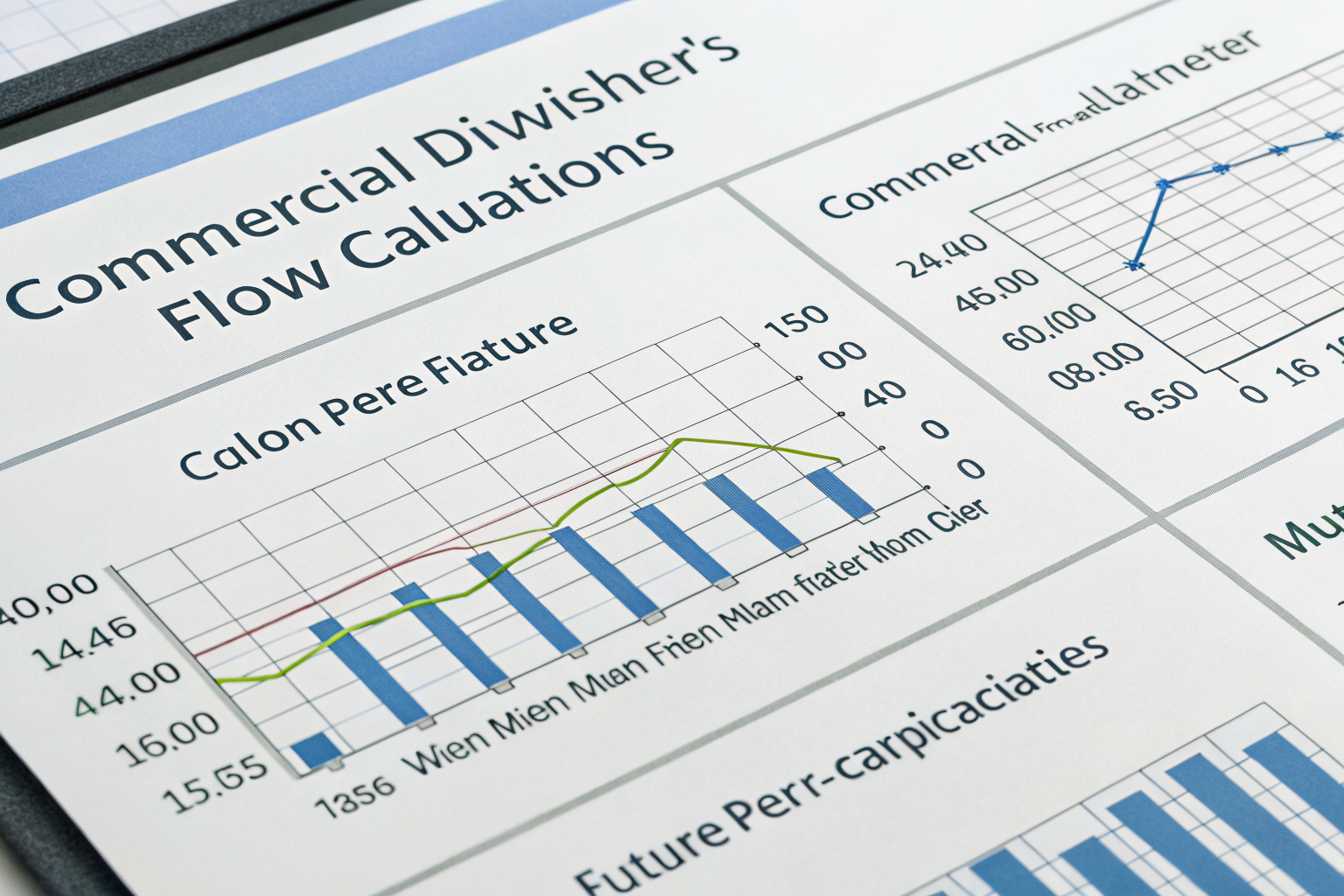
Dishwasher flow rate increases required grease interceptor capacity through modified fixture capacity method calculations:
Calculate base dishwasher GPM using manufacturer specifications, door-type units typically discharge 6-12 GPM depending on cycle frequency and tank capacity.
Add dishwasher flow to total facility GPM using the standard fixture capacity method that combines all connected equipment discharge rates.
Apply temperature correction factor of 1.25-1.5x to account for reduced separation efficiency when hot water contacts the grease interceptor.
Increase retention time calculation by 25-50% to compensate for thermal bypass effects that reduce effective grease separation periods.
Select interceptor size using the adjusted GPM flow rate calculation that accounts for both additional volume and reduced effectiveness.
The GPM flow rate calculation must account for dishwasher cycle timing and peak discharge periods. Conveyor dishwashers create continuous flow while door-type units produce intermittent surges that affect sizing differently.
Fixture capacity method modifications become critical when dishwashers represent 20% or more of total facility flow. The additional volume requires larger interceptor capacity, but the temperature impact demands even greater sizing to maintain separation effectiveness.
Where Should Dishwashers Drain When Grease Trap Connection Is Prohibited?

Alternative dishwasher drains route to separate waste lines that bypass grease management systems entirely. Most facilities install dedicated 3-inch waste lines that carry dishwasher discharge directly to the building’s main sewer connection.
Separate waste lines handle dishwasher drainage without affecting grease management systems. The routing requires additional plumbing but eliminates thermal bypass concerns that destroy interceptor effectiveness. This approach works in UPC states where connections are prohibited.
Pre-rinse sinks offer another alternative for facilities wanting to capture some dishwasher-related FOG. Food particles and grease get removed during manual pre-cleaning, while the dishwasher handles sanitizing through the separate drain line.
Drainage fixture units for separate dishwasher lines typically require 4-6 units for door-type machines and 8-12 units for conveyor systems. The separate routing eliminates grease system complications but requires adequate sewer capacity for the additional discharge volume.
Frequently Asked Questions
Can I install a temperature reduction valve to connect my dishwasher to the grease trap?
Temperature reduction valves can lower dishwasher discharge to acceptable levels for grease trap connection. However, UPC jurisdictions still prohibit the connection regardless of temperature controls, while IPC areas may allow it with proper valve installation.
What happens if I connect my dishwasher to a grease trap anyway?
Hot dishwasher water will liquefy captured grease and flush it downstream, effectively bypassing the trap’s separation function. This creates compliance violations and can lead to sewer blockages that result in significant fines.
Do conveyor dishwashers have different grease trap connection rules than door-type units?
Conveyor dishwashers follow the same code restrictions as door-type units regarding grease trap connections. The key factor is water temperature, not dishwasher type, both styles discharge water above 140°F during rinse cycles.