
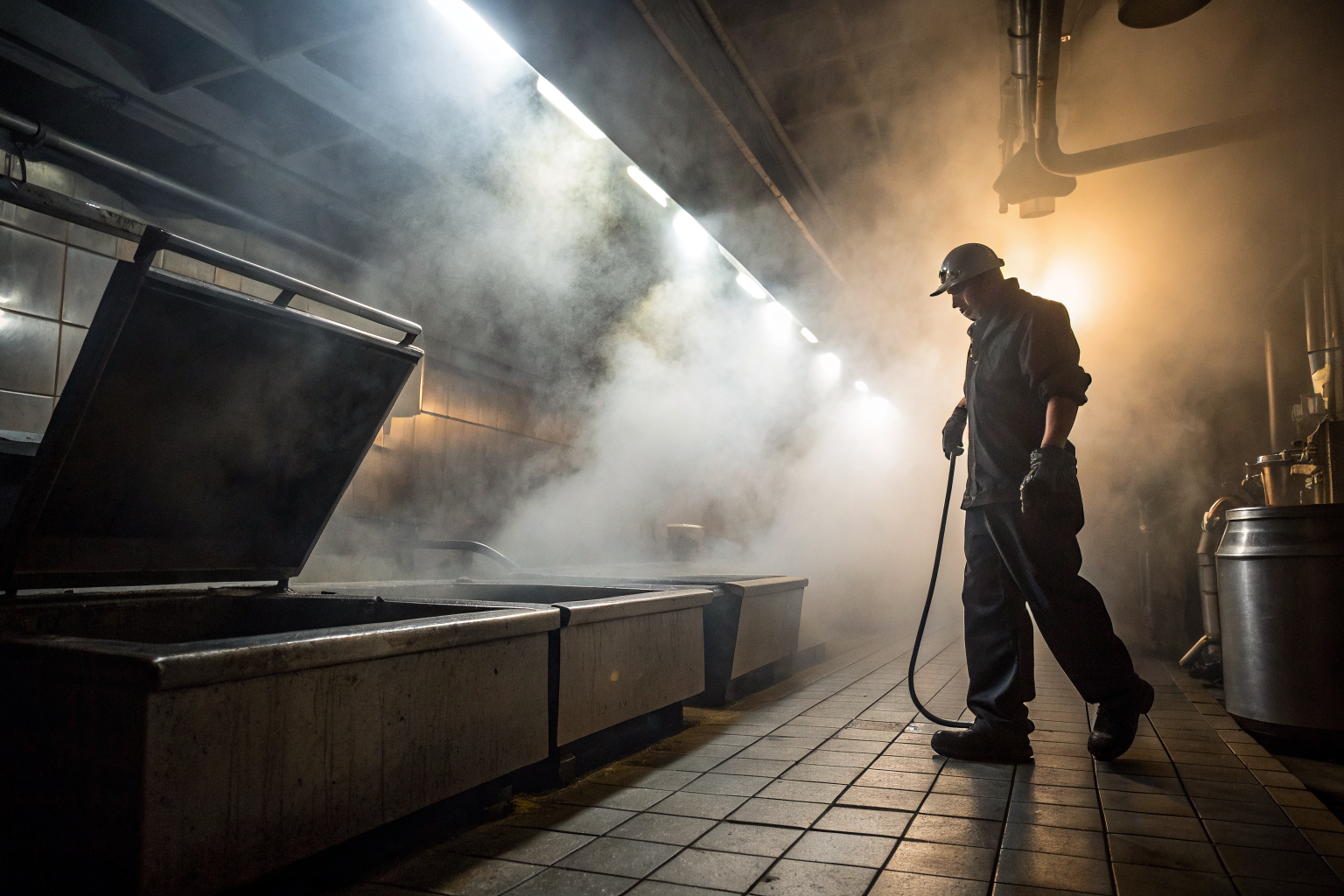
Grease trap service contracts gone wrong cost restaurant owners $15,000 in emergency pumping and regulatory fines within the first year. The wrong hauler can destroy your commercial grease trap system and land you in violation of local FOG control programs.
Key Takeaways:
• Licensed grease haulers must provide valid waste transporter permits and disposal facility agreements before you sign any contract
• Legitimate grease trap service includes inlet/outlet inspection, baffle cleaning, and complete waste manifest documentation, not just pump-and-dump
• Emergency response availability within 4 hours separates professional haulers from fly-by-night operators who disappear during FOG crises
What Licensing Should Your Grease Trap Service Provider Have?

A licensed grease hauler must hold a waste transporter permit before touching your restaurant’s FOG system. This isn’t optional paperwork. It’s the foundation of legal grease hauling business operations.
State waste transporter permits prove the hauler can legally transport liquid waste across municipal boundaries. Most states require $100,000 minimum bonding for liquid waste transporters. Without this permit, your hauler operates illegally and you share liability for violations.
Local business licenses confirm the company operates legally in your jurisdiction. Many cities require additional FOG-specific permits beyond standard business registration. Check your city’s website for the business license database.
| License Type | Required Documentation | Verification Method |
|---|---|---|
| State Waste Transporter Permit | EPA ID number, permit expiration date | State environmental agency website |
| Local Business License | Business registration number, current status | City business license database |
| Disposal Facility Agreements | Active contracts with permitted facilities | Request facility permit copies |
| Commercial Insurance | General liability, environmental coverage | Certificate of insurance with your business as additional insured |
Disposal facility agreements prove your hauler can legally dispose of fats oils and grease waste. Without permitted disposal sites, haulers dump illegally or abandon loads. Request copies of facility permits and active disposal contracts.
Bonding and insurance protect you when things go wrong. Environmental cleanup costs exceed $50,000 for illegal dumping incidents. Verify coverage amounts match your state’s minimum requirements.
How Do You Verify Proper Grease Trap Cleaning Procedures?

Professional cleaning visits include inlet baffle inspection and outlet flow testing. Pump-and-dump operators skip these steps, leaving you with a trap that fails within weeks.
Follow these steps to verify proper procedures:
Time the service call from arrival to departure. Professional cleaning visits should take 45-90 minutes depending on trap size, not 15 minutes for pump-and-dump operations.
Watch the inlet and outlet inspection process. Technicians must remove and clean inlet baffles, check outlet flow rates, and document any damage or wear patterns.
Confirm complete waste removal. The hauler should pump the trap completely dry, not just remove floating grease layers while leaving settled sludge behind.
Verify flow testing after cleaning. Water should flow freely through inlet and outlet pipes without backup or slow drainage indicating blockages.
Document the cleaning timeline. Take photos of the empty trap and record start/finish times to prove adequate service duration for your grease trap service contract.
Check baffle replacement or repair. Damaged baffles must be repaired or replaced during the service call, not deferred to future visits.
Rushed service calls under 30 minutes indicate corners being cut. Real cleaning requires disassembly, inspection, and proper waste removal that takes time.
What Documentation Must Your Hauler Provide After Each Service?

Grease trap waste manifest documents disposal facility destination and waste volume. Without proper manifests, you cannot prove regulatory compliance during inspections.
Your hauler must provide these documents after each service:
• Complete waste manifest with EPA codes. Valid manifests must include EPA waste codes, disposal facility permits, and exact waste volumes measured in gallons. Generic “waste removed” descriptions fail regulatory standards.
• Disposal facility receipts showing final destination. The manifest alone isn’t enough. You need receipts proving the waste reached a permitted disposal facility, not an illegal dump site.
• Before and after photos documenting trap condition. Photos prove the trap was properly cleaned and identify any damage or wear requiring attention before the next service cycle.
• Service completion certificate with technician signature. This document confirms all required procedures were completed and creates a paper trail for regulatory inspections.
• Digital records accessible within 24 hours. Paper-only systems fail during emergencies. Professional haulers provide online access to service records and manifest copies for immediate regulatory response.
Missing documentation equals regulatory violations during inspections. Restaurant FOG program management requires complete records for every service event.
What Are the Red Flags for Pump-and-Dump Operators?

Pump-and-dump operators skip required inlet and outlet inspection procedures. They quote low prices, provide minimal service, and disappear when problems arise.
Watch for these warning signs:
| Red Flag | Professional Standard | Impact |
|---|---|---|
| Service calls under 30 minutes | 45-90 minutes minimum | Incomplete cleaning, early system failure |
| No licensing verification available | Immediate permit and insurance documentation | Legal liability, regulatory violations |
| Cash-only payment demands | Standard invoicing with payment terms | No service records, tax compliance issues |
| Missing waste manifests | Complete documentation within 24 hours | Regulatory violations, disposal uncertainty |
| No emergency response guarantee | 4-hour maximum response commitment | System failures during peak business hours |
| Pricing 50%+ below market rates | Competitive but sustainable pricing | Corner-cutting, incomplete service |
Service calls under 30 minutes typically indicate pump-and-dump operations that skip required inspection steps. Real grease hauling business operations require time for proper procedures.
Pricing that seems too good to be true usually is. Professional haulers cannot operate profitably with pricing 50% below market rates without cutting corners on licensing, disposal, or service quality.
Cash-only payment demands often indicate unlicensed operators avoiding paper trails. Legitimate businesses provide invoices and accept standard payment methods.
What Questions Should You Ask Before Signing a Grease Trap Service Contract?

Grease trap service contracts specify emergency response timeframes and documentation requirements. Without clear terms, you’re vulnerable during system failures and regulatory inspections.
Ask these critical questions before signing:
• What is your guaranteed emergency response time? Professional haulers guarantee 4-hour emergency response and provide digital documentation within 24 hours of service. Anything longer leaves you exposed during FOG crises.
• What specific procedures are included in each service call? The contract should detail inlet/outlet inspection, baffle cleaning, flow testing, and complete waste removal. Generic “pump and clean” language allows corner-cutting.
• How do you handle equipment failures or service interruptions? Backup equipment and alternative scheduling must be available when primary trucks break down or technicians call in sick during scheduled service windows.
• What documentation do you provide and when? Digital manifests, disposal receipts, and service photos should be available within 24 hours through online portals, not mailed weeks later.
• Can I modify service frequency based on seasonal volume changes? Restaurant FOG production varies with menu changes and business cycles. Contracts should allow frequency adjustments without penalty fees.
• What are the contract termination terms if service quality fails? 30-day termination clauses protect you from being locked into poor service. Avoid contracts requiring 90+ day notice periods.
FOG control program compliance depends on reliable service and complete documentation. Don’t sign contracts that leave these requirements unclear or negotiable.
Frequently Asked Questions
How do I choose between different grease trap cleaning companies in my area?
Compare licensing credentials first, then verify each company’s documentation standards and emergency response guarantees. Request references from similar restaurants and check online reviews for patterns of missed service calls or regulatory violations.
Can I use any waste hauler for my restaurant’s grease trap or does it need to be specialized?
You must use a licensed liquid waste hauler with specific FOG handling permits and disposal facility agreements. General waste companies cannot legally transport or dispose of grease trap waste due to environmental regulations.
What should I do if my current grease trap service company is missing required documentation?
Document the missing records immediately and request complete manifests within 48 hours. If they cannot provide proper documentation, switch to a licensed hauler before your next regulatory inspection to avoid compliance violations.