
Restaurant owners waste thousands of dollars on oversized grease traps when a grease trap size chart could save them from compliance disasters and unnecessary costs.
Key Takeaways:
- Coffee shops typically need 7-14 GPM grease traps while full-service restaurants require 25-50 GPM capacity
- High-volume fry operations demand 75-100+ GPM grease interceptors due to heavy FOG production
- Food trucks can operate with compact 4-7 GPM units when equipped with standard three-compartment sinks
Quick Answer: 6 Restaurant Types and Their Grease Trap Requirements
- Coffee shops and bakeries – 7-14 GPM capacity for minimal FOG operations
- Food trucks – 4-7 GPM compact units for mobile three-compartment setups
- Casual dining restaurants – 25-35 GPM for 50-100 seat operations
- Full-service fine dining – 40-50 GPM for complex kitchens with multiple prep stations
- High-volume fry shops – 75-100 GPM interceptors for heavy oil processing
- Large chain restaurants – 100+ GPM systems for maximum fixture density and throughput
Proper grease trap sizing depends on your fixture count, menu type, and local code requirements. The commercial grease trap you choose must handle your peak GPM flow rate without overflow.
What Grease Trap Sizes Do Different Restaurant Types Actually Need?
Restaurant type determines your baseline GPM requirements, but actual grease trap sizing calculations depend on fixture count and local codes. Here’s the master reference showing capacity ranges by establishment type:
| Restaurant Type | GPM Range | Typical Fixtures | Average Seats |
|---|---|---|---|
| Coffee Shop | 7-14 GPM | 2-3 sinks, espresso station | 20-40 |
| Food Truck | 4-7 GPM | 3-compartment mobile sink | N/A |
| Fast Casual | 15-25 GPM | 4-5 sinks, dishwasher | 30-60 |
| Casual Dining | 25-35 GPM | 6-8 fixtures, full kitchen | 50-100 |
| Fine Dining | 40-50 GPM | 8-12 fixtures, complex prep | 75-150 |
| High-Volume Fry | 75-100+ GPM | 10+ fixtures, multiple fryers | 100-200+ |
These ranges assume standard fixture configurations. Your actual GPM flow rate calculation may vary based on local Uniform Plumbing Code interpretations and specific kitchen layouts. Most jurisdictions require professional sizing verification before permit approval.
Menu complexity drives fixture density. A steakhouse needs fewer sinks than a sushi restaurant with extensive prep requirements. Fats oils and grease production varies dramatically between establishment types, but flow rate matters more than FOG volume for initial sizing.
How Do Coffee Shops and Bakeries Size Their Grease Management?
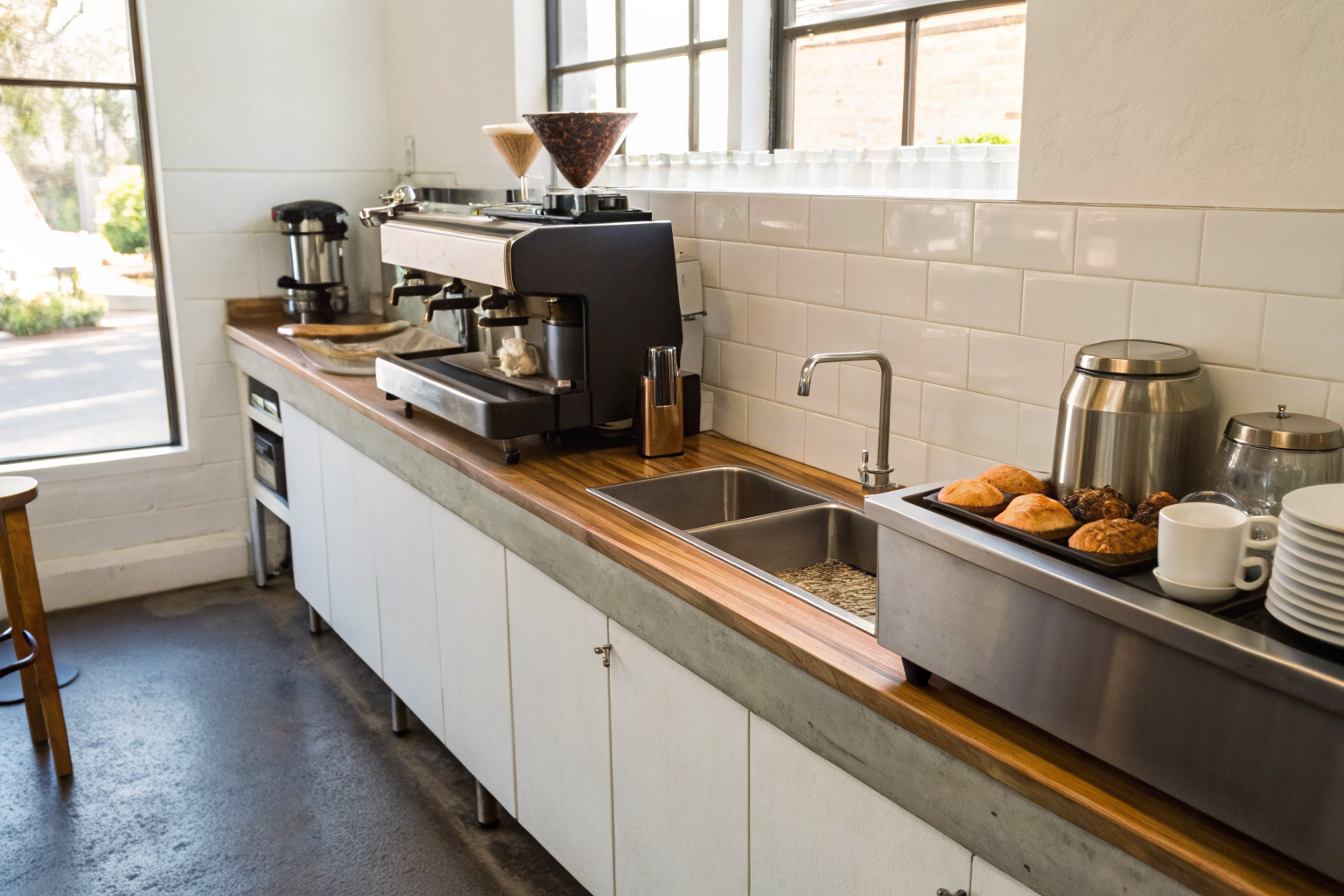
Coffee shop grease trap sizing is straightforward because these operations generate minimal FOG loads. A coffee shop typically needs 7-14 GPM capacity for basic espresso equipment and limited food preparation.
Most coffee shops operate with 2-3 fixtures: a three-compartment prep sink, espresso machine drainage, and possibly a dishwasher connection. The fixture capacity method calculates drainage fixture units for each component. Standard espresso machines contribute 2 DFU while prep sinks add 3-4 DFU each.
Bakery operations require similar capacity ranges despite higher flour and butter usage. The key difference is pastry prep areas generate more solid waste than liquid fats oils and grease. Most health departments classify bakeries as low-FOG producers, keeping them in the 7-14 GPM range.
Special considerations include espresso machine water temperature effects on grease separation and display case condensation drainage. Some municipalities require separate interceptors for high-temperature equipment discharge, but standard under-sink units handle most coffee shop applications.
Location matters for coffee shop sizing. Drive-through operations with expanded food menus may need 15-20 GPM capacity, pushing them into fast-casual territory.
What Size Grease Trap Does a Food Truck Really Need?
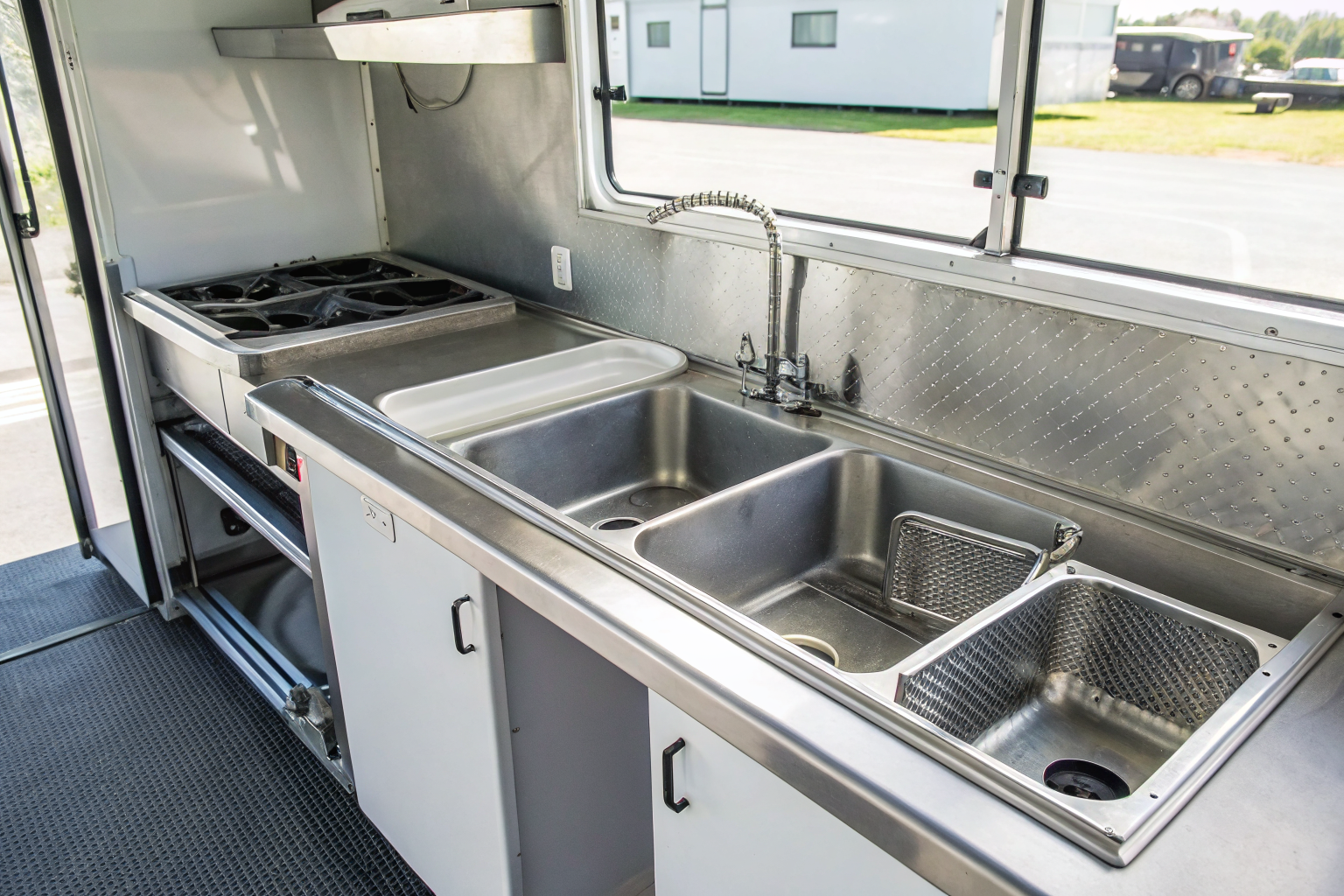
Food truck grease trap sizing follows a simple four-step process based on mobile kitchen constraints:
Count your fixtures accurately. Most food trucks have one three-compartment sink and possibly a hand sink. Standard mobile setups generate 6-8 drainage fixture units total.
Calculate flow rate based on sink capacity. Three-compartment mobile sinks typically handle 4-7 GPM maximum flow. Your grease interceptor must match this capacity without exceeding truck weight limits.
Choose compact under-sink units over large interceptors. Food trucks can’t install 500-gallon underground systems. Compact 20-50 gallon capacity units handle the 4-7 GPM range effectively.
Verify local mobile vendor codes. Some cities require food trucks to use commissary kitchen grease management instead of onboard systems. Check regulations before purchasing equipment.
Mobile kitchen space constraints eliminate complex plumbing runs. Most food trucks install grease traps directly under their prep sink with minimal drainage fixture units feeding the system. This setup keeps capacity requirements low compared to brick-and-mortar restaurants.
Weight restrictions matter for food truck operations. A 50-gallon grease interceptor adds 400+ pounds when full, affecting payload capacity and fuel efficiency.
Full-Service Restaurant Grease Trap Requirements by Kitchen Size
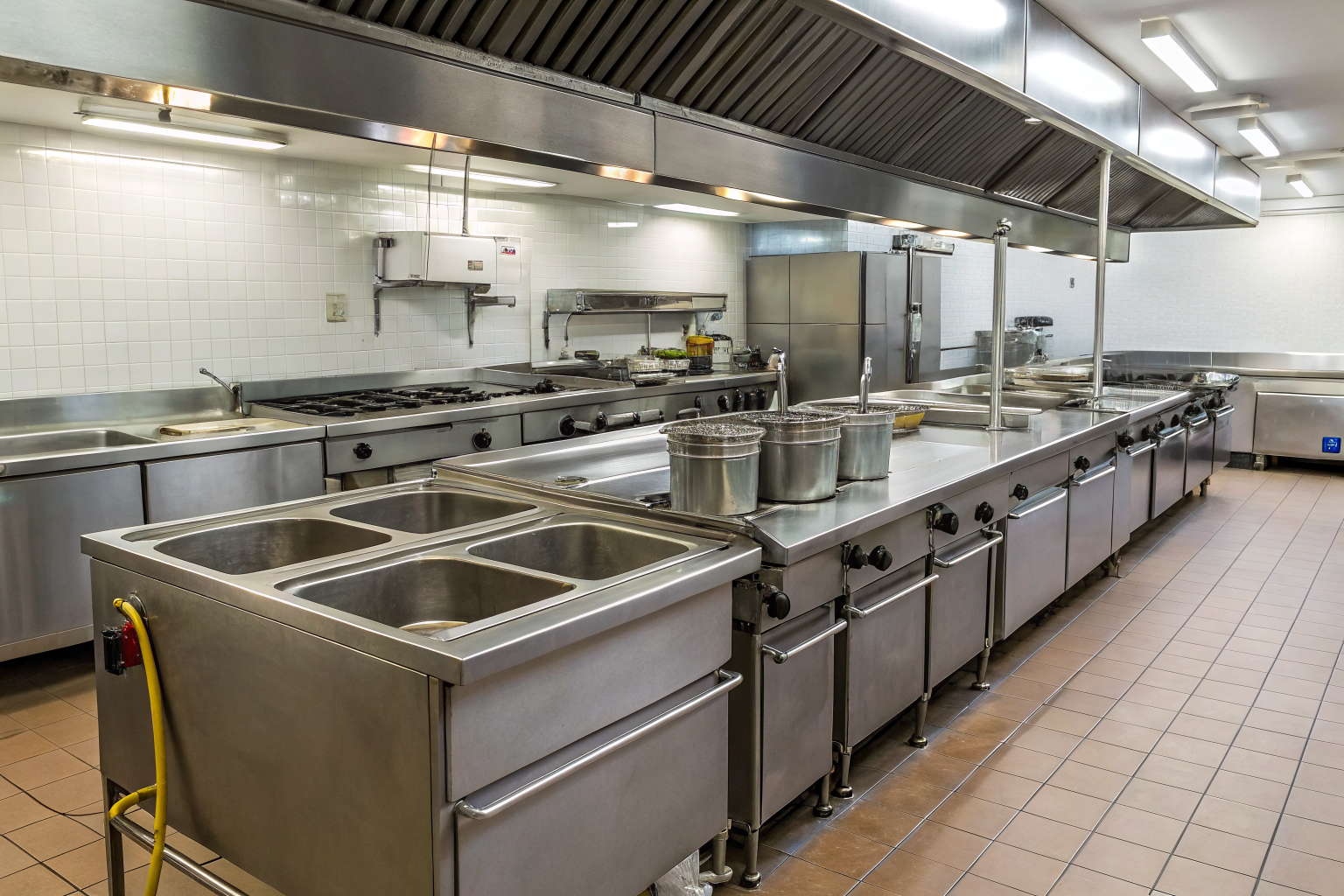
Full-service restaurants need moderate to high capacity systems based on seat count and kitchen complexity. The 25-50 GPM range covers most operations, but specific requirements vary by several factors:
• 50-75 seat casual dining – 25-30 GPM capacity handles standard fixture layouts with 6-8 sinks, one dishwasher, and basic prep equipment
• 75-125 seat family dining – 35-40 GPM systems accommodate expanded fixture counts including separate salad prep, soup stations, and dual dishwashers
• 125-175 seat full-service – 40-45 GPM capacity supports complex kitchen operations with specialized prep areas and high-volume dish processing
• 175+ seat fine dining – 45-50 GPM interceptors handle maximum fixture density with sauce stations, pasta cookers, and extensive prep requirements
Kitchen layout affects capacity more than seat count. Open kitchen designs with customer-facing prep require additional hand sinks and cleanup stations. Each fixture adds drainage fixture units to your total calculation.
The Uniform Plumbing Code requires professional sizing calculations for full-service operations. Most jurisdictions mandate engineer-sealed drawings showing fixture capacity method calculations and GPM flow rates before issuing permits.
Menu type influences long-term maintenance but not initial sizing. Italian restaurants with heavy oil usage need more frequent pumping than seafood restaurants, but both require similar GPM capacity based on fixture count.
When Do High-Volume Operations Need Grease Interceptors Instead?
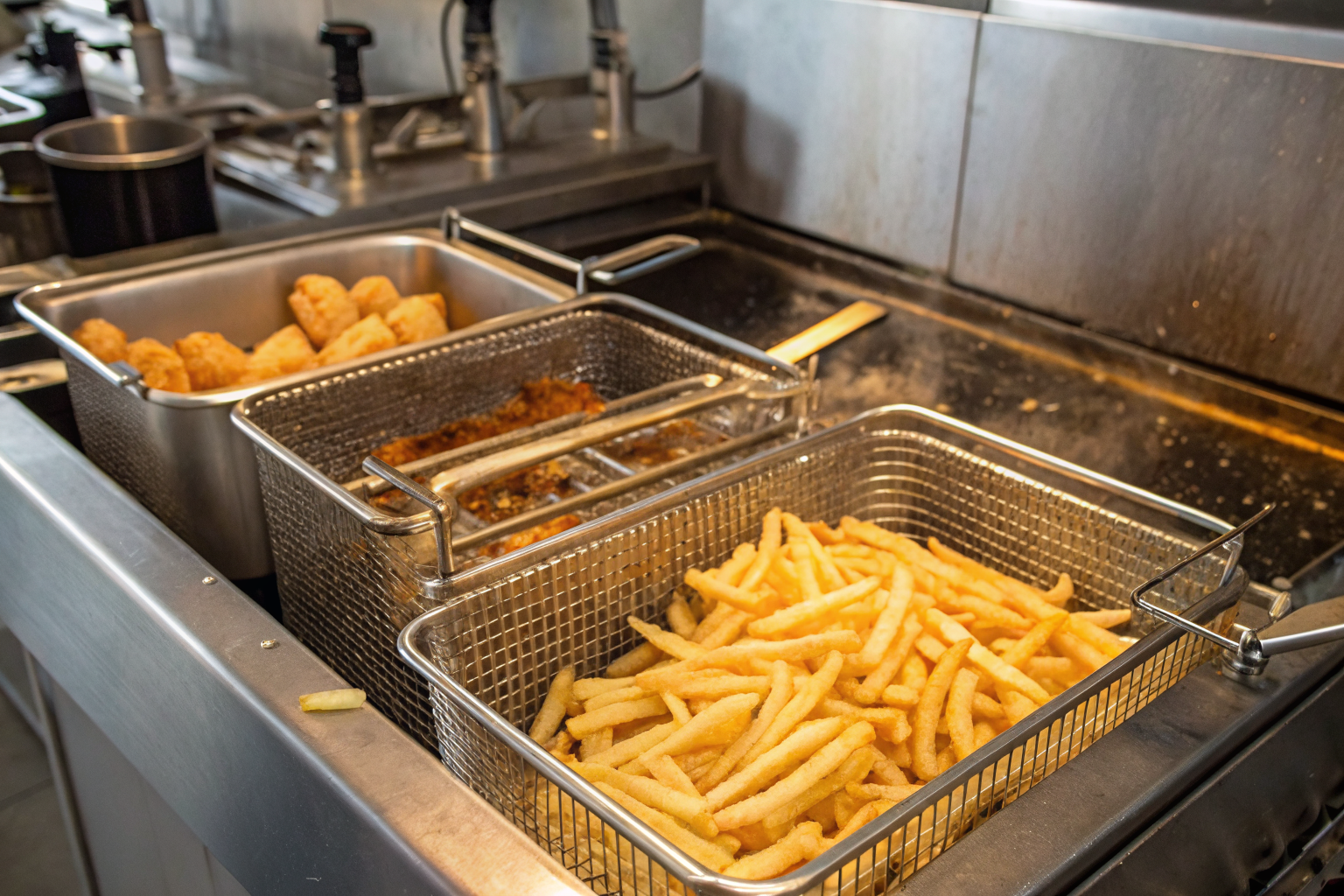
High-volume fry operations exceed standard grease trap capacity and require large interceptor systems. The cutoff point typically occurs at 75-100+ GPM flow rates where under-sink units become inadequate.
| Operation Type | GPM Requirement | Interceptor Size | Installation Type |
|---|---|---|---|
| Fast Food Chain | 75-100 GPM | 1000-1500 gallon | Underground/exterior |
| Dedicated Fry Shop | 100-150 GPM | 1500-2000 gallon | Underground required |
| Large Food Court | 150+ GPM | 2000+ gallon | Centralized system |
| High-Volume Cafeteria | 200+ GPM | 3000+ gallon | Multiple interceptors |
Fryer-heavy operations generate massive fats oils and grease loads that overwhelm standard traps. A single commercial fryer can produce 50+ pounds of waste oil daily during peak periods. Multiple fryer stations require interceptor capacity to handle both volume and separation time.
Code requirements trigger interceptor mandates at specific thresholds. Most cities require interceptors when GPM flow rate calculation exceeds 50-75 GPM or when daily FOG production surpasses established limits. The Uniform Plumbing Code provides minimum sizing formulas, but local amendments often increase requirements.
Installation costs for grease interceptors range from $15,000-50,000 depending on capacity and site conditions. Underground systems require excavation, concrete vaults, and specialized pumping equipment. Most high-volume operations budget 2-3% of total kitchen construction costs for grease management systems.
Maintenance frequency increases with interceptor size. Systems over 1000 gallons typically need professional pumping every 30-60 days versus quarterly service for standard traps.
How Fixture Count Drives Your Actual Grease Trap Size
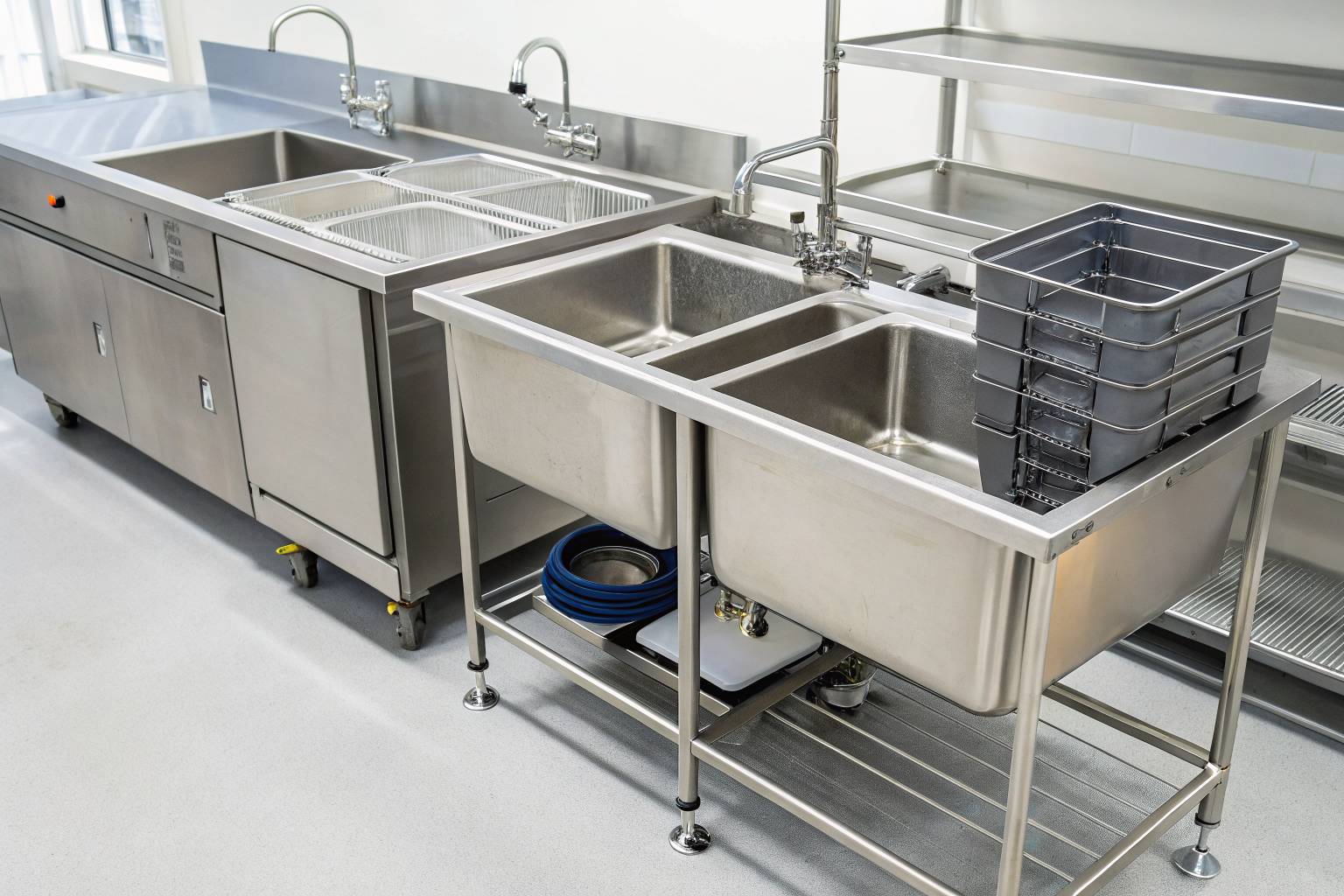
Fixture count determines minimum GPM requirements through direct correlation with drainage fixture units. The grease trap size chart provides starting points, but fixture math gives you the real capacity answer.
| Fixture Type | Drainage Units | GPM Contribution |
|---|---|---|
| 3-Compartment Sink | 3 DFU each | 7.5 GPM total |
| Dishwasher (Door Type) | 4 DFU | 10 GPM |
| Dishwasher (Conveyor) | 6 DFU | 15 GPM |
| Hand Sink | 1 DFU | 2.5 GPM |
| Prep Sink (Single) | 2 DFU | 5 GPM |
| Floor Drain | 2 DFU | 5 GPM |
The fixture capacity method converts drainage fixture units to GPM flow rate calculation using standard plumbing tables. Each DFU represents 2.5 GPM flow capacity under normal operating conditions. Your total DFU count determines minimum trap size requirements.
Real-world example: A casual dining restaurant with two three-compartment sinks (6 DFU), one door-type dishwasher (4 DFU), three prep sinks (6 DFU), and two hand sinks (2 DFU) generates 18 total DFU. This equals 45 GPM minimum capacity requirement.
Most jurisdictions require 25-50% capacity buffer above calculated minimums. The 45 GPM example would need a 55-70 GPM system to meet code requirements. This buffer accounts for peak usage periods and prevents overflow during heavy dish cycles.
Fixture placement affects drainage patterns and may require multiple smaller traps instead of one large unit. Long plumbing runs between fixtures and interceptors can cause backup problems during peak flow periods.
Frequently Asked Questions
Can I use a smaller grease trap if my restaurant doesn’t do much frying?
Menu type affects grease production, but trap size depends primarily on your total fixture count and water flow rates. Even salad-focused restaurants need proper sizing based on their dishwashing and prep sink capacity. The GPM flow rate calculation considers water volume, not just oil content.
Do chain restaurants use the same size grease traps across all locations?
No, each location requires individual sizing based on local fixture counts, kitchen layout, and municipal code requirements. Corporate standards provide guidelines, but actual GPM calculations vary by site. Franchise operators must follow local Uniform Plumbing Code interpretations regardless of brand specifications.
What happens if I install a grease trap that’s too small for my restaurant type?
Undersized grease traps overflow with FOG, causing drain backups and code violations. Most municipalities require resizing within 30-60 days of discovery, plus potential fines for non-compliance. Emergency pumping costs during overflow situations often exceed the price difference between proper and undersized systems.