

Grease trap sizing mistakes cost restaurants thousands in emergency repairs, code violations, and system failures that shut down kitchens during peak hours. One undersized unit can trigger weekly pump-outs instead of quarterly service, turning a manageable expense into a budget nightmare.
Key Takeaways:
• GPM flow rate calculations determine 85% of commercial grease trap sizing decisions
• Undersized traps require 3x more frequent pumping and cleaning cycles
• Uniform Plumbing Code requires minimum 20 GPM capacity for most restaurant fixtures
What Are the Two Main Grease Trap Sizing Methods?

Grease trap sizing uses two primary calculation methods that determine capacity requirements for commercial kitchen installations. The GPM flow rate calculation method measures actual water flow through fixtures to size grease interceptors based on peak demand. The drainage fixture unit method assigns standardized values to each fixture type and calculates total capacity using code-mandated conversion tables.
GPM flow rate calculation applies to 90% of commercial kitchen installations because it reflects real-world usage patterns. This method measures actual gallons per minute flowing through prep sinks, dishwashers, and floor drains during peak operation. You multiply each fixture’s flow rate by the number of fixtures, add a safety factor, and select a grease interceptor with matching or greater capacity.
Drainage fixture units provide an alternative calculation method when local codes mandate standardized sizing or when installations exceed certain flow thresholds. Each fixture receives a DFU rating based on its drain size and typical usage. A three-compartment prep sink rates 3 DFU, while a commercial dishwasher rates 6 DFU. You sum all fixture units and convert to required grease trap capacity using code tables.
The methods differ in their application scope and accuracy. GPM calculations work best for standard restaurant kitchens with predictable fixture loads. DFU calculations become mandatory for large installations, complex plumbing systems, or when local inspectors require engineered drawings. Most health departments accept either method, but some jurisdictions specify which approach to use.
Grease interceptors sized using GPM methods typically match actual kitchen demands more precisely than DFU-based calculations. DFU ratings assume maximum theoretical usage that rarely occurs in practice, often resulting in oversized units that cost more upfront and may not function optimally.
How Do You Calculate GPM Flow Rate for Grease Trap Sizing?
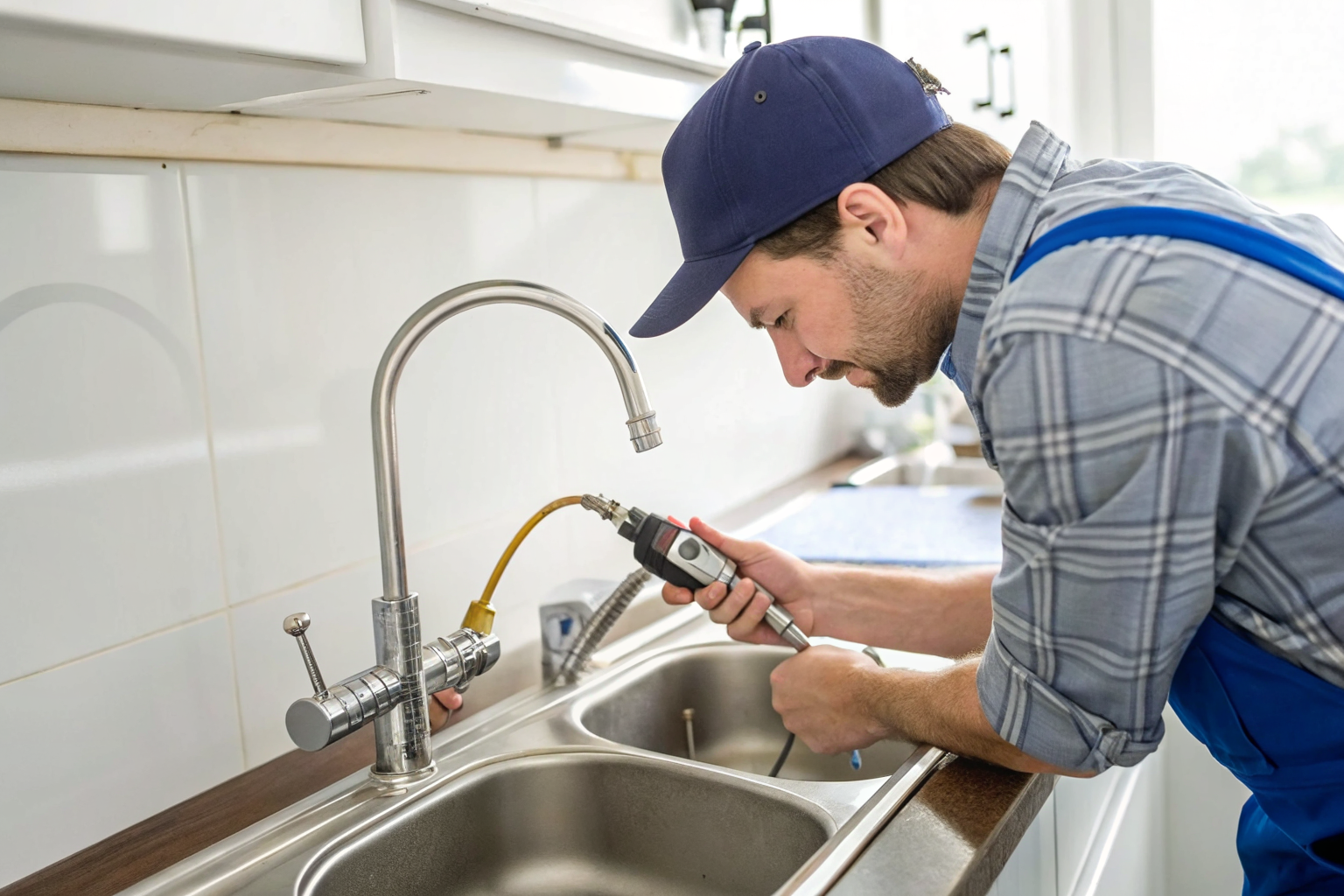
GPM flow rate calculation determines grease trap capacity requirements by measuring actual water flow during peak kitchen operation. This fixture capacity method accounts for simultaneous fixture usage and adds safety factors to prevent system overload.
Measure individual fixture flow rates. Run each fixture at full capacity and record GPM using a flow meter or timed container method. Three-compartment sinks typically flow 15-20 GPM per compartment, while pre-rinse spray valves reach 1.6 GPM under current regulations.
Identify peak simultaneous usage. Observe kitchen operations during the busiest service periods and count how many fixtures run simultaneously. Most restaurants hit peak demand when prep sinks, dishwashers, and floor cleaning occur at the same time.
Calculate total peak flow. Multiply each fixture’s GPM by the number running simultaneously, then sum all fixtures. A typical fast-casual kitchen might have two prep sinks (40 GPM), one dishwasher (50 GPM), and one mop sink (5 GPM) for 95 GPM total peak flow.
Apply the retention time factor. Multiply total GPM by the required retention time to determine minimum trap capacity. Most codes require 30-45 minutes retention, meaning a 95 GPM system needs a minimum 2,850-4,275 gallon grease interceptor.
Add safety margin for FOG separation. Increase calculated capacity by 25-50% to account for grease accumulation and maintain proper separation efficiency. Fats oils and grease accumulate faster in high-volume kitchens, requiring additional capacity buffer.
Three-compartment sinks require 45 GPM minimum flow rate calculation because each compartment can operate simultaneously during peak prep periods. Dishwashers add significant flow but operate intermittently, so calculate based on actual cycle patterns rather than maximum rated capacity.
The GPM method produces accurate results when you measure actual usage patterns instead of relying on manufacturer specifications. Rated fixture capacities often exceed real-world flow rates, leading to oversized and expensive grease interceptor installations.
When Should You Use Drainage Fixture Units Instead of GPM?

Drainage fixture units provide an alternative sizing methodology when specific code requirements or installation characteristics make GPM calculations impractical. The Uniform Plumbing Code mandates DFU calculations for large interceptors, complex systems, or when local jurisdictions require standardized approaches.
| Installation Type | GPM Method | DFU Method |
|---|---|---|
| Standard restaurant kitchen | Preferred for accuracy | Required by some codes |
| Large food service (>100 GPM) | Complex to measure | Mandated by UPC |
| Multi-tenant buildings | Difficult to calculate | Simplified approach |
| Engineered systems | Requires professional design | Code-compliant standard |
DFU method required for installations over 100 GPM total flow capacity because measuring simultaneous usage becomes impractical in large facilities. Hotels, hospitals, and shopping center food courts typically exceed this threshold and must use DFU calculations to satisfy building code requirements.
The DFU approach assigns standardized values to each fixture regardless of actual usage patterns. A commercial dishwasher receives 6 DFU whether it runs continuously or once per hour. This standardization simplifies permitting and inspection but may not reflect real kitchen demands.
Conversion factors translate total DFU to required grease interceptor capacity using established tables. Each DFU equals approximately 7.5 gallons of flow, so a 40 DFU system requires a 300-gallon minimum capacity trap. Local codes may modify these conversion rates based on regional requirements.
Use DFU calculations when local inspectors mandate this approach, when the installation exceeds 100 GPM total capacity, or when you need simplified sizing for permit applications. The method works well for standardized kitchen designs but may oversize traps for efficient operations.
What Size Grease Trap Does Your Kitchen Actually Need?

Kitchen type determines minimum grease trap capacity based on fixture loads, service volume, and operational patterns. Fast-casual restaurants need minimum 40 GPM capacity traps for typical fixture loads, while full-service dining establishments require larger interceptors to handle complex prep operations.
| Restaurant Type | Minimum Trap Size | Typical GPM Range |
|---|---|---|
| Coffee shop/bakery | 20 GPM | 15-30 GPM |
| Fast-casual | 40 GPM | 35-65 GPM |
| Full-service restaurant | 75 GPM | 60-120 GPM |
| Large kitchen/hotel | 150 GPM | 125-300 GPM |
Quick-service restaurants with limited prep typically need 20-40 GPM grease interceptors because they use fewer fixtures and generate less FOG. These kitchens focus on assembly and reheating rather than full-scale food preparation, reducing grease trap capacity requirements.
Full-service restaurants require 75-150 GPM capacity because they operate multiple prep sinks, commercial dishwashers, and extensive floor drainage systems simultaneously. The fixture capacity method shows these establishments generate 3-4 times more wastewater during peak service periods.
Large institutional kitchens, hotels, and multi-restaurant facilities need 150-500 GPM grease interceptors to handle complex operations. These installations typically require professional engineering calculations and custom-sized interceptors rather than standard commercial units.
Undersized traps create operational nightmares regardless of kitchen type. A 20 GPM trap serving a 40 GPM kitchen will overflow during peak periods, require emergency pumping, and fail health inspections. Oversized traps waste money upfront and may not maintain proper flow velocities for effective grease separation.
Match trap capacity to actual peak demand plus a 25% safety margin. This approach prevents system overload while avoiding unnecessary expense from excessive oversizing.
What Happens When You Size Grease Traps Wrong?

Incorrect sizing causes operational and compliance problems that affect kitchen functionality, maintenance costs, and regulatory standing. Undersized traps fail inspection 67% more often than properly sized units because they cannot handle peak flow demands or maintain required grease separation efficiency.
• Frequent backups and overflows occur when trap capacity cannot handle peak kitchen demands, forcing wastewater back into floor drains and prep sinks during busy service periods
• Excessive pumping costs multiply when undersized traps require cleaning every 2-4 weeks instead of the standard 90-day cycle, tripling annual maintenance expenses
• Code violations and fines result when oversized traps fail to maintain minimum flow velocities needed for proper FOG separation, creating compliance issues during inspections
• System failure during peak service shuts down kitchen operations when inadequate capacity causes complete drainage backup, forcing restaurant closure until emergency pumping restores function
• Downstream pipe damage occurs when undersized traps allow excess grease to enter sewer lines, causing blockages that require expensive pipe replacement and potential environmental cleanup
Undersized grease interceptors create a cascade of problems that extend beyond the trap itself. Fats oils and grease that bypass inadequate separators accumulate in drain lines, creating blockages that require professional cleaning and may damage pipe systems.
Oversized traps present different but equally problematic issues. Excessive capacity reduces flow velocity below the minimum needed for proper separation, allowing grease to pass through without adequate contact time. Large traps also cost significantly more upfront and may require custom installation procedures.
The most expensive sizing mistake involves installing a trap that barely meets minimum requirements without safety margin. These marginal installations work initially but fail as kitchen operations expand or fixture usage increases over time.
Proper sizing prevents all these issues by matching trap capacity to actual peak demand with appropriate safety factors. The upfront investment in correct sizing saves thousands in avoided repairs, reduced pumping frequency, and prevented compliance violations.
Which Plumbing Codes Control Grease Trap Sizing Requirements?

Uniform Plumbing Code establishes grease trap sizing standards that govern commercial kitchen installations across most U.S. jurisdictions. UPC Section 1003 mandates minimum 750-gallon capacity for large interceptors while allowing smaller point-of-use traps for individual fixtures under specific conditions.
The UPC requires grease interceptors for all commercial food service establishments that discharge wastewater containing fats oils and grease above acceptable limits. Section 1003.3.2 specifies minimum retention times of 24 hours for large interceptors and 30 minutes for small grease traps, directly affecting sizing calculations.
Local amendments to the UPC often modify sizing requirements based on regional conditions and municipal sewer system capabilities. Some jurisdictions mandate larger minimum sizes, require professional engineering calculations above certain thresholds, or specify particular calculation methods for determining capacity.
Inspection criteria focus on proper sizing relative to actual kitchen loads rather than theoretical maximums. Code officials verify that installed capacity matches submitted calculations and that traps function effectively during peak operation periods. Undersized installations fail inspection even if they meet minimum code requirements on paper.
Compliance verification requires documentation of the sizing methodology used, calculations showing peak flow determinations, and manufacturer specifications confirming adequate capacity. Jurisdictions using drainage fixture units typically require conversion tables showing how DFU totals translate to minimum trap sizes.
State and local codes may impose stricter requirements than the base UPC standards. California, for example, requires larger minimum sizes for certain restaurant types, while some East Coast jurisdictions mandate specific retention times that affect capacity calculations.
Code compliance protects restaurants from costly violations and ensures proper system function. Working with local building departments early in the design process prevents sizing mistakes that require expensive corrections after installation.
Frequently Asked Questions
Can a grease trap be too small for my restaurant?
Yes, undersized grease traps cause frequent backups and require cleaning every 2-4 weeks instead of the standard 90-day cycle. Small traps also fail to separate grease properly, leading to downstream clogs and code violations that can shut down kitchen operations.
Do I need to hire a professional for grease trap sizing calculations?
Professional sizing is required for installations over 100 GPM or when local codes mandate engineered drawings. Simple restaurant setups under 50 GPM can often use standard sizing charts, but complex kitchens need professional calculations to ensure proper capacity and code compliance.
What’s the most common grease trap sizing mistake restaurants make?
Restaurants typically underestimate peak flow rates by using average fixture usage instead of maximum simultaneous demand. This leads to undersized traps that overflow during busy periods and require expensive emergency pumping to restore kitchen function.